Overview of the Cashew Processing and Packaging Process
Raw cashew nuts are cashew nuts that have not yet been shelled. At this stage, they are still in their natural raw form, covered by a hard outer shell.
This outer shell contains anacardic acid, a substance that may irritate or burn the skin if handled carelessly. For that reason, cashew processing must follow a strict and careful production process to reduce risks and ensure food safety.
To better understand how raw cashew nuts are processed, stored, inspected, and turned into commercial cashew kernels, let’s follow each step of the process with Kimmy Farm below.
Basic process of producing finished cashew kernels:
- Step 1: Harvest cashew fruits after they fall naturally.
- Step 2: Separate the raw cashew nut from the cashew apple.
- Step 3: Sun-dry the raw cashew nuts.
- Step 4: Store the raw cashew nuts.
- Step 5: Steam or roast the raw cashew nuts.
- Step 6: Dry the cashew nuts.
- Step 7: Remove the hard outer shell.
- Step 8: Dry the cashew kernels.
- Step 9: Remove the cashew testa.
- Step 10: Grade the cashew kernels and inspect quality.
- Step 11: Metal detection and fumigation.
- Step 12: Packaging and shipment from the factory.
Raw Cashew Nut Processing Procedure
After harvest, cashew nuts are dried under sunlight to reduce moisture. The raw cashew nuts are then transported to a factory, where the hard shells are processed and removed.
The raw cashew processing process usually includes steaming or roasting, drying, shelling, peeling, grading, quality inspection, and packaging. Each step requires close supervision. Workers must also follow hygiene standards for machinery, tools, protective equipment, and the working environment.
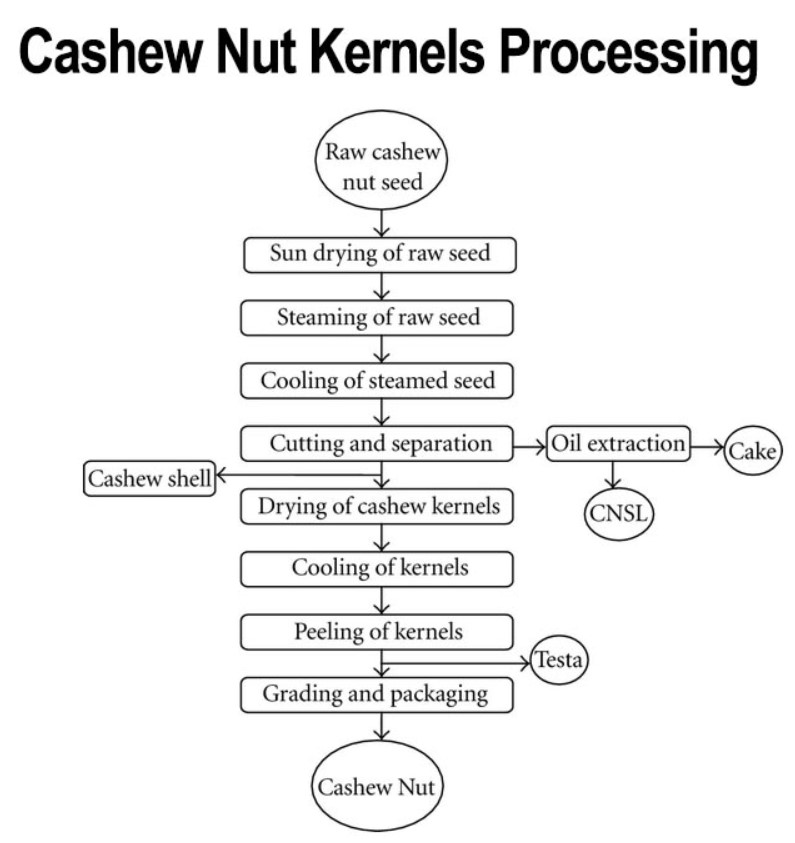
Diagram of the cashew processing process, turning raw cashew nuts into commercial cashew kernels
=> Read more: What Are Raw Cashew Nuts and Cashew Kernels? How Are They Different?
Step 1: Wait for the Cashew Apples to Fall and Collect Them
When the cashew tree produces fruit, ripe cashew apples naturally fall to the ground. Farmers then collect them. If cashew apples are picked by hand before they are fully ripe, the final quality of the cashew kernels may be affected.
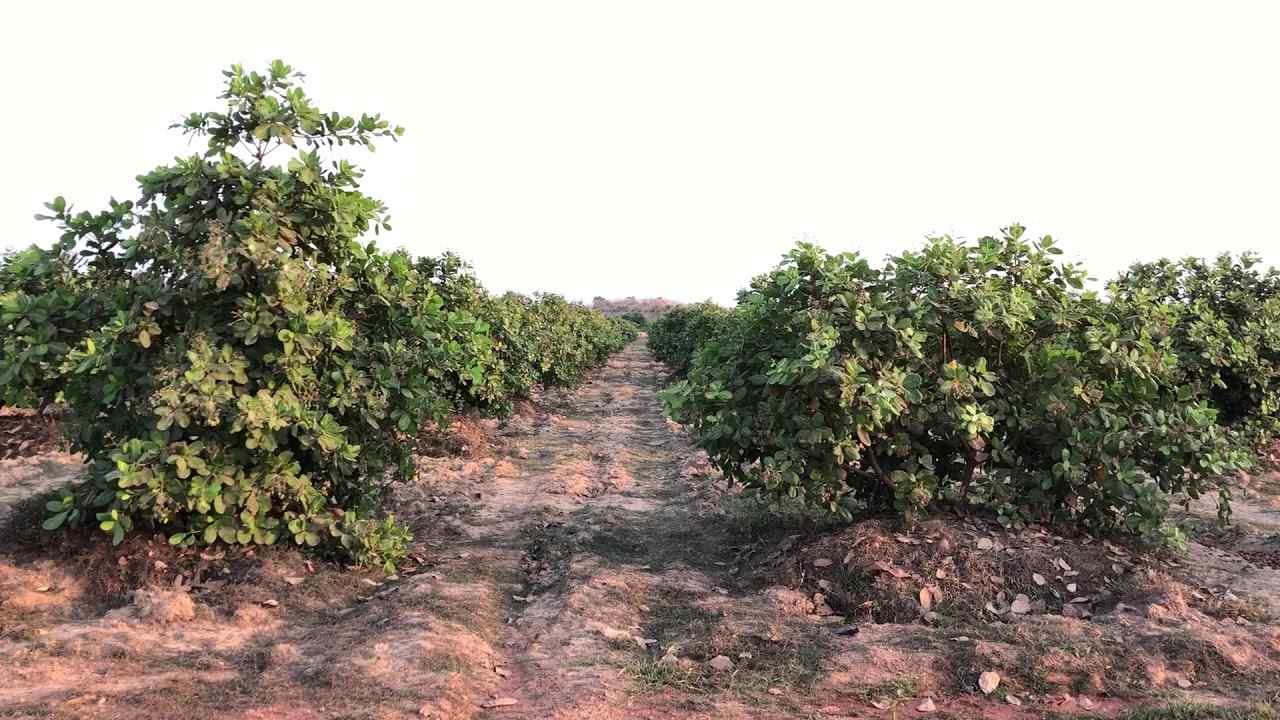
That is why in Binh Phuoc, cashew farmers often wait until the fruits fall naturally before collecting them. While waiting for the cashew apples to fall, farmers usually clear the ground under the trees, remove weeds, and keep the area clean so harvesting becomes easier.
=> Read more:
- Benefits and Uses of Cashew Apples and Products Made from Cashew Apples
- Origin, Characteristics, and Features of Vietnamese Cashew Trees
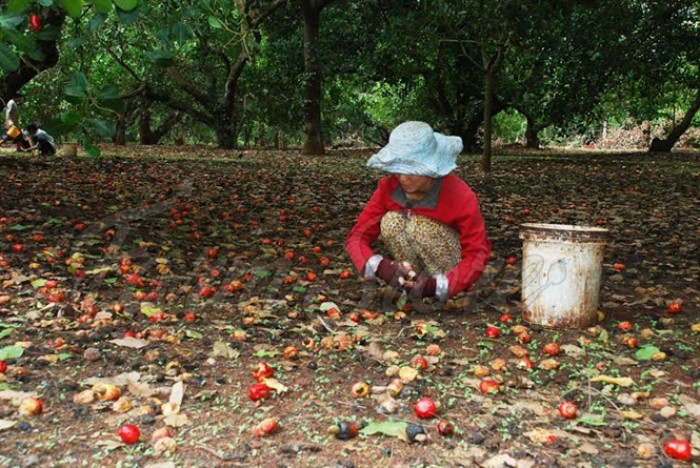
Farmers in Binh Phuoc harvesting nuts from cashew apples – Kimmy Farm Vietnam
Step 2: Separate the Raw Cashew Nut from the Cashew Apple
After the cashew apples fall, farmers use a knife to quickly separate the raw cashew nut from the fruit.
During this step, no fruit flesh should be left attached to the top of the cashew nut. If the cashew apple is not cleanly separated from the nut, the quality of the raw cashew nut may be affected.
=> Read more: What Are Raw Cashew Nuts and Cashew Kernels? How Are They Different?
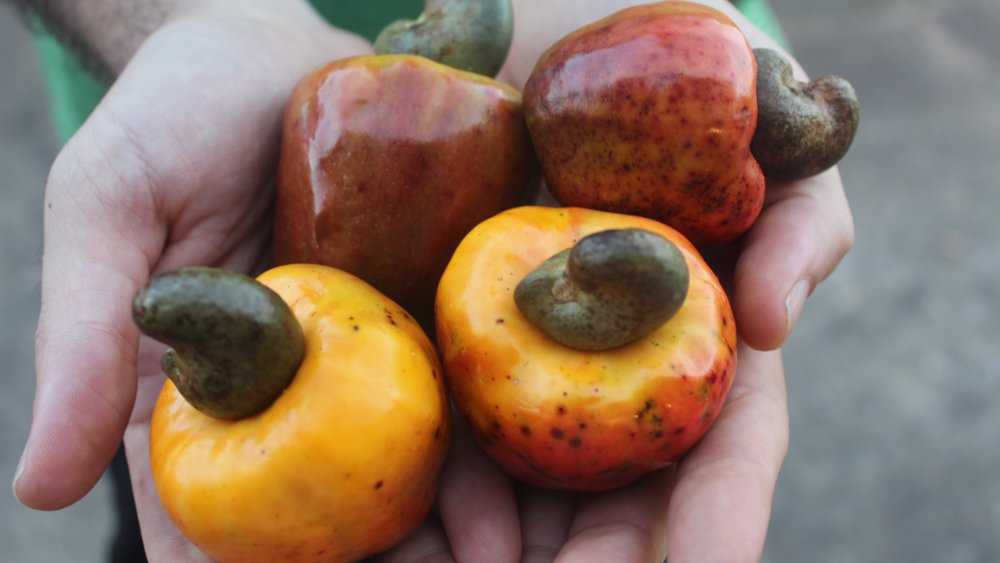
Cashew apples before raw cashew nuts are separated – Kimmy Farm Vietnam
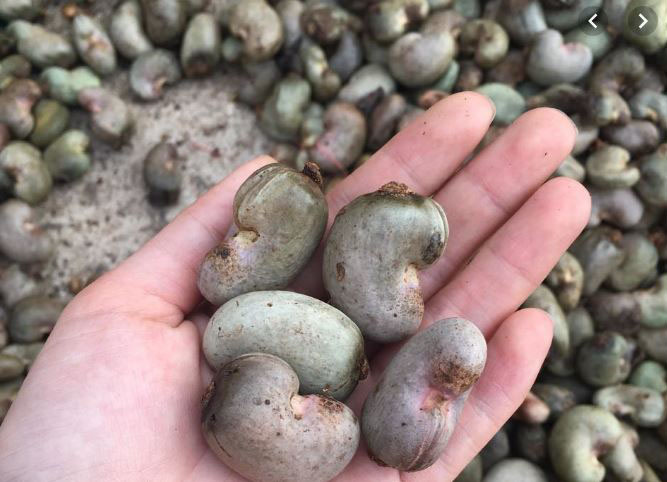
Raw cashew nuts after being separated from cashew apples.
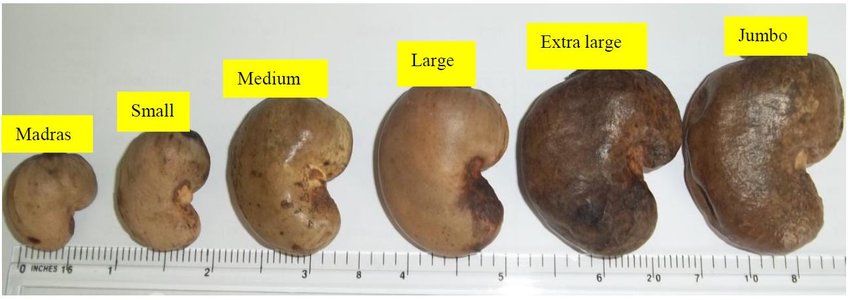
Basic size classification of raw cashew nuts
Step 3: Sun-Dry the Raw Cashew Nuts
After the raw cashew nuts are separated, farmers usually dry them under direct sunlight for at least 2 days. In practice, raw cashew nuts are spread out in the sun and turned regularly until the moisture level inside the shell reaches around 8–10%, which is considered ideal.
In Binh Phuoc, harvested cashew nuts are often dried on concrete yards, drying mats, or tarpaulins for about 5 to 6 days. To measure moisture accurately, producers do not rely only on sight or touch. They use moisture and temperature meters for more reliable results.
During production and storage, cashew nuts must always be kept in dry places.
=> Read more: When Is the Cashew Harvest Season in Binh Phuoc?
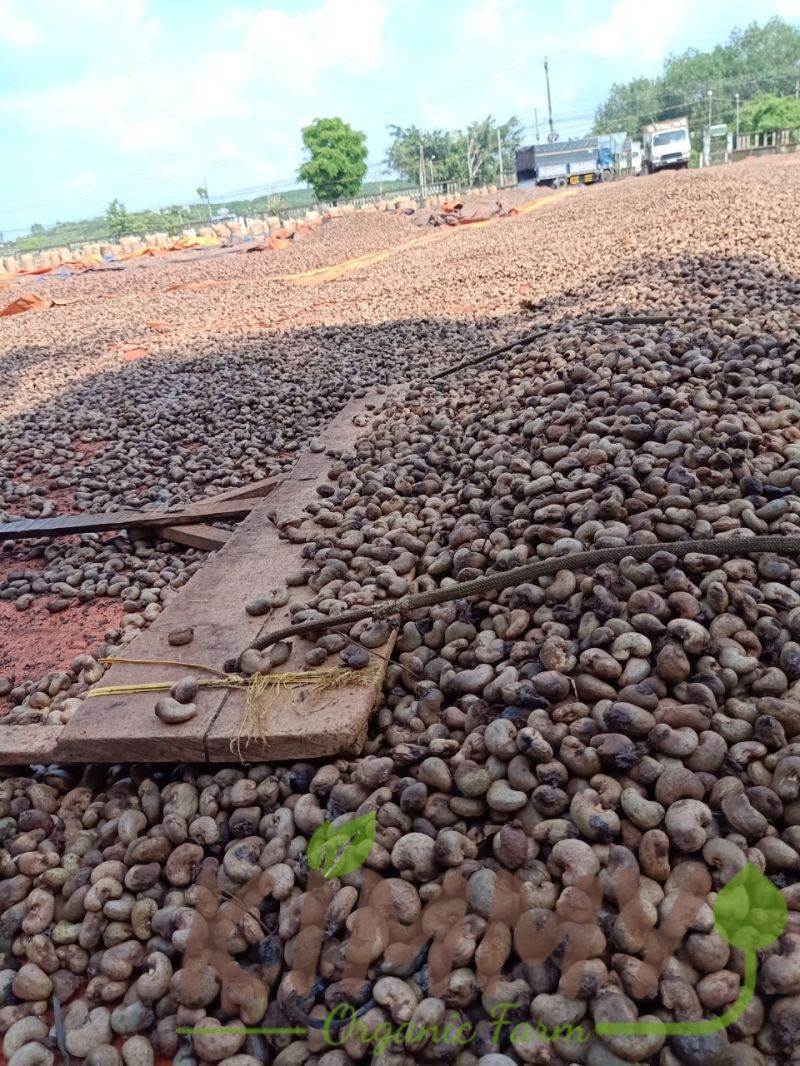
Raw cashew drying yard, where raw cashew nuts are turned regularly until the moisture level inside the hard shell reaches around 8–10%
Step 4: Store Raw Cashew Nuts and Prepare for Transportation
After harvest, raw cashew nuts are dried until they reach a moisture level of around 8–10%. They are then screened and sorted by size. During this process, impurities such as soil, stones, and other foreign materials are removed to increase the value of the raw cashew nuts.
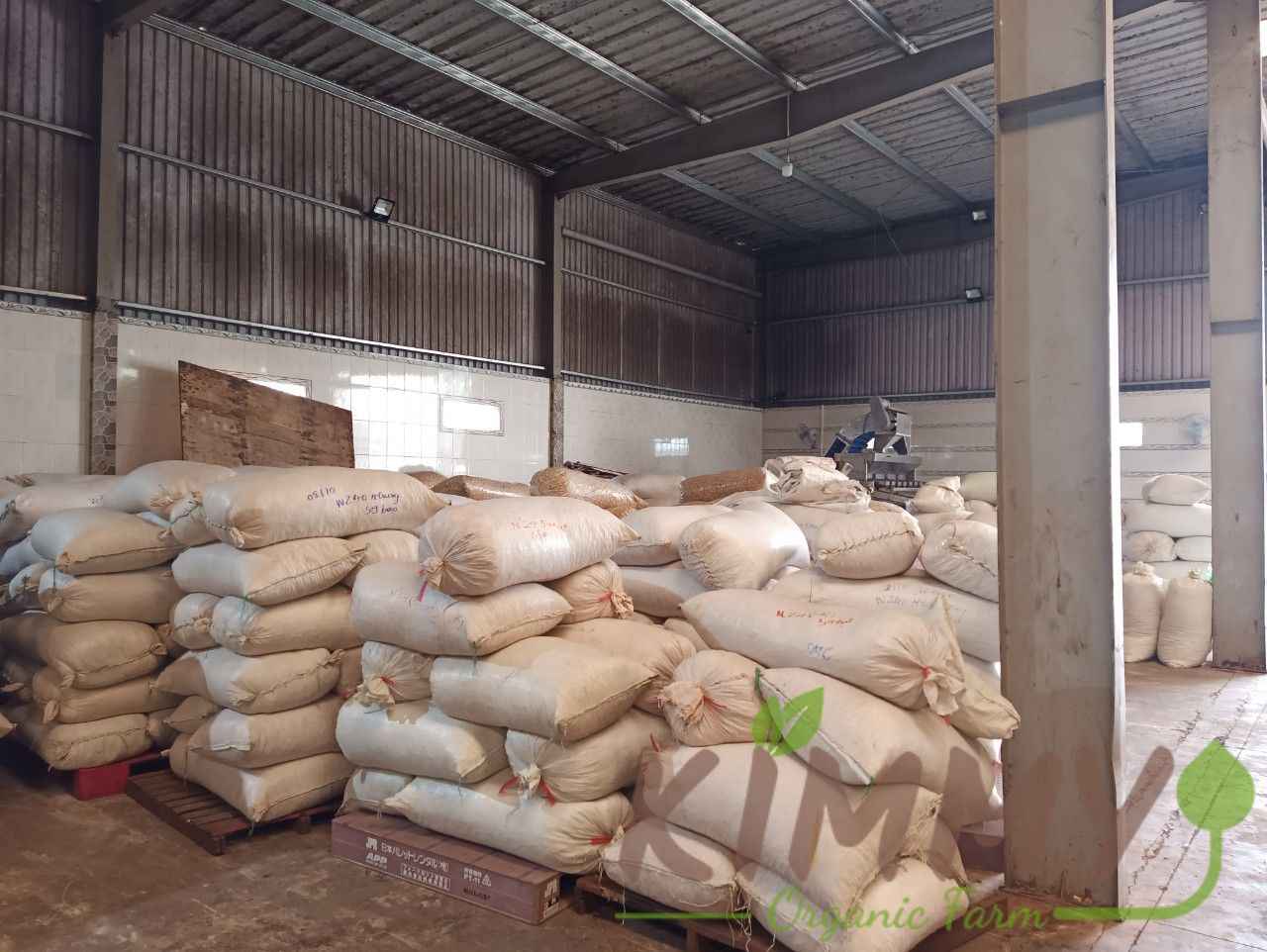
After sorting, raw cashew nuts are packed in burlap or jute bags and stored by batch. Dried raw cashew nuts must be kept in a well-ventilated place away from direct sunlight. They should not be stored in plastic bags because this can harm the quality of the nuts.
In raw cashew warehouses, the bags are usually stacked neatly on numbered wooden pallets and kept away from the walls. After that, the raw cashew nuts are transported to cashew processing factories, where they are turned into commercial cashew kernels.
=> Read more: Methods for Checking the Moisture Level of Raw Cashew Nuts
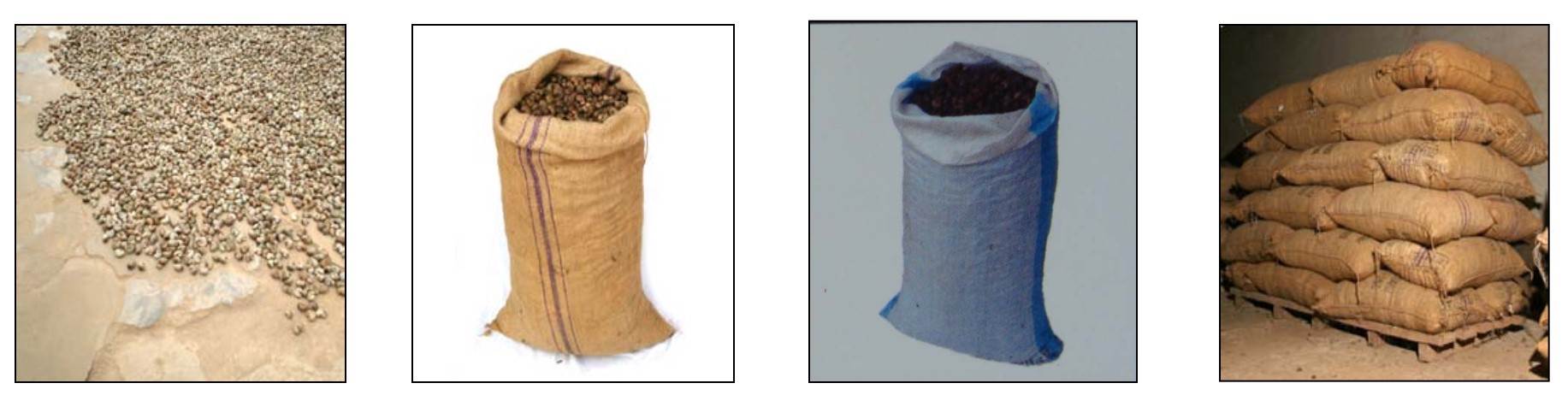
After sorting, raw cashew nuts are packed in burlap or jute bags and stored by batch. Dried raw cashew nuts must be kept in a well-ventilated place away from direct sunlight.
Step 5: Steam the Raw Cashew Nuts
After dried raw cashew nuts are transported to the cashew processing factory, they are usually steamed before shelling. This helps soften the hard shell and makes it easier to remove.
Steaming is widely used in medium-scale cashew processing factories with the support of boilers. Raw cashew nuts can be steamed by either an indirect or direct method. The indirect method steams cashews in a separate chamber, while the direct method places cashews in the same area as boiling water.
The steaming process softens the shell, allowing workers or machines to remove it more easily with less effort.
The basic steaming process for raw cashew nuts usually works as follows:
- Raw cashew nuts are usually steamed in a boiler for 30–45 minutes.
- The water temperature used for steaming raw cashew nuts should be around 100°C.
- After steaming, the cashews are removed from the boiler and placed outdoors.
- They are left outside for around 12 hours to cool down and make shell removal easier.
- Boilers come in different capacities depending on the factory’s production needs.
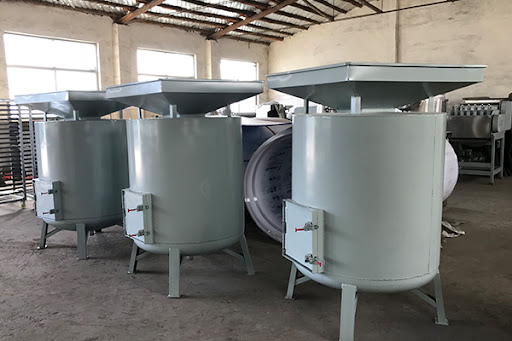
Steaming raw cashew nuts with a boiler – The steaming process softens the shell, making it easier to remove with less effort.
Step 6: Cut and Remove the Hard Shell
Raw cashew nuts are moved to the factory for the shell-cutting process. This step removes the hard outer shell and exposes the kernel inside.
After steaming, the hard shell becomes softer. Skilled workers then use special cutting tools to remove the outer shell and take out the cashew kernel inside. This is one of the most difficult stages because workers must separate the shell without breaking the kernel.
In the past, cashew shells were often treated as waste. Today, they can be reused to create useful products such as cashew nut shell liquid, fuel, or other industrial materials.
=> Read more:
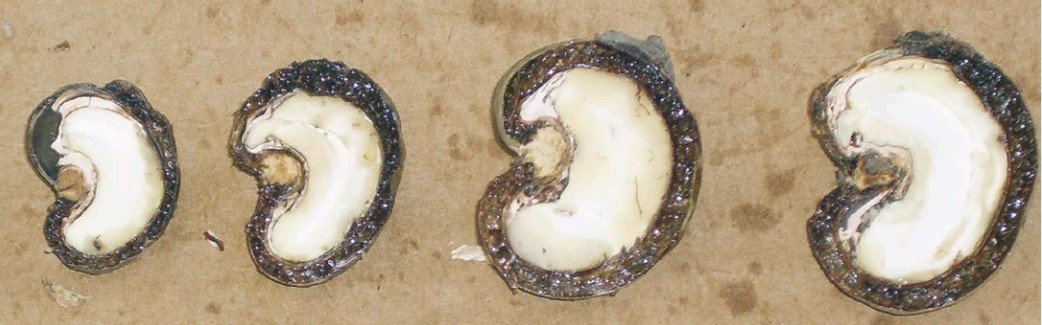
Raw cashew nuts are moved to the factory for shell cutting and cashew testa removal.
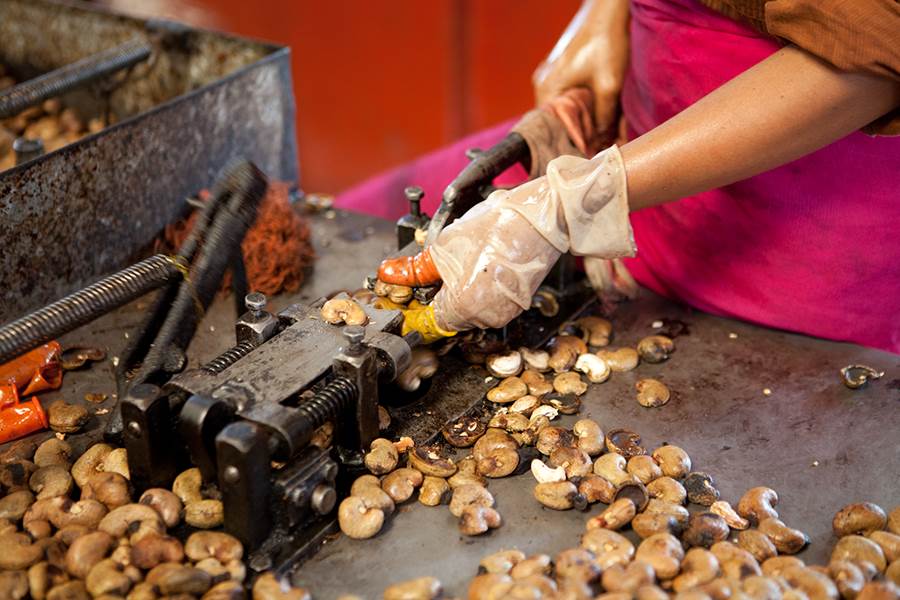
Shell cutting is a difficult stage that requires skilled workers to remove the shell without breaking the cashew kernel inside.
Step 7: Dry the Cashew Kernels
To extend the shelf life of cashew kernels, the kernels are dried after shelling. This can be done by sun drying or by using drying machines.
For export standards, the moisture level of cashew kernels is usually reduced to around 3–4%. This helps the kernels last longer and also makes it easier to remove the cashew testa.
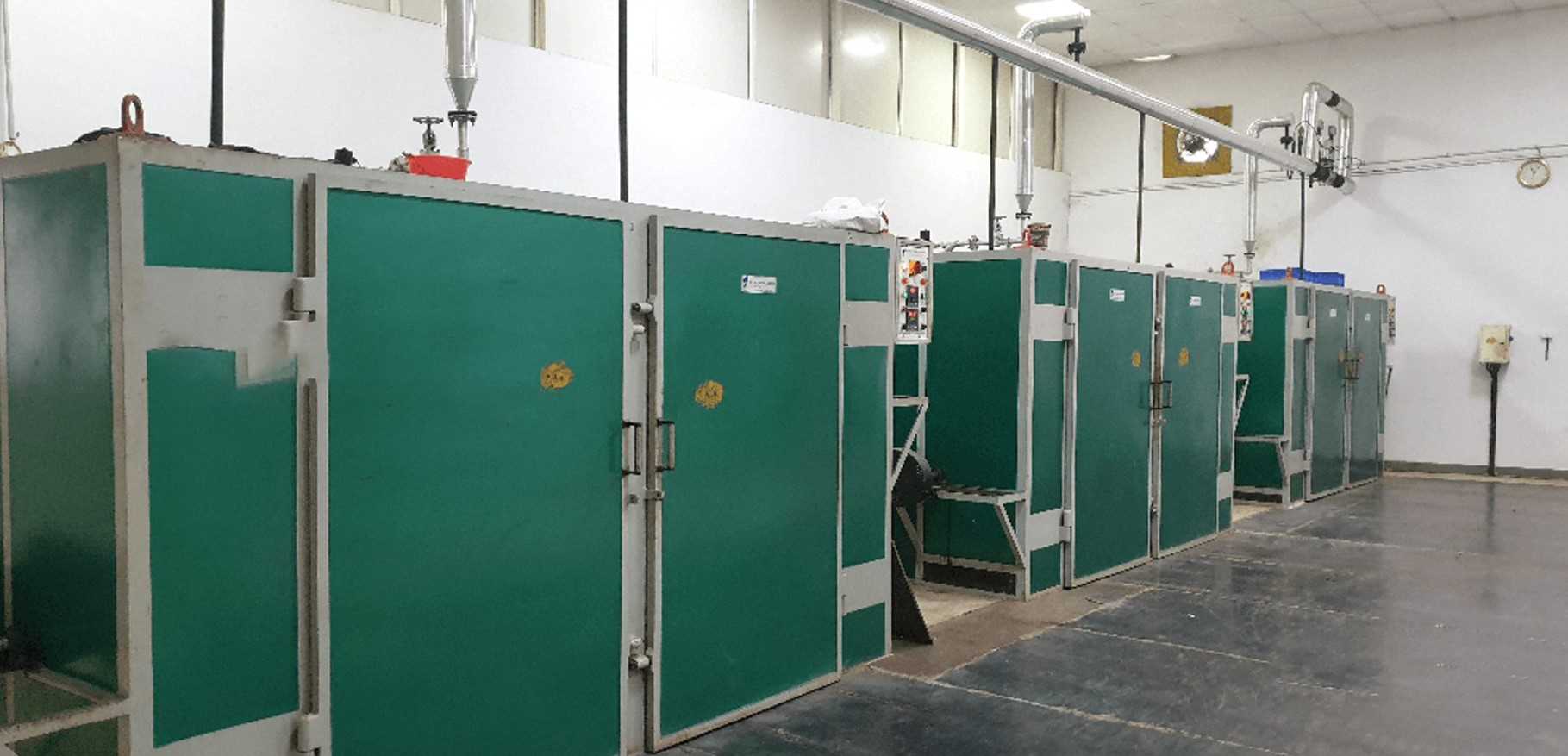
A moisture level of 3–4% helps cashew kernels meet export standards, last longer, and makes testa removal easier.
Step 8: Remove the Cashew Testa
The testa is the thin skin covering the inside of the cashew kernel. It must be removed to produce clean white cashew kernels.
After drying, the kernels are cooled outdoors for around 12 hours. This cooling period helps the peeling process become easier. Each kernel is then peeled to remove the testa and produce clean white kernels. After peeling, the kernels are sent to the grading department.
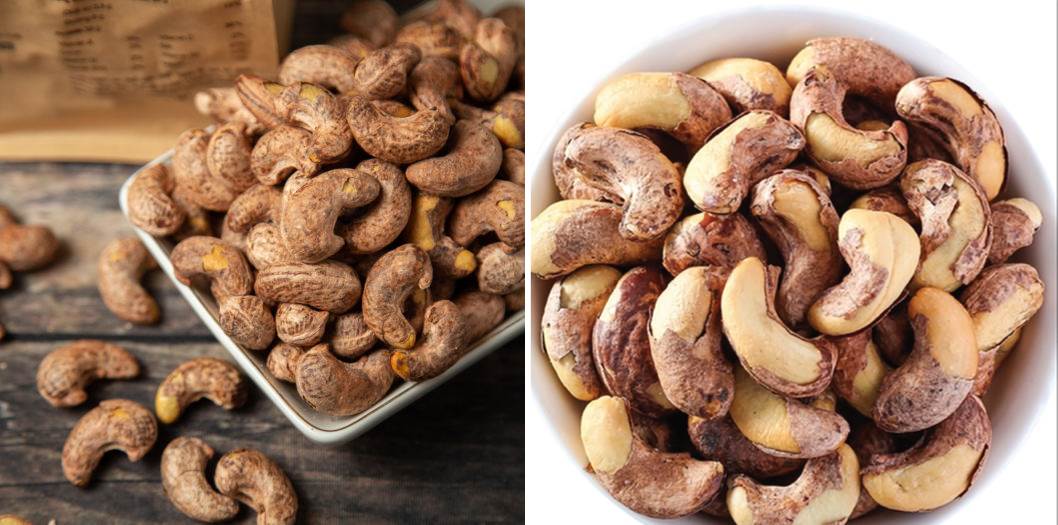
Cashew kernels before the testa is removed

Cashew testa peeling machine – The thin inner skin must be removed to produce clean cashew kernels.
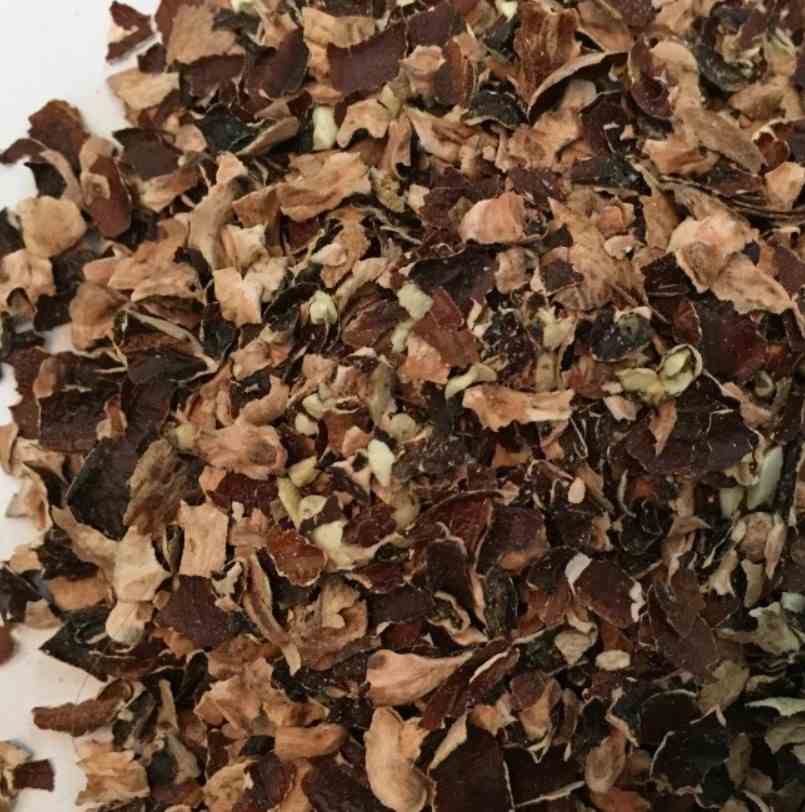
Cashew testa after being removed from the kernels
Step 9: Color Sorting and Quality Inspection
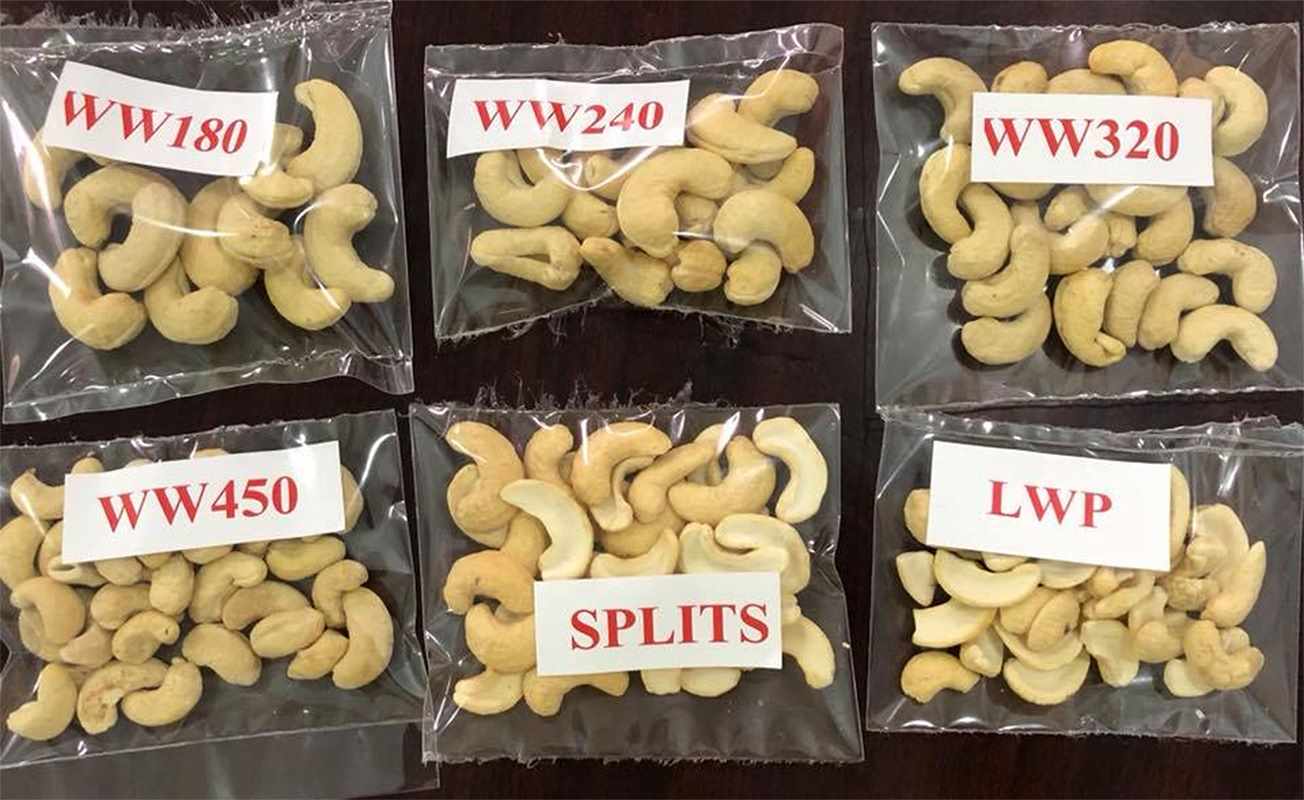
The grading process is designed to classify white cashew kernels into different grades. Cashew kernels are sorted by size, color, texture, and overall appearance.
Cashew grading is usually based on international and national standards such as AFI, CEPCI, and TCVN 4850:2010.
=> Read more: Cashew Types, Standards, and Cashew Grading Methods
Step 10: Metal Detection
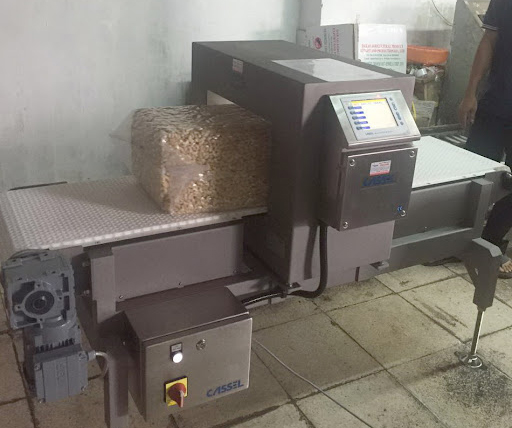
Before packaging, cashew kernels must pass through a metal detector to remove metal contaminants and improve food safety.
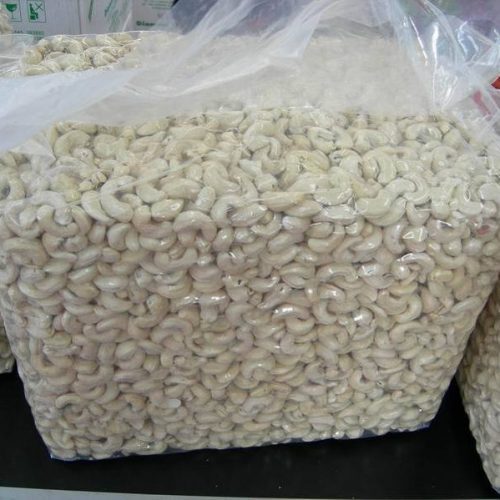
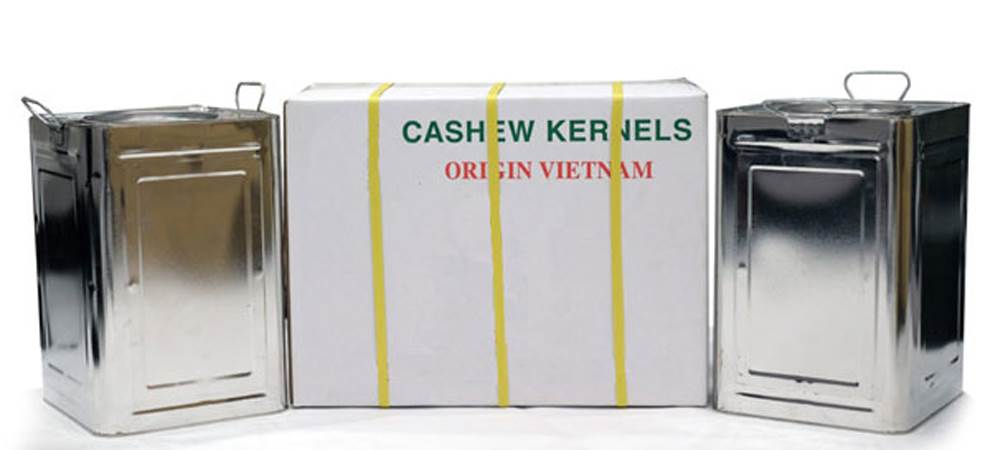
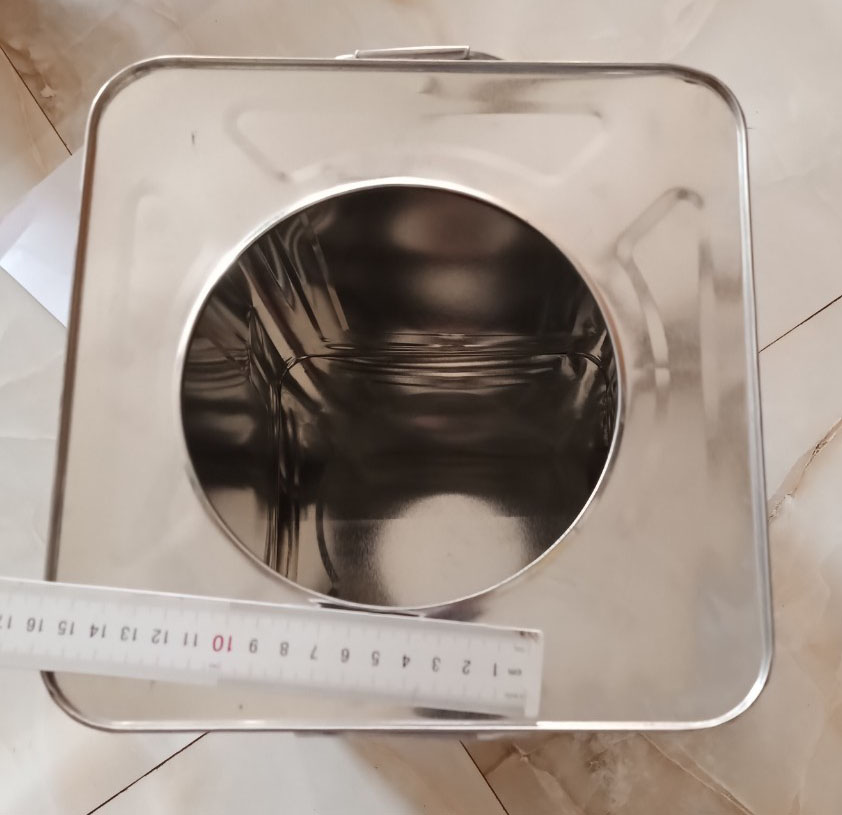
Cashew kernels may then be packed in 22.68 kg vacuum pouches, 11.34 kg tins, or other packaging formats depending on the target market and customer requirements.
Step 11: Packaging
The packaging used for cashew kernels must be strong enough to protect the product from outside pressure, moisture, and damage during transport.
Cashew packaging must be properly sized so the kernels are held securely but not pressed too tightly. Packaging size should also be compatible with standard pallets and shipping containers.
All materials used inside the package must be clean and food-safe. Cashew kernels must be packed in sealed packaging. Materials such as paper labels or printed specifications may be used, as long as the ink, glue, and labeling materials are non-toxic and safe for food packaging.
| Type of Packaging | In 20′ Full Load Containers |
| In 2 x 10 kg vacuum tins in cartons | 700 cartons |
| In 2 x 25 lbs (11.34 kg) vacuum tins in cartons | 700 cartons |
| In 1 x 50 lbs (22.68 kg) vacuum flexi pouch in carton | 700 cartons |
| In 2 x 25 lbs (11.34 kg) vacuum flexi pouches in cartons | 700 cartons |
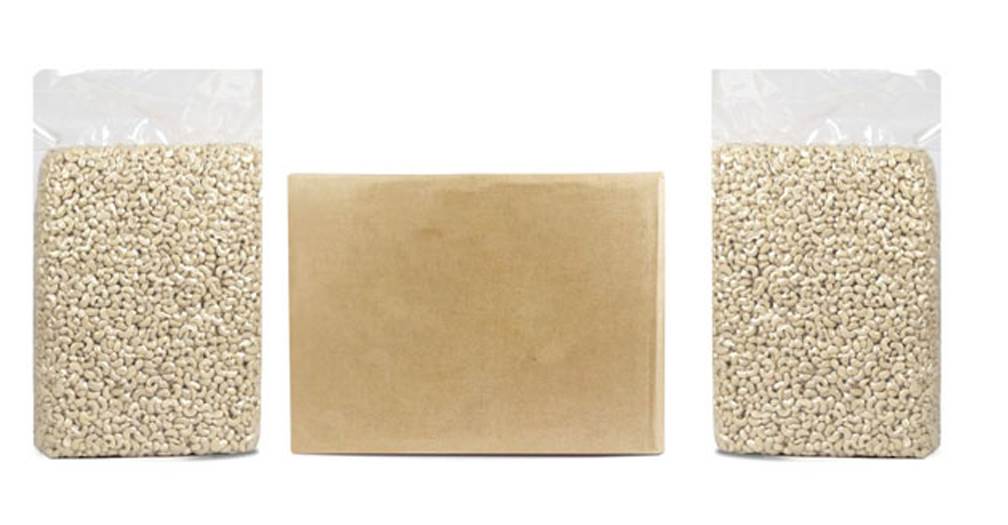
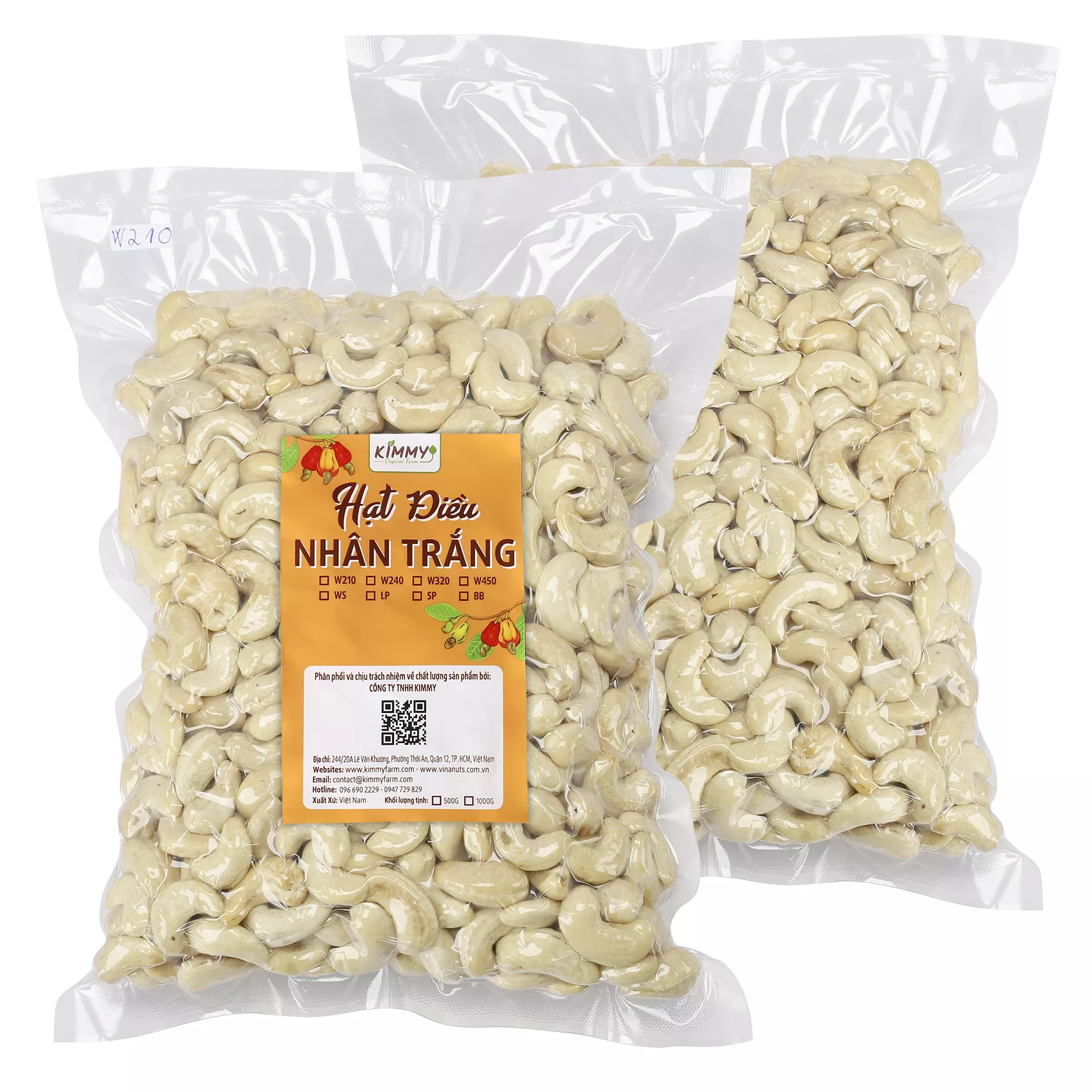
Cashew kernels in vacuum bags, with two bags packed in one carton
Step 12: Fumigation
Because cashew kernels are food products, they must meet strict food safety standards. Fumigation is the process of using approved fumigants to eliminate pests such as insects or rodents.
The main purpose of fumigation is to clean, disinfect, and reduce possible sources of contamination before shipment. In modern cashew production, factories often use cleaning and disinfection systems to reduce bacteria, microorganisms, and other potential food safety risks.

How to Store Cashew Nuts Properly
For Raw Cashew Nuts
After harvest, raw cashew nuts should be sun-dried for about 5–6 days, or until the moisture level reaches around 8–10%. To check the moisture level accurately, producers use a moisture and temperature meter instead of judging by sight or touch.
Raw cashew nuts should be stored in a dry place, away from direct sunlight. A cool storage temperature of around 10°C to 20°C is suitable for maintaining quality.
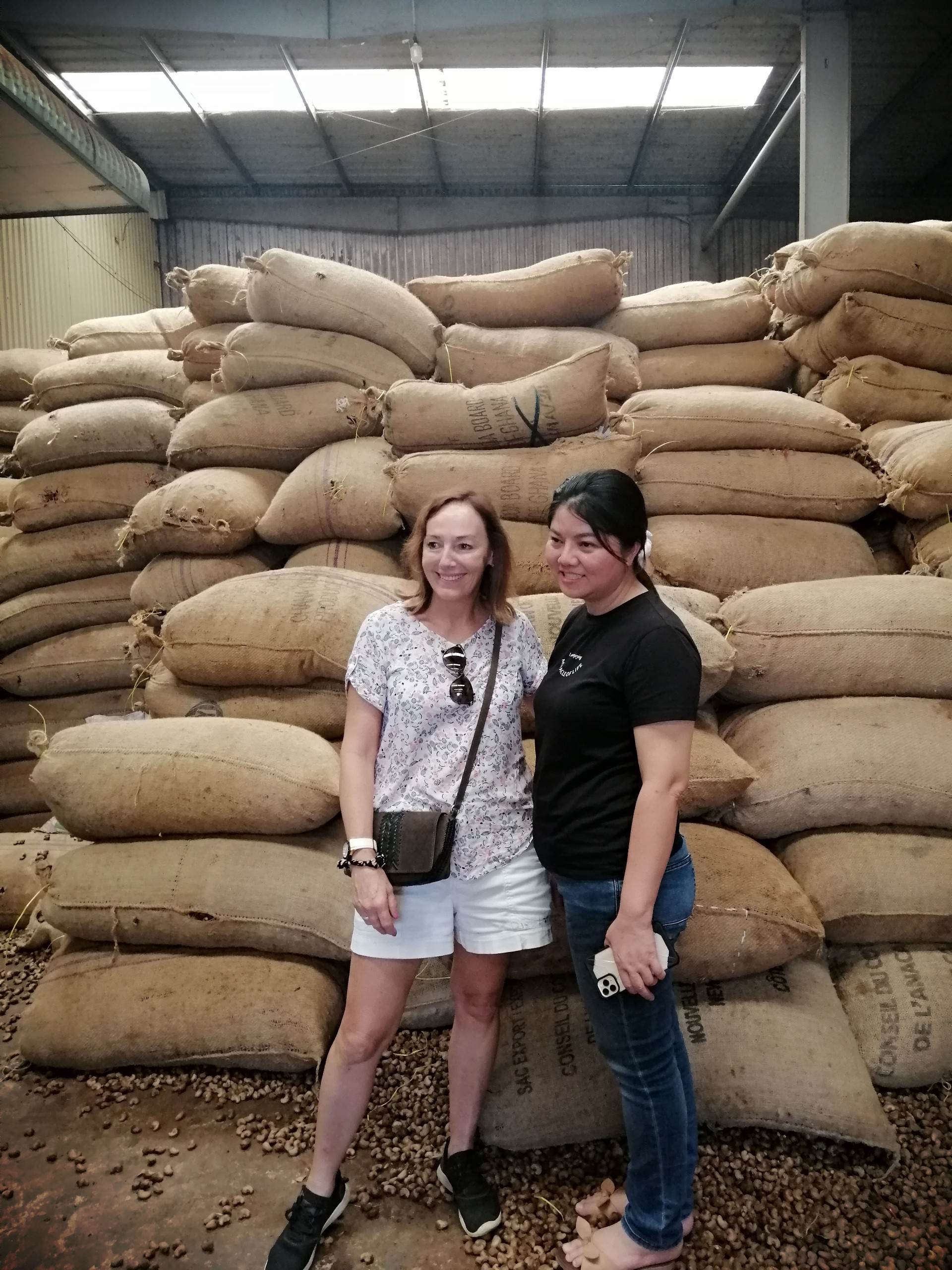
Raw cashew storage warehouse at Kimmy Farm – Photo with company customers
For Cashew Kernels
To store cashew kernels properly, avoid exposure to high temperatures and keep the moisture level below 5%. Cashew kernels should also be protected from environmental damage such as humidity, heat, pests, and direct sunlight.
Chemical preservatives should not be used because they may affect consumer health. Some fumigation chemicals, such as methyl bromide, have been used in the past, but they may create unwanted odors or quality issues. For this reason, many modern producers avoid using this method in cashew processing.
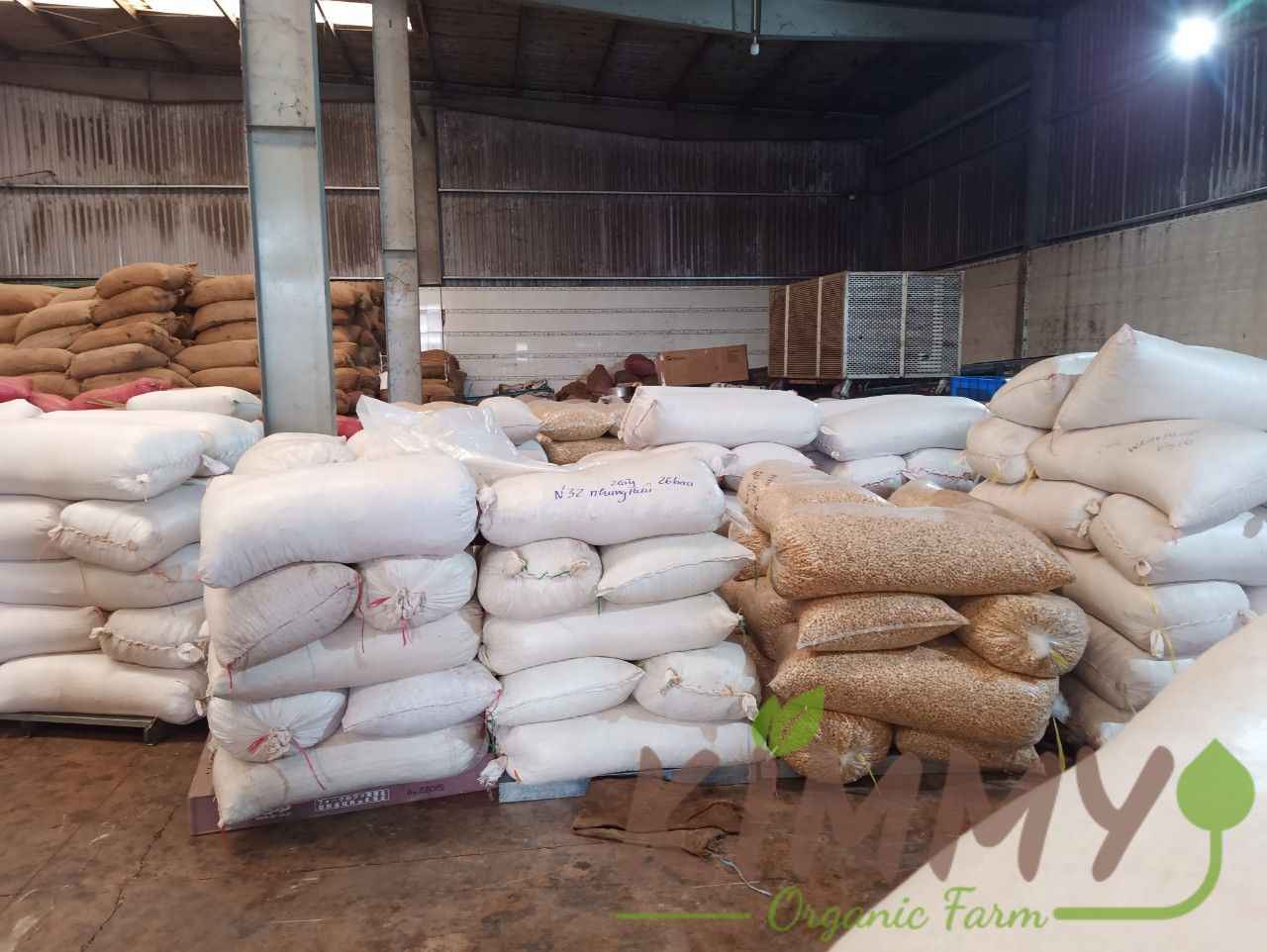
A section of the cashew kernel warehouse at Kimmy Company – Binh Phuoc Cashews, Vietnam
For Salted Roasted Cashews
Salted roasted cashews are processed through several steps, including selection, drying, roasting, and standard packaging. They usually have a shelf life of around 12 months.
To keep salted roasted cashews fresh and tasty during storage, follow these basic tips:
- Keep them away from humid environments.
- Store them in airtight containers or vacuum-sealed bags.
- Keep them away from high heat sources.
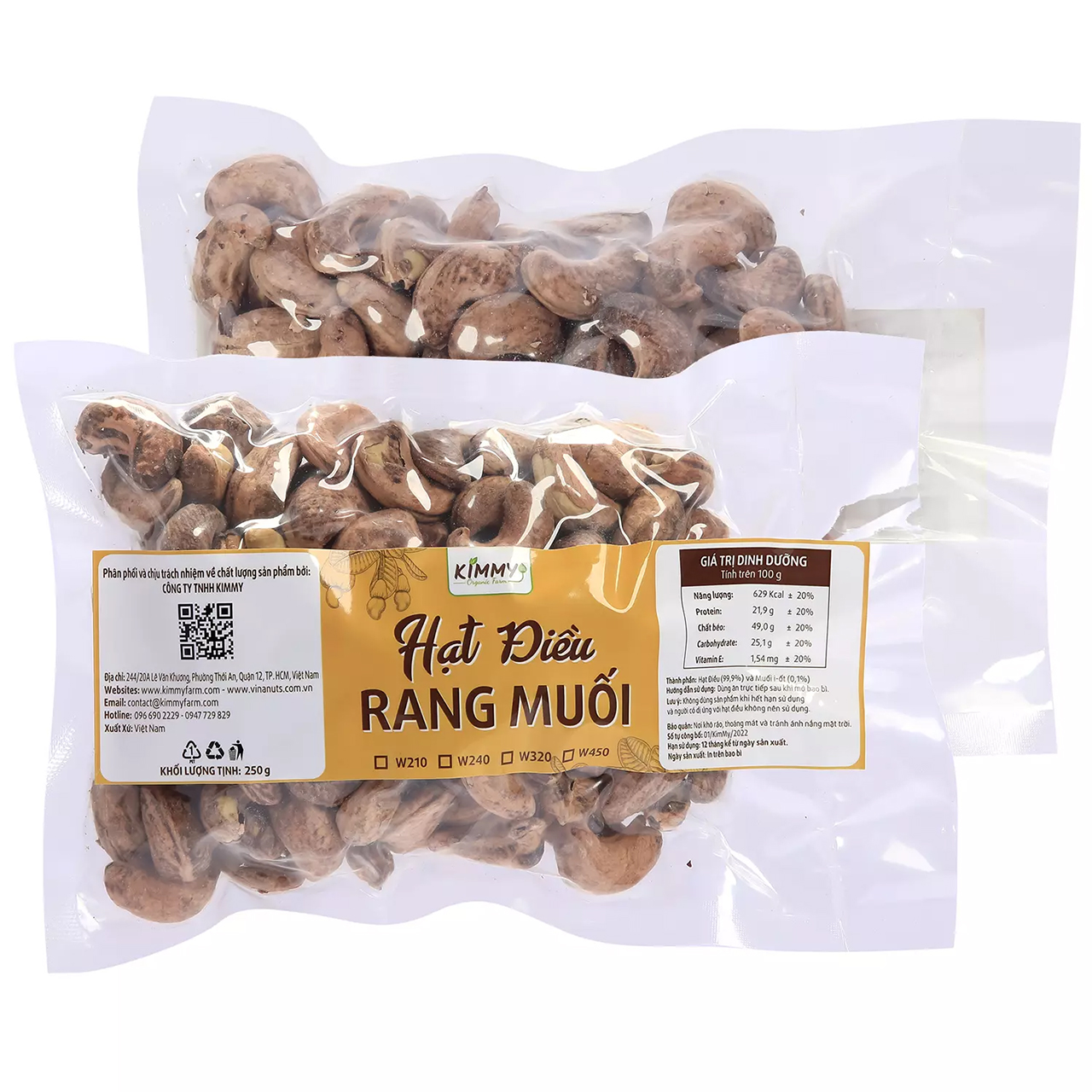
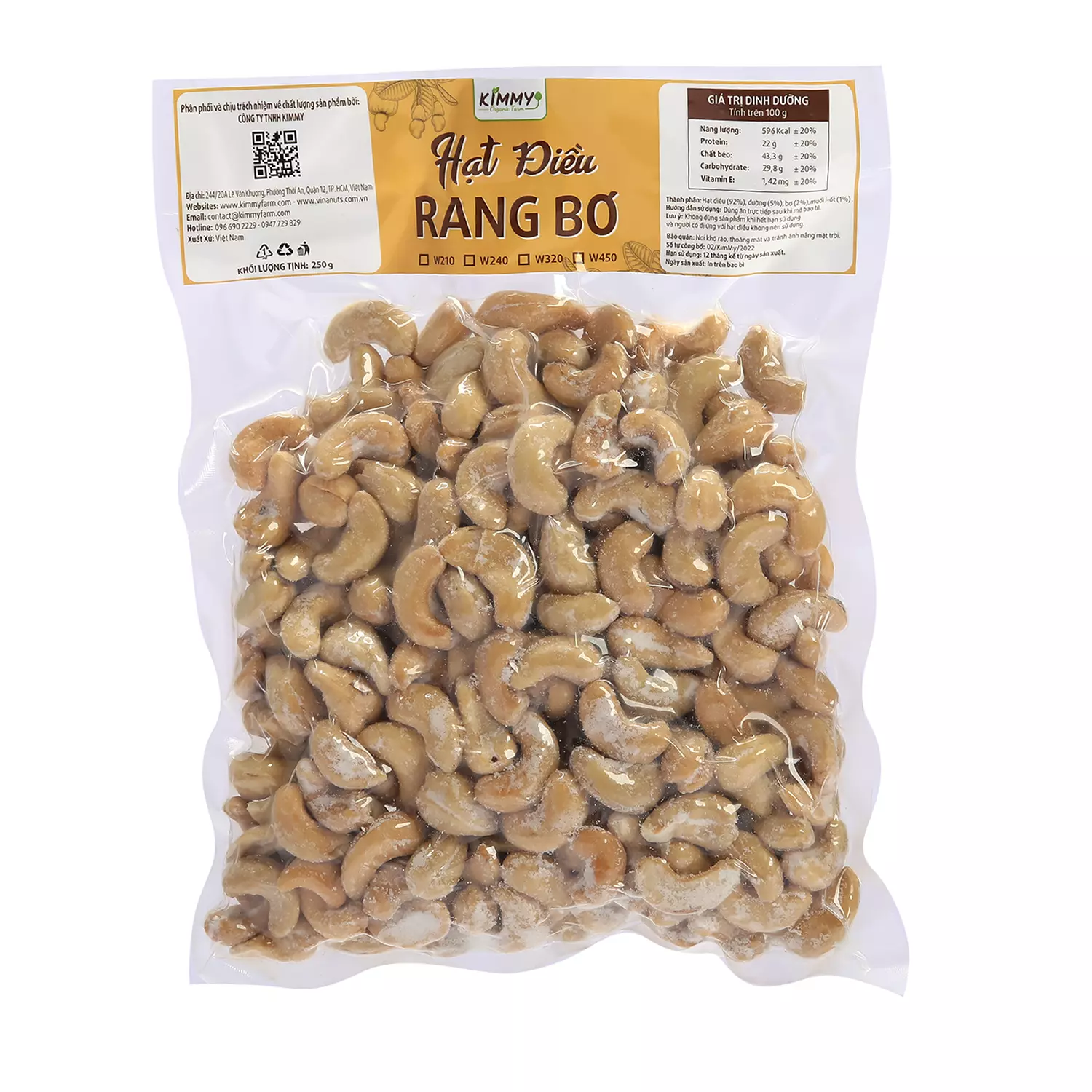
250g salted roasted cashews stored in vacuum bags at Kimmy Farm Vietnam
=> Read more: How to Store Salted Roasted Cashews Properly
Quick Tips to Identify High-Quality Cashew Kernels
Check the Appearance of the Cashew Kernels
- Damage: The fewer damaged kernels, the better the quality.
- Cleanliness: The fewer remaining testa pieces, the better the quality.
- Color: White cashew kernels usually indicate good quality.
- Size: Larger kernels are often considered higher grade.
- Shelf life: A longer remaining shelf life usually means better freshness.
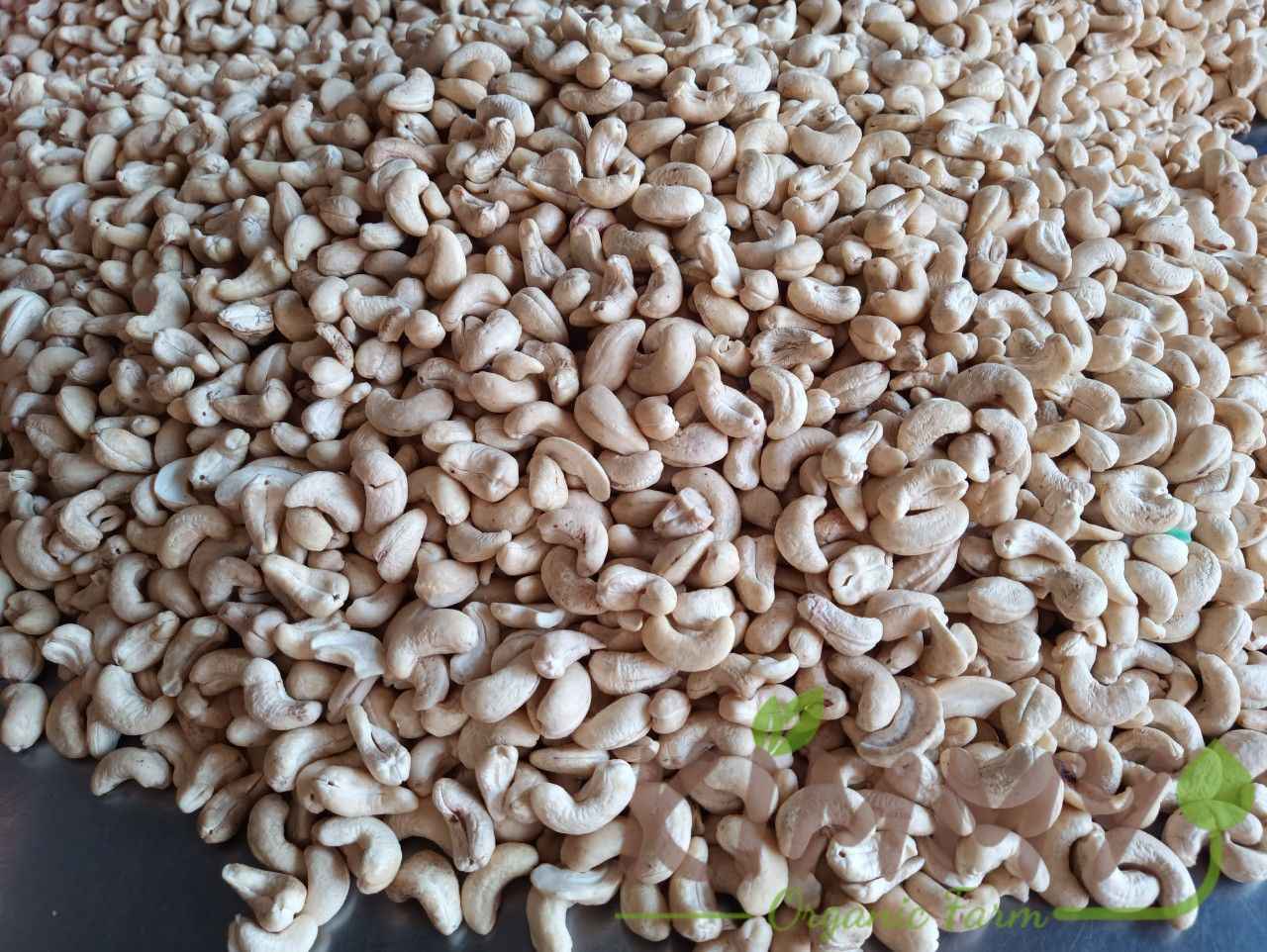
Checking the appearance of cashew kernels helps evaluate their quality.
Check Quality by Tasting Roasted Cashews
- Flavor: rich, nutty, aromatic, and naturally creamy.
- Texture: crispy, dry, pleasant, and free from rancid oil smell.
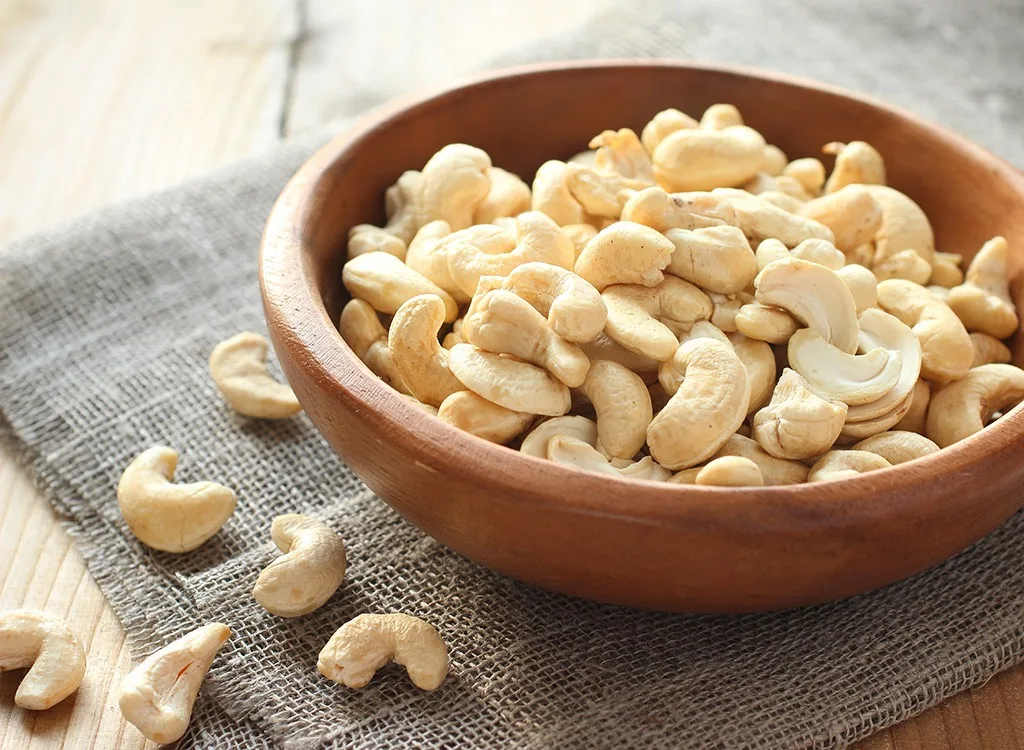
Market Demand for Cashew Kernels
In Vietnam
Cashews as Gifts
In the international market, Vietnamese cashews are highly valued for their quality. Binh Phuoc cashews are especially appreciated by food lovers around the world.
Because of this, using Binh Phuoc cashews as gifts for international partners is both meaningful and elegant. It represents Vietnamese agricultural quality while offering a premium and practical gift.

Cashews as Tet Holiday Gifts
Cashew gift products are trusted by many businesses as gifts for partners and employees during the Vietnamese Lunar New Year. They are popular because of their delicious taste, attractive packaging, and premium image.
The market for cashew gift sets becomes especially active every Tet season, and demand continues to grow year by year.
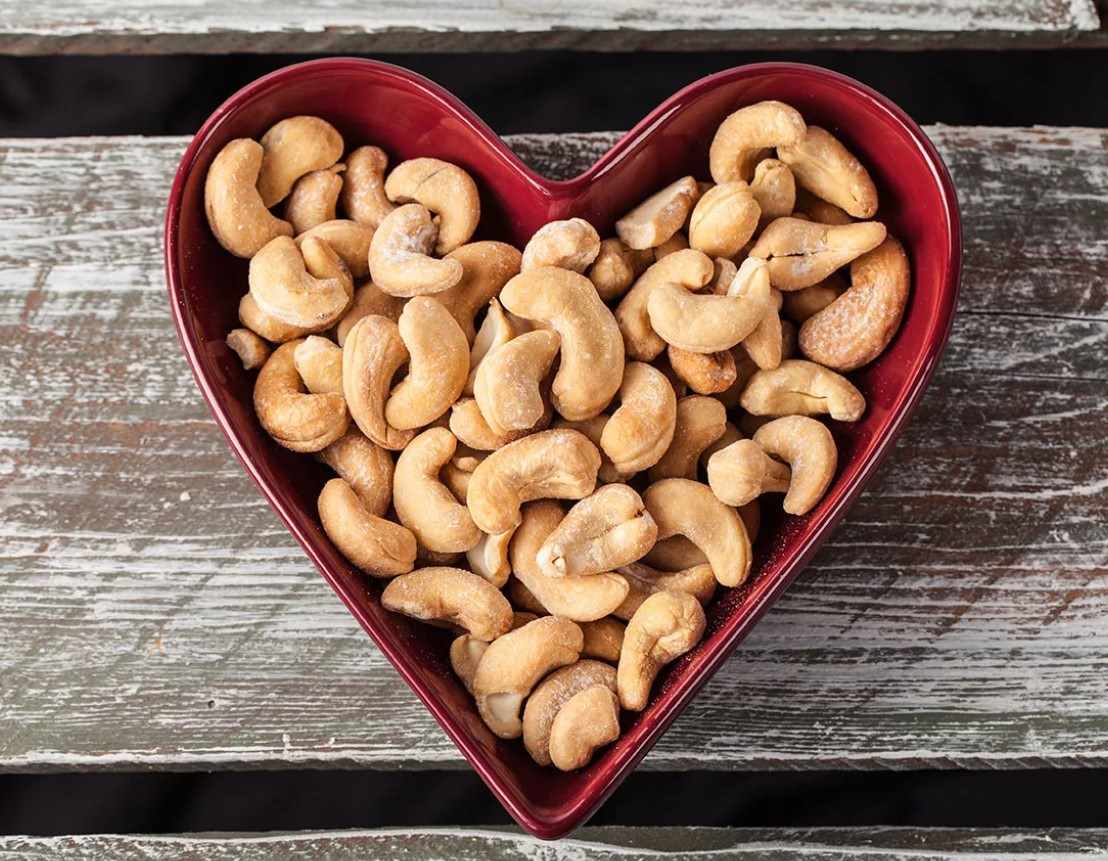
Eating cashews may support heart health.
Nutritious Food
According to the United States Department of Agriculture (USDA), one average serving of roasted cashews, about 28 grams, contains approximately 156 calories, 12 grams of unsaturated fat, 9 grams of carbohydrates, 5 grams of protein, 2 grams of sugar, and 1 gram of fiber.
Vietnamese cashews are a nutrient-rich food. They are energy-dense, flavorful, and widely used in premium food products in many countries. Because of their nutritional value, Binh Phuoc cashew kernels are often used in high-end snacks, health foods, and processed food products.

In International Markets
Export Cashew Kernels
Binh Phuoc export cashew kernels are one of the main commercial products of Vietnam’s cashew industry.
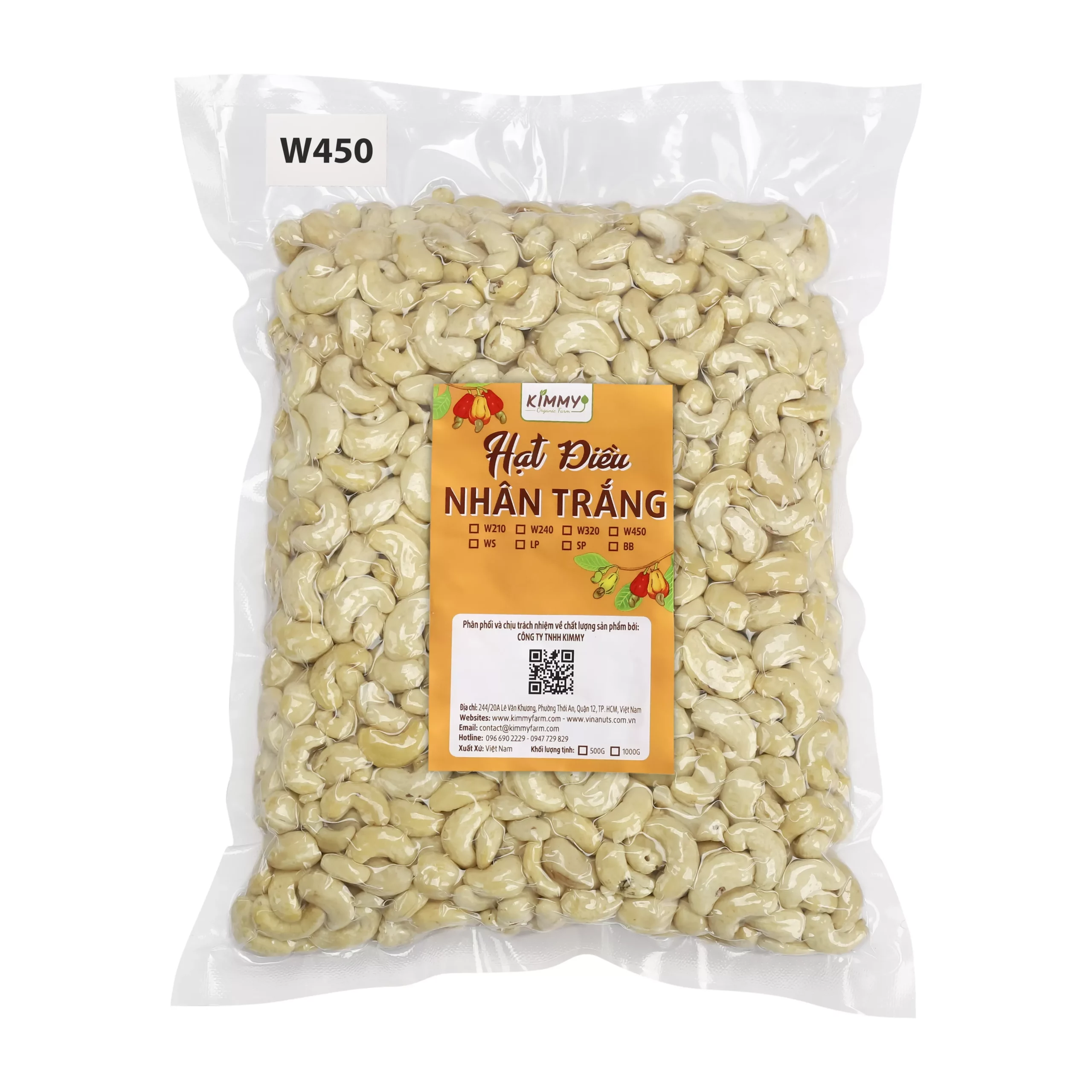
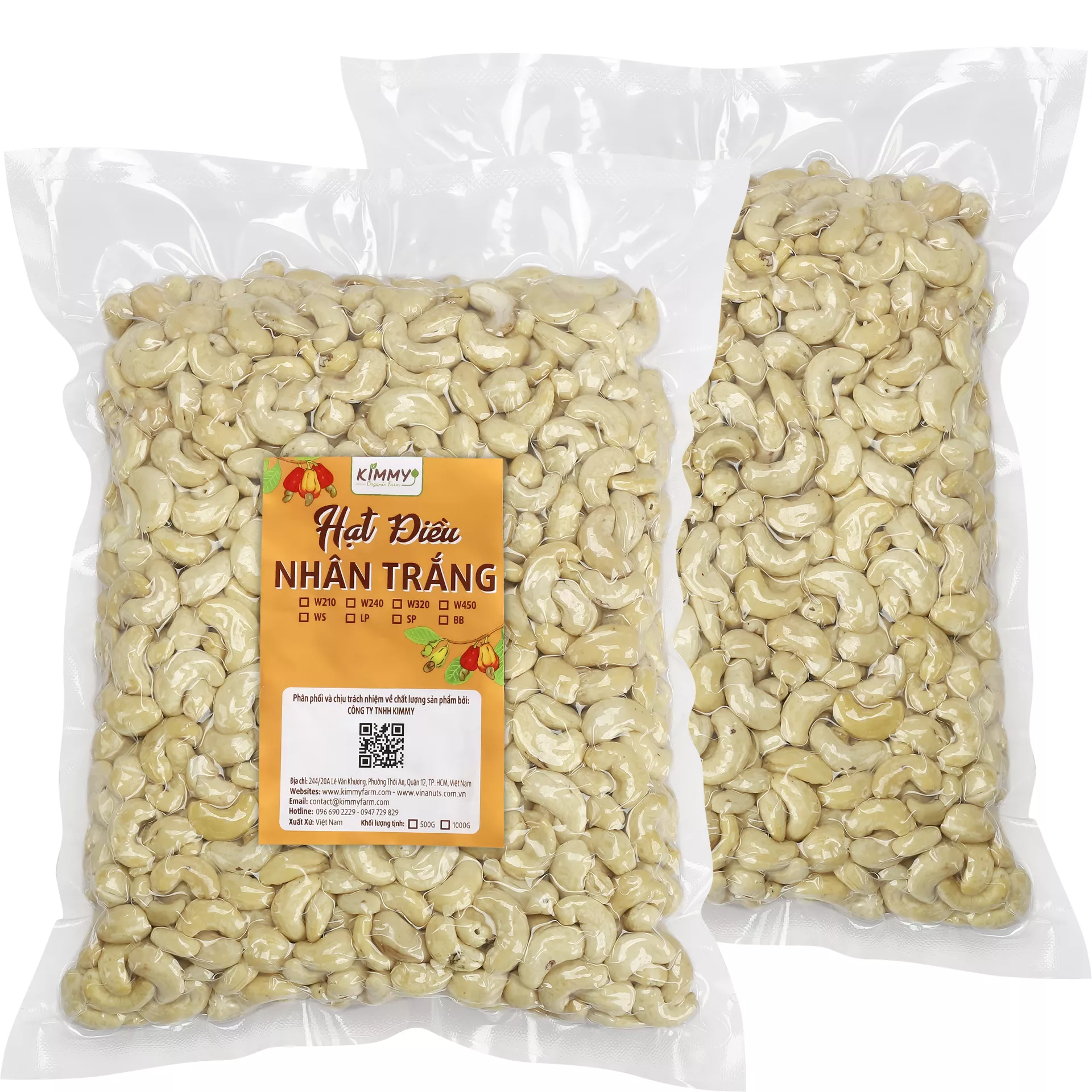
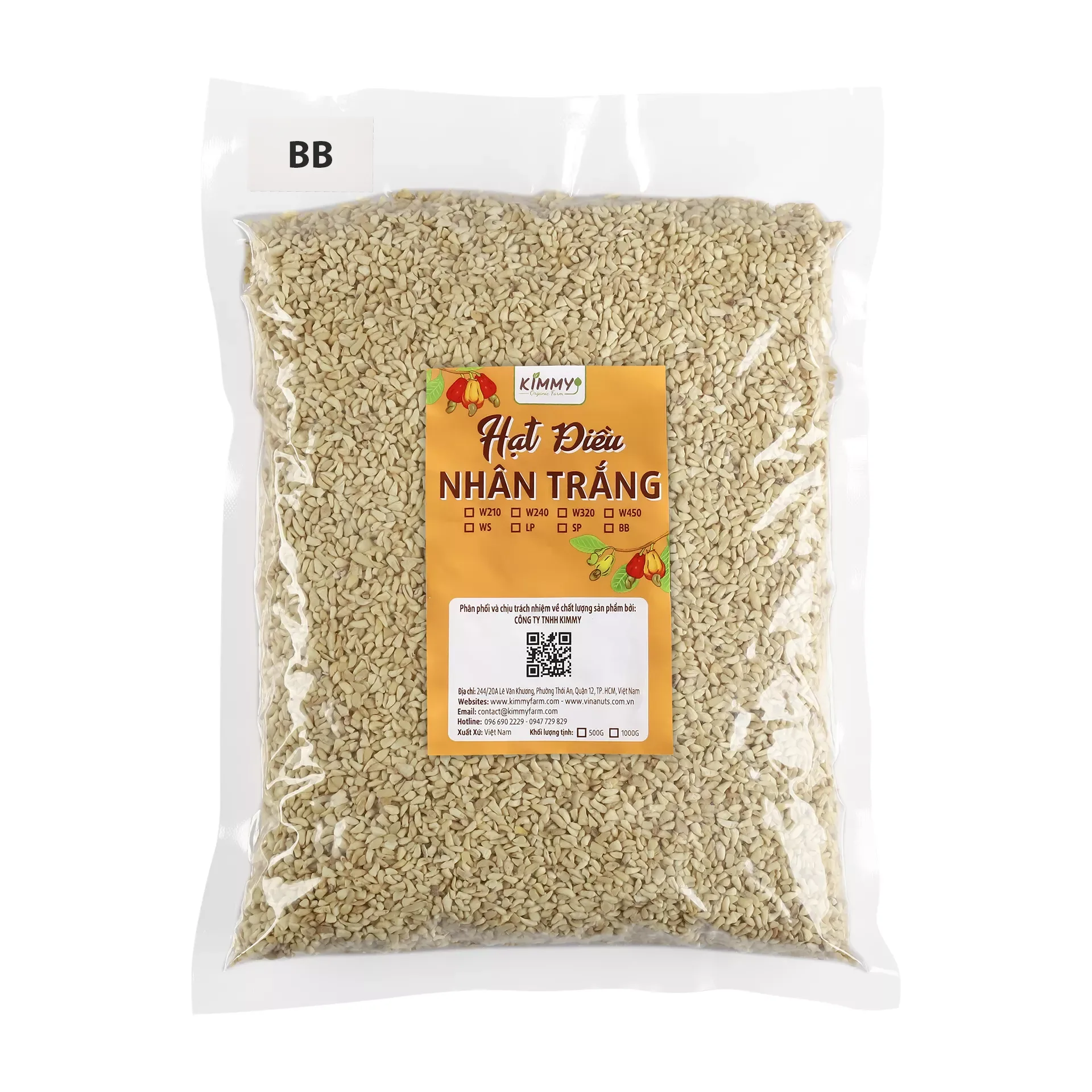
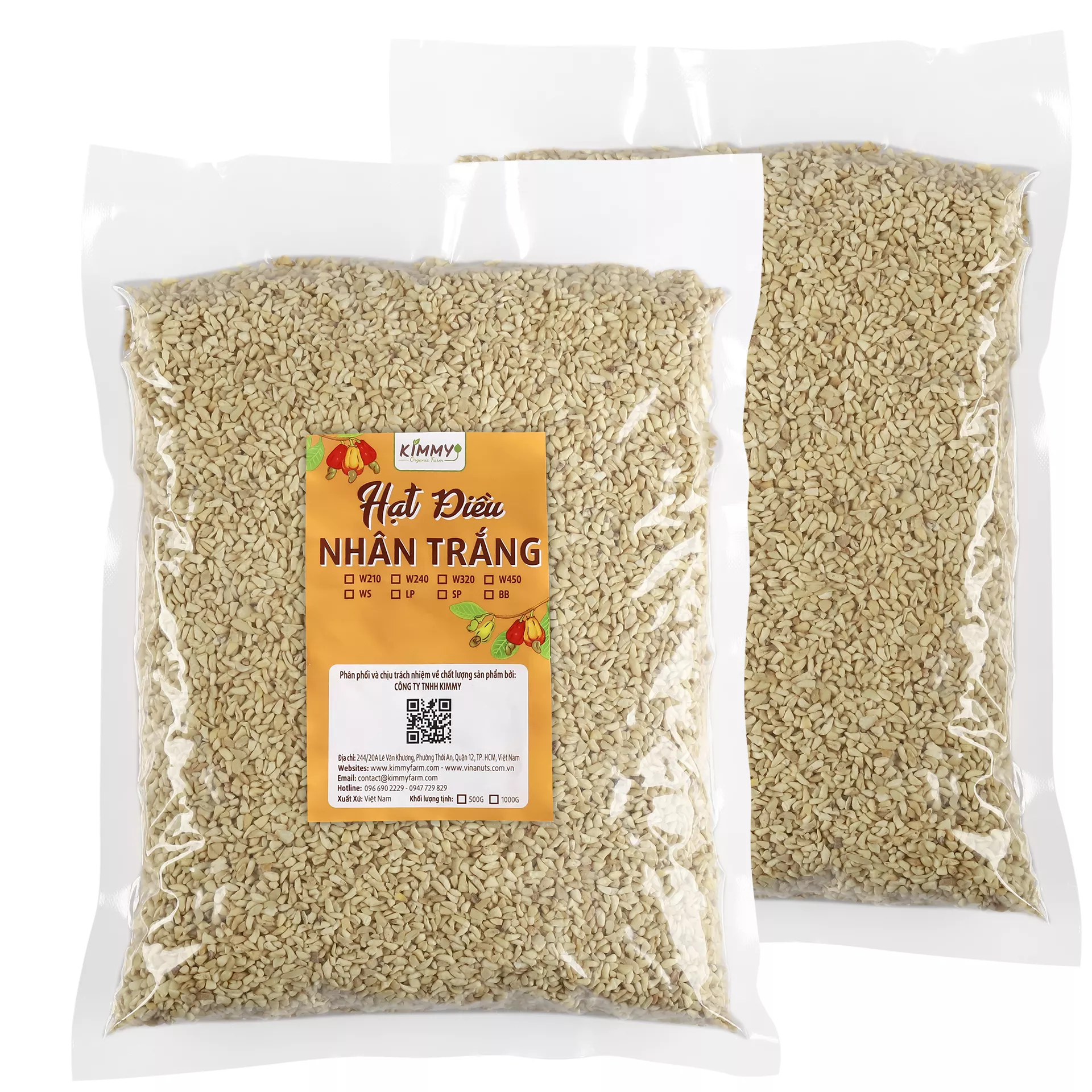
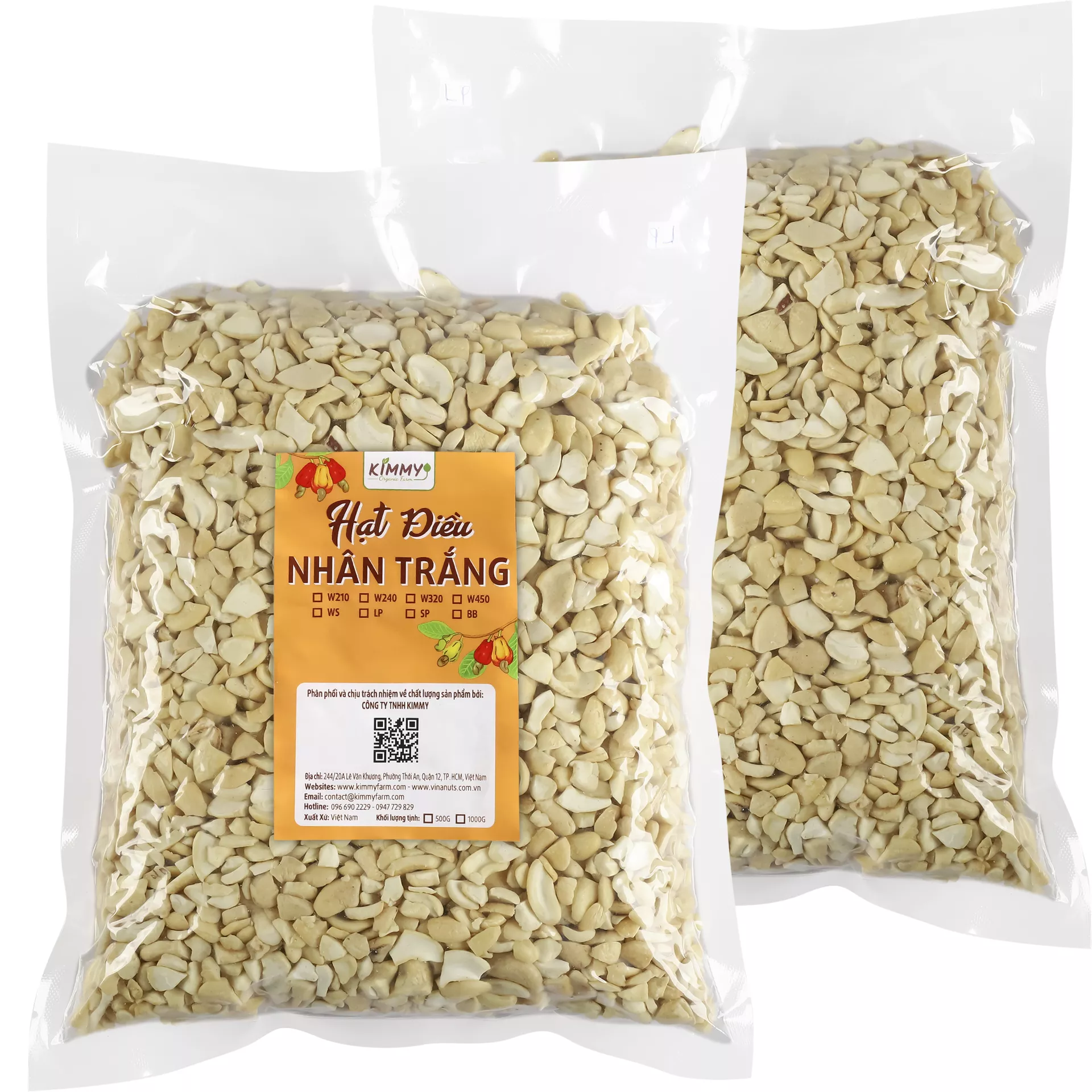
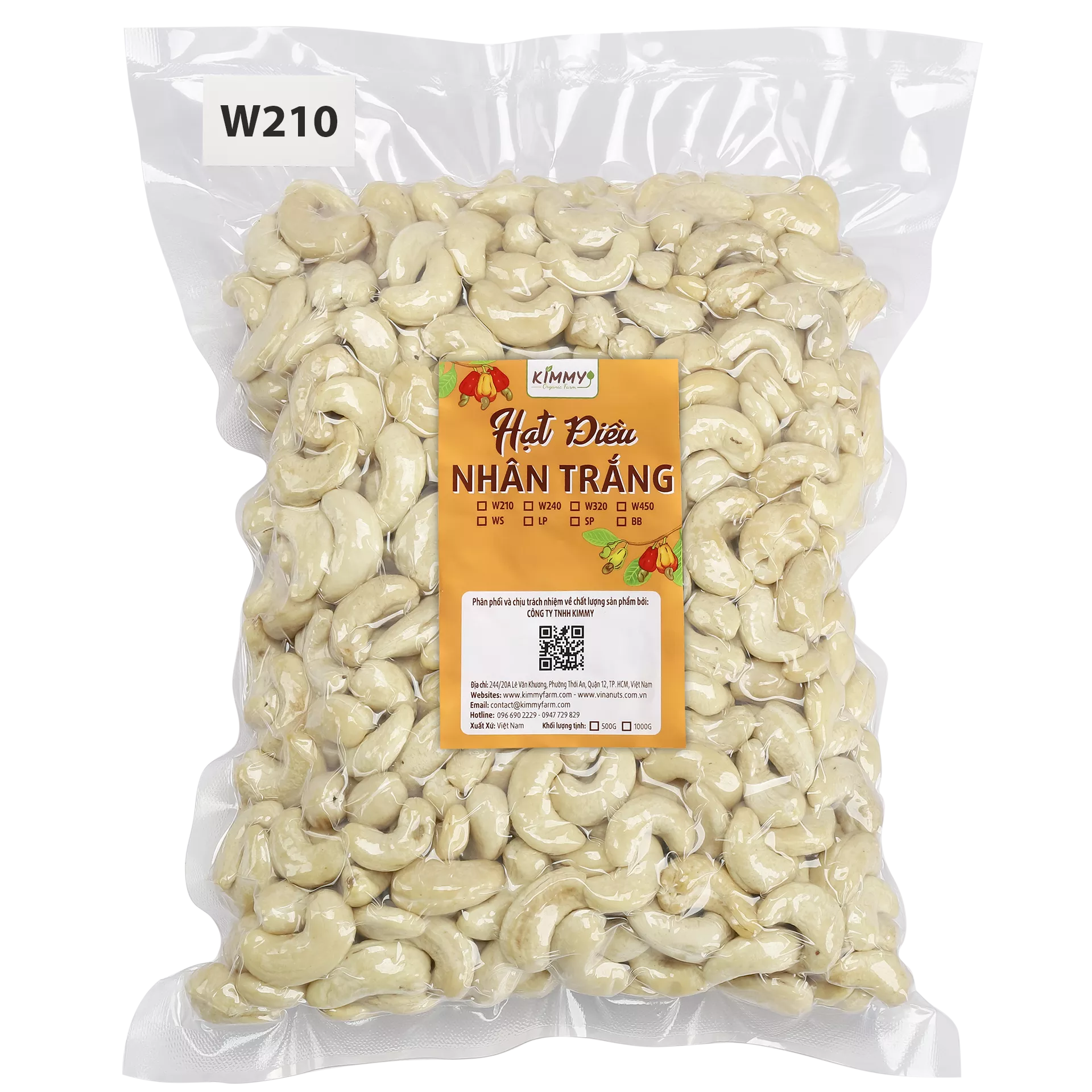
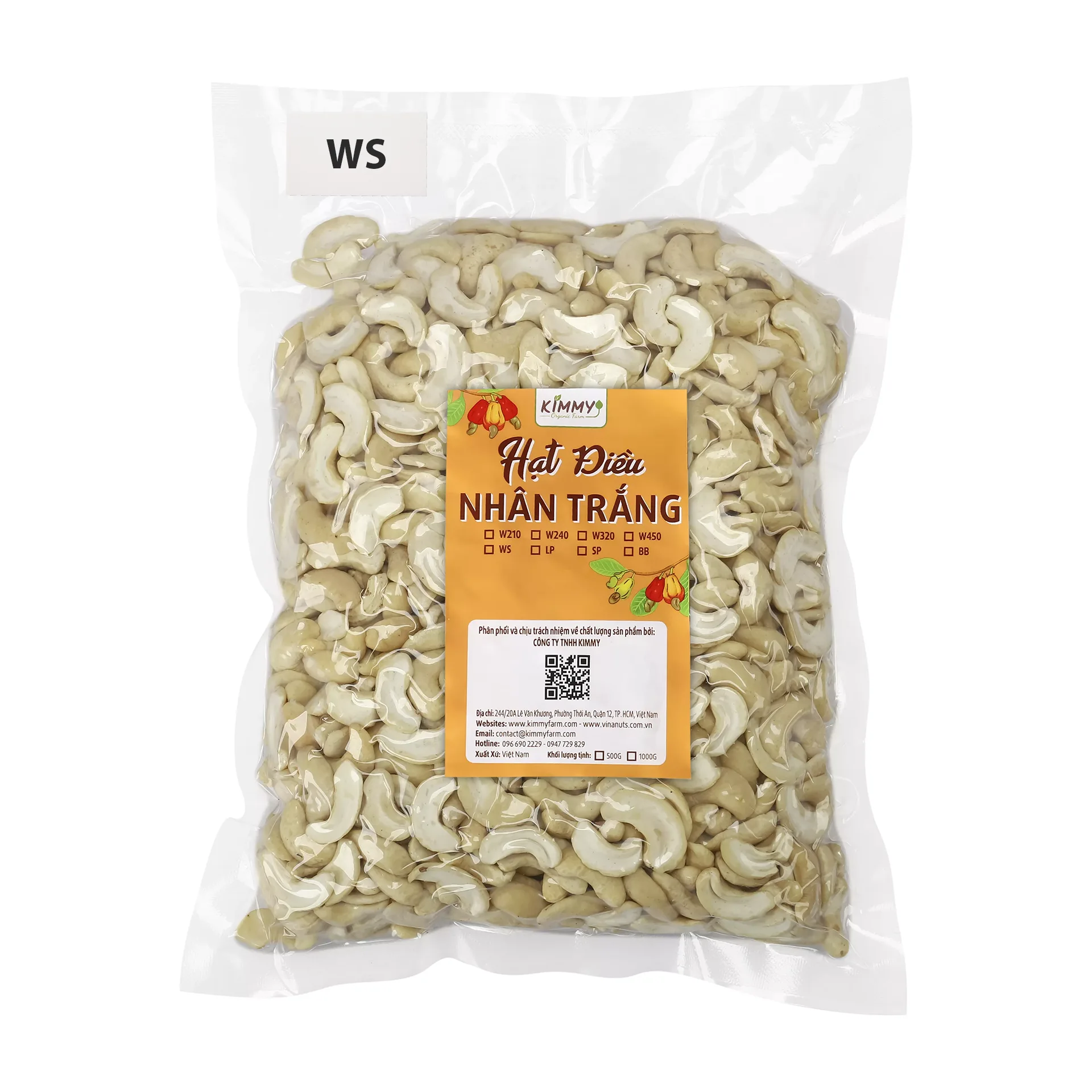
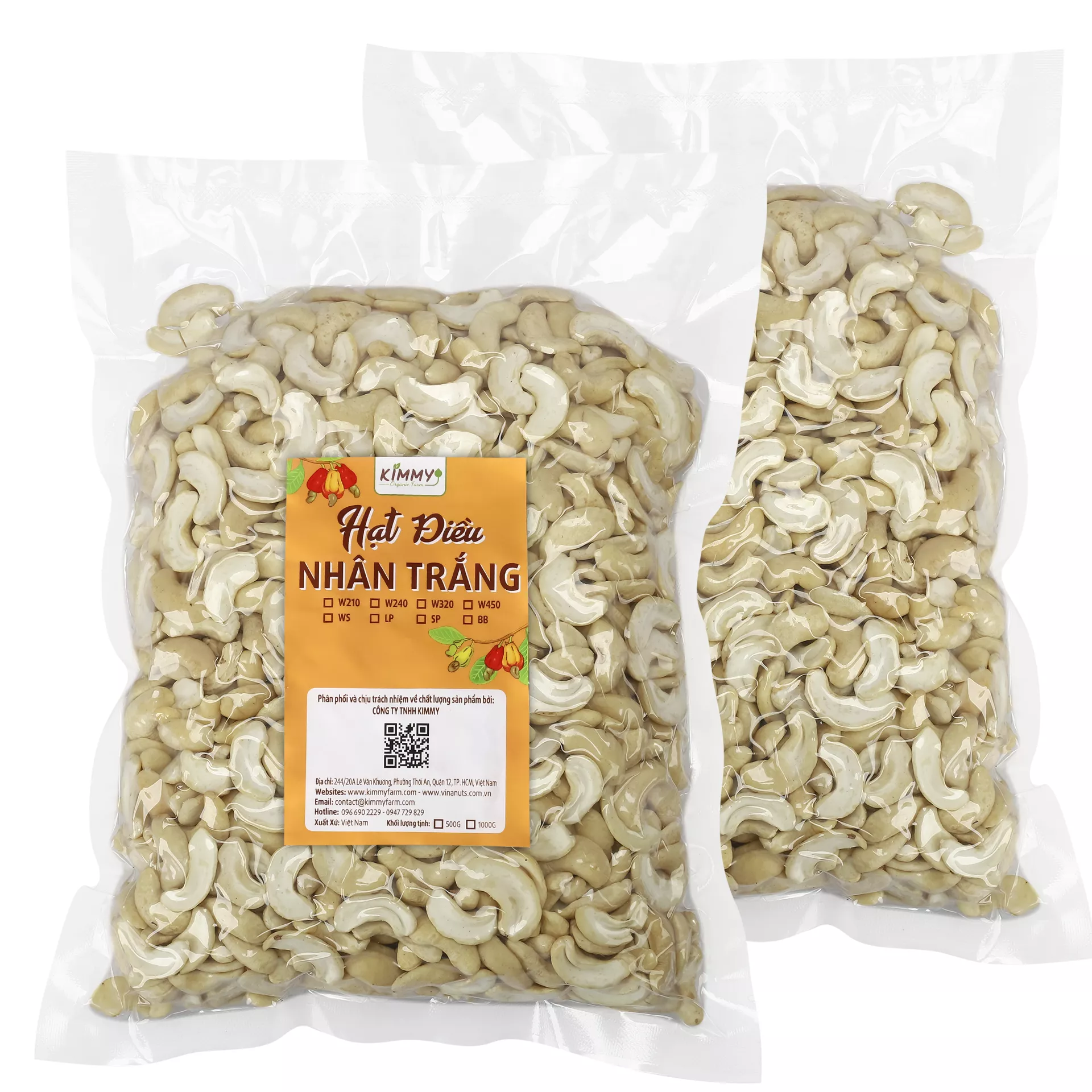
After raw cashew nuts are processed and shelled, the kernels are graded according to standards such as AFI and TCVN 4850:2010. Common grades include W240, W320, W450, WS, LP, and more.
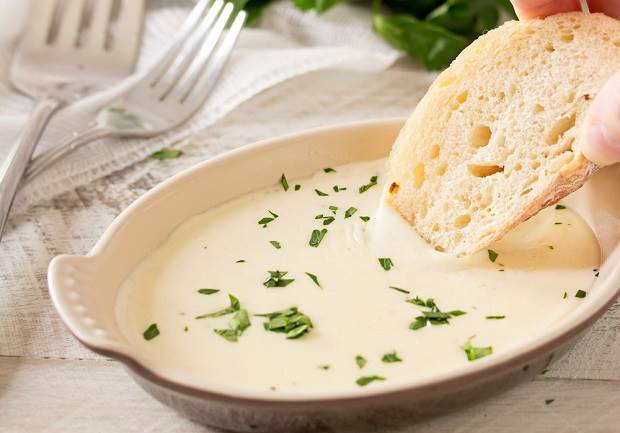
Vietnamese cashew kernels are often described as rich, creamy, and flavorful. They are used to make salted roasted cashews, honey cashews, whole salted cashews, garlic chili cashews, wasabi cashews, and many other products. They can also be salted, sweetened, flavored, roasted, fried, or processed into cashew cheese and cashew butter.
=> Read more: HACCP Food Safety Certification for the Cashew Industry
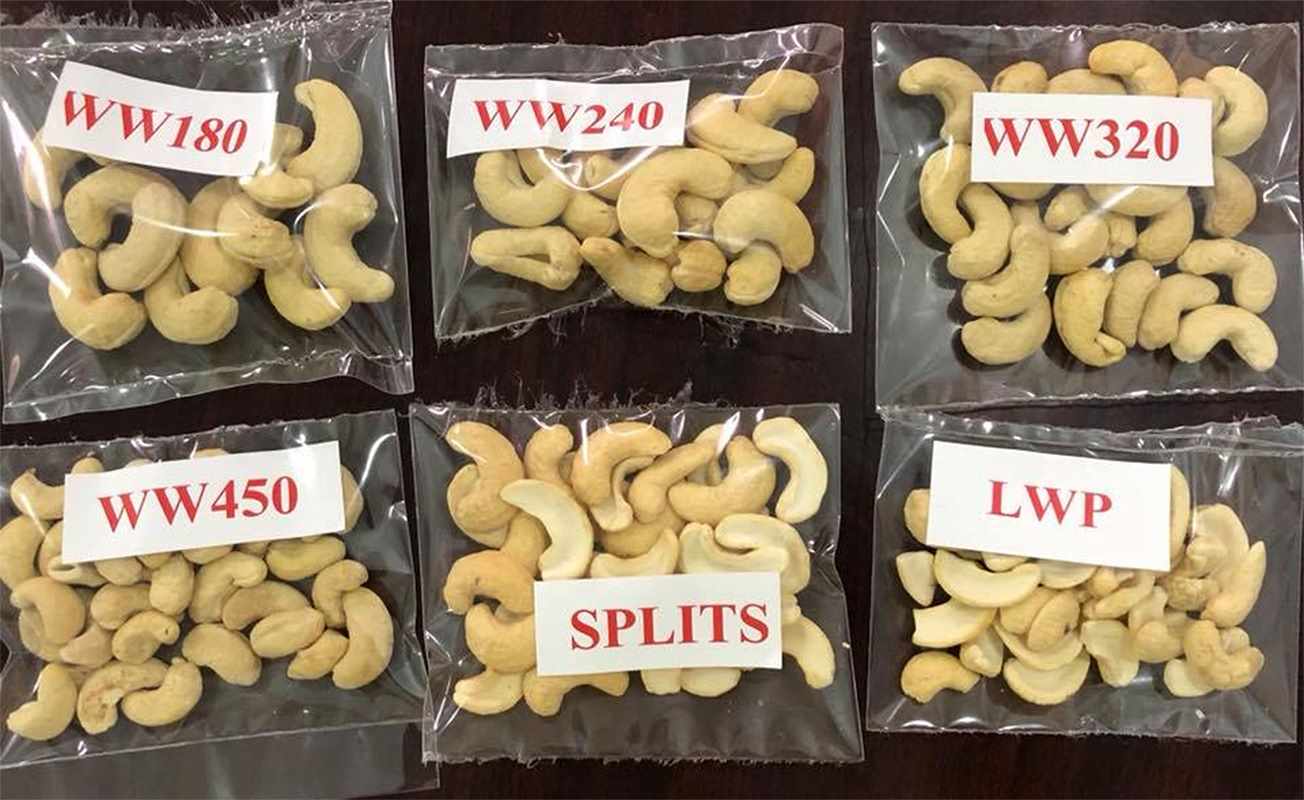
Cashew kernels are graded according to standards such as AFI and TCVN 4850:2010 into grades such as W240, W320, W450, WS, LP, and more.
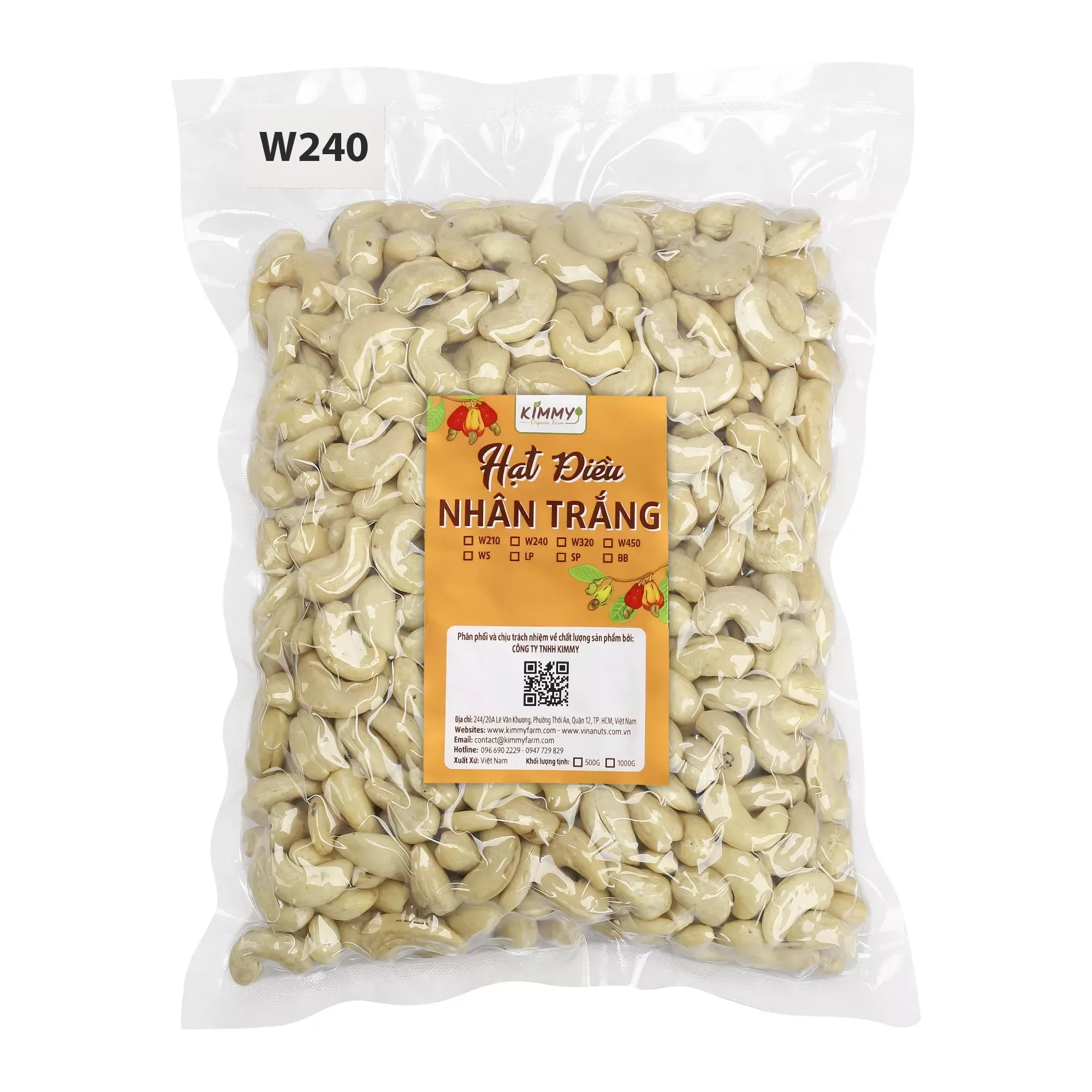
Vietnamese W240 white cashew kernels, graded according to AFI standards – Kimmy Farm Vietnam
Salted Roasted Cashew Kernels
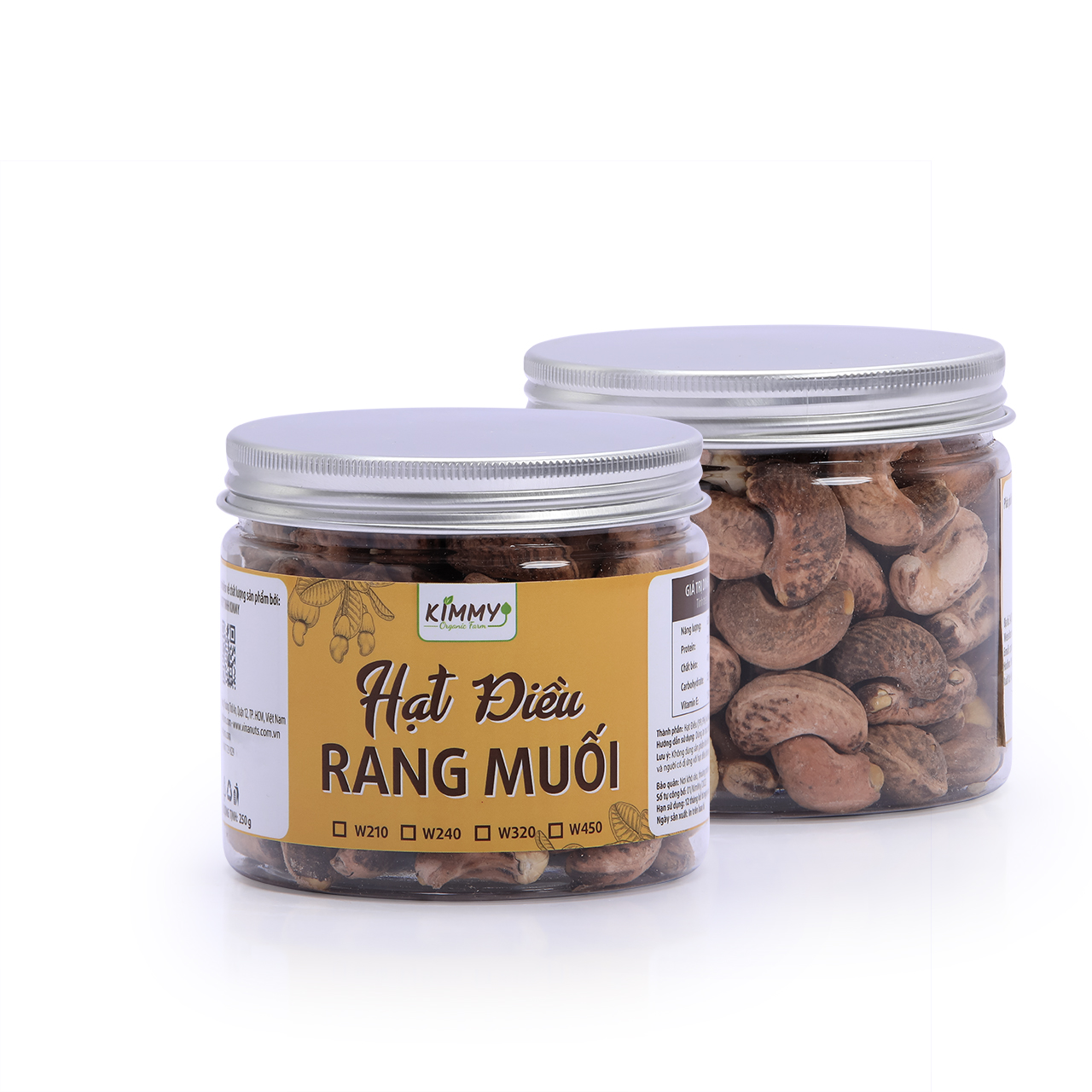
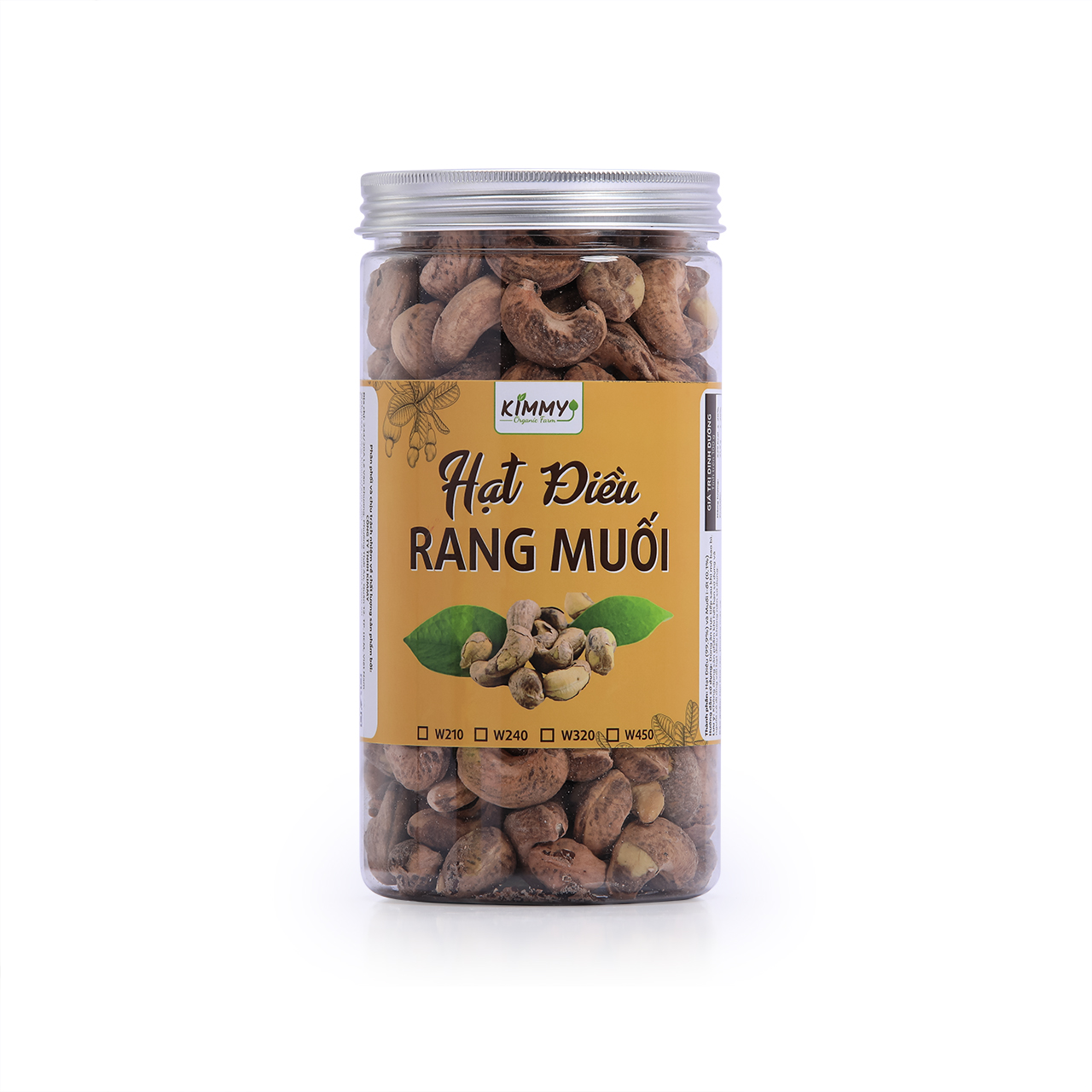
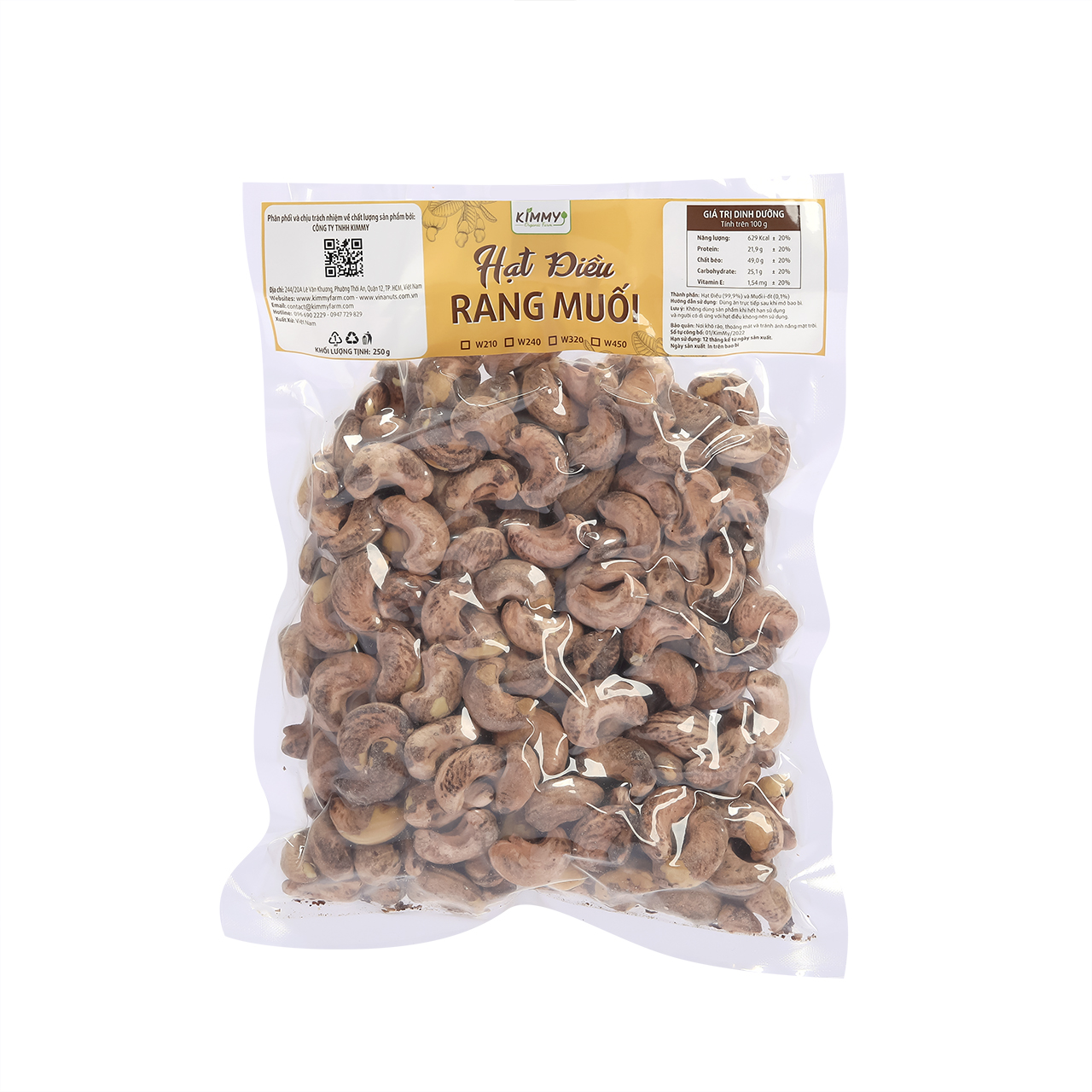
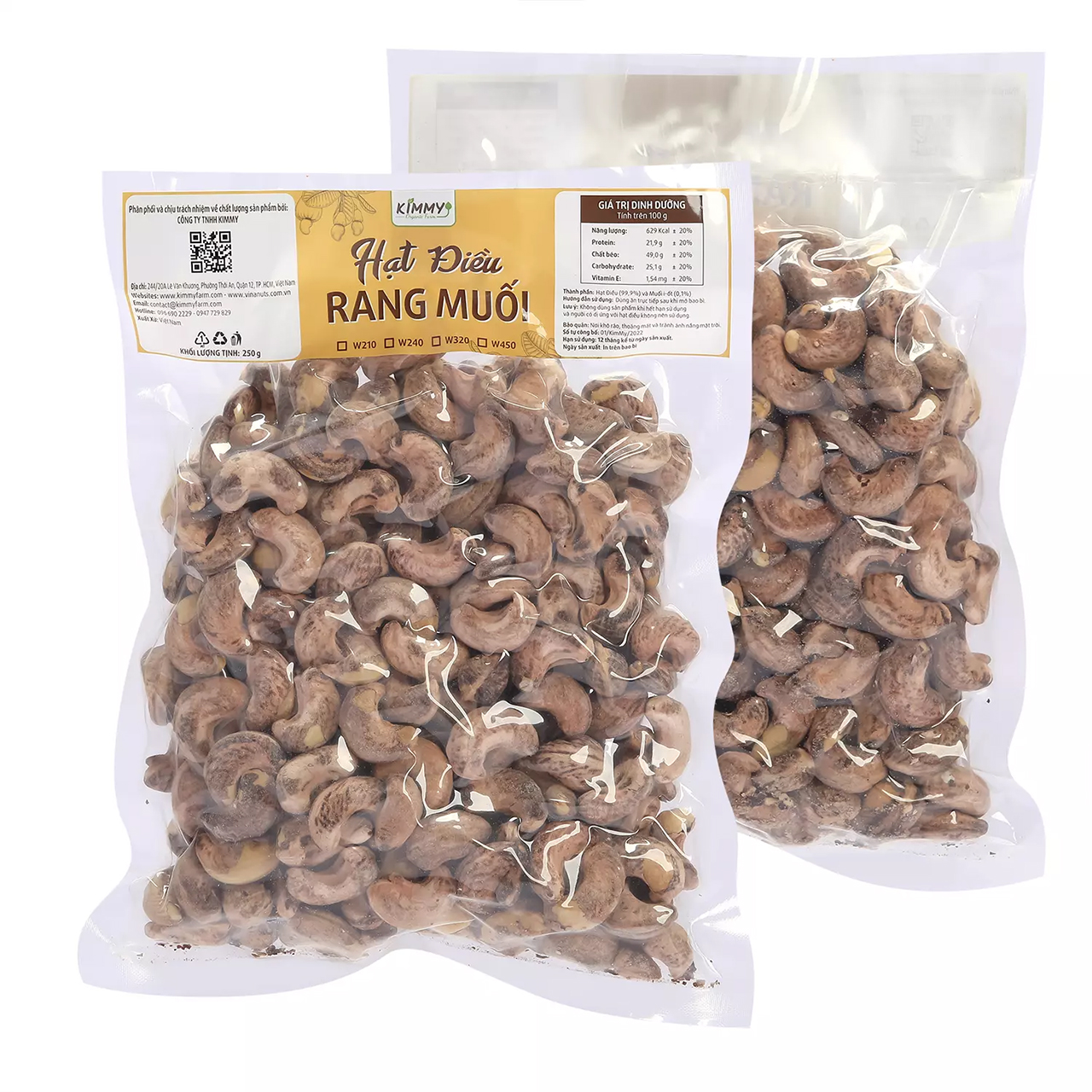
Salted roasted cashews are a nutritious snack made by roasting cashew kernels with salt. The result is a rich, crispy, lightly salty, and creamy flavor that many consumers enjoy.
Vietnam mainly exports two common types of salted roasted cashews:
- Salted roasted cashews with testa: This type is popular in Southeast Asia and China. Many consumers in these markets believe that the testa helps preserve the original cashew flavor and keeps the nuts from tasting too salty.
- Salted roasted cashews without testa: This type is popular in markets such as the EU, the United States, Japan, and South Korea, where consumers often prefer clean, fully peeled cashew kernels.
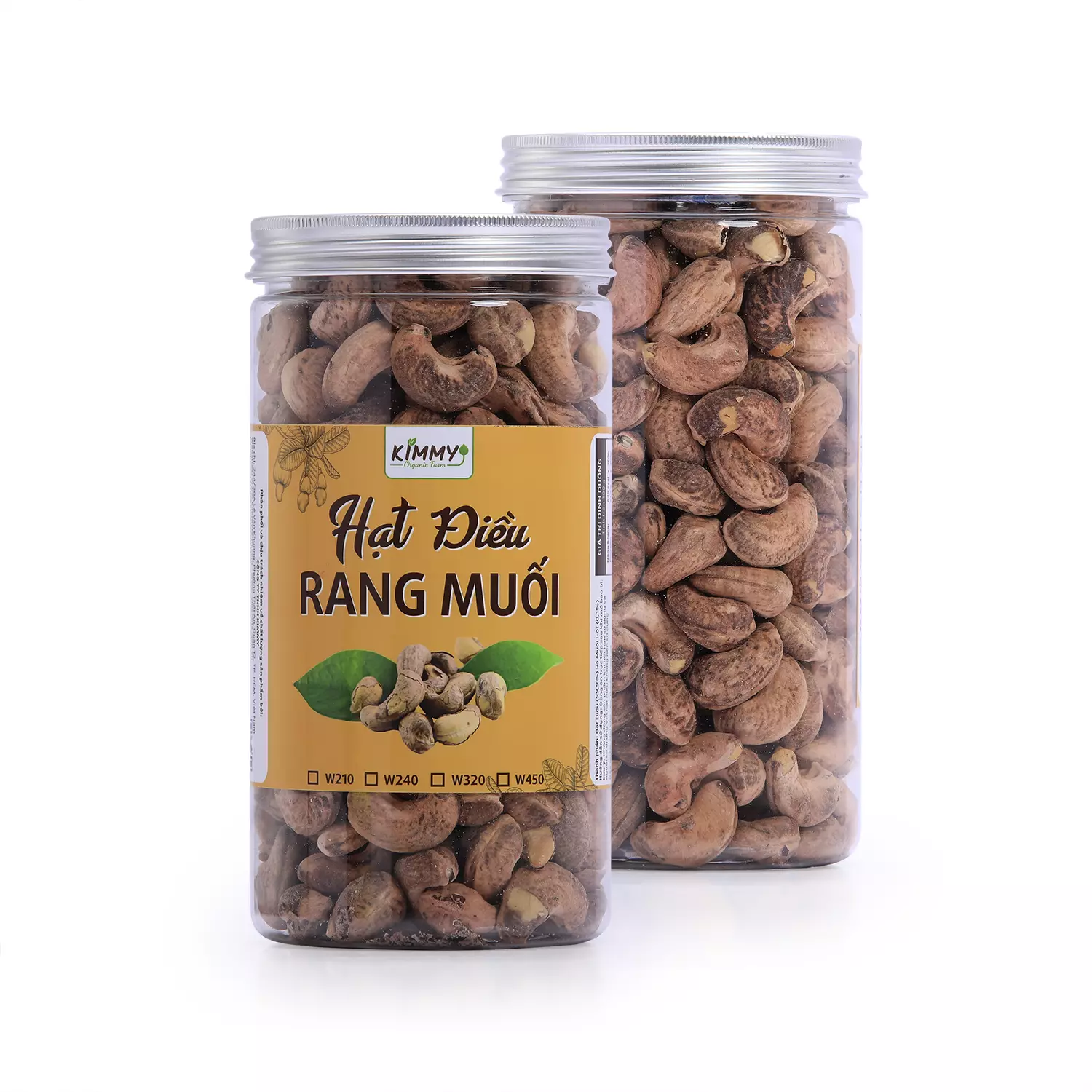
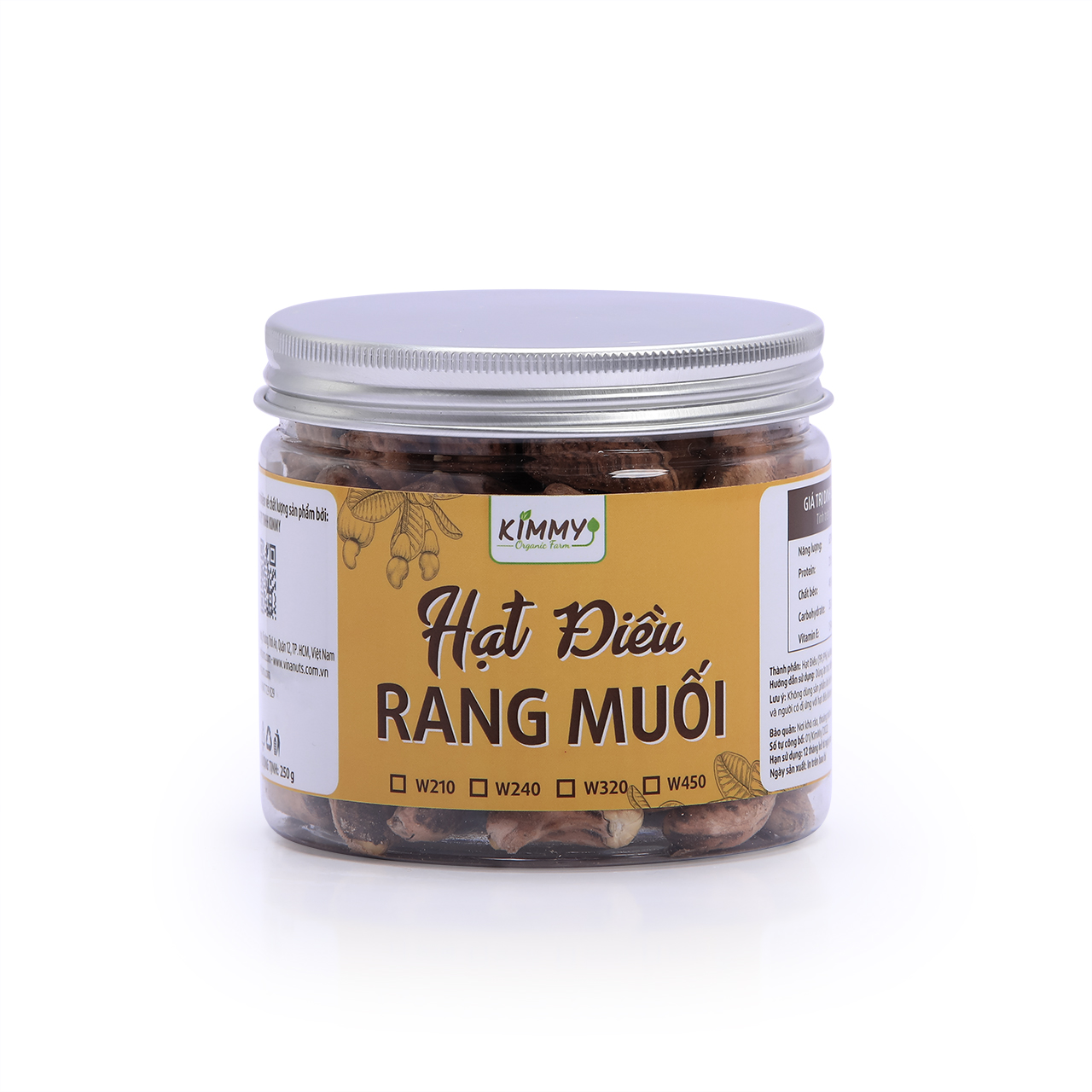
Salted roasted cashews with testa are popular in Southeast Asia and China.
Salted roasted cashews are made from cashew kernels roasted with salt, creating a crispy, creamy, and savory snack.
Butter Roasted Cashew Kernels
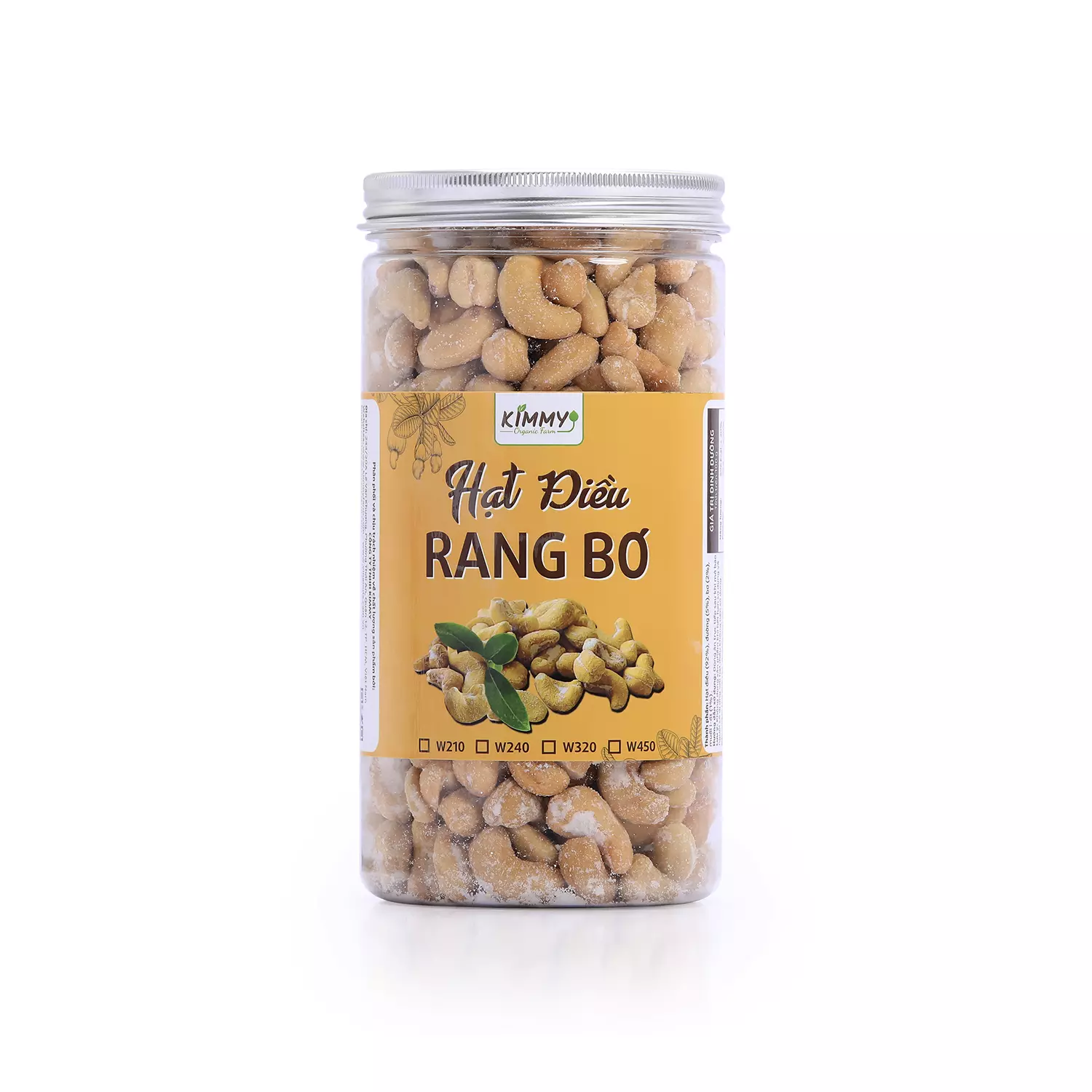
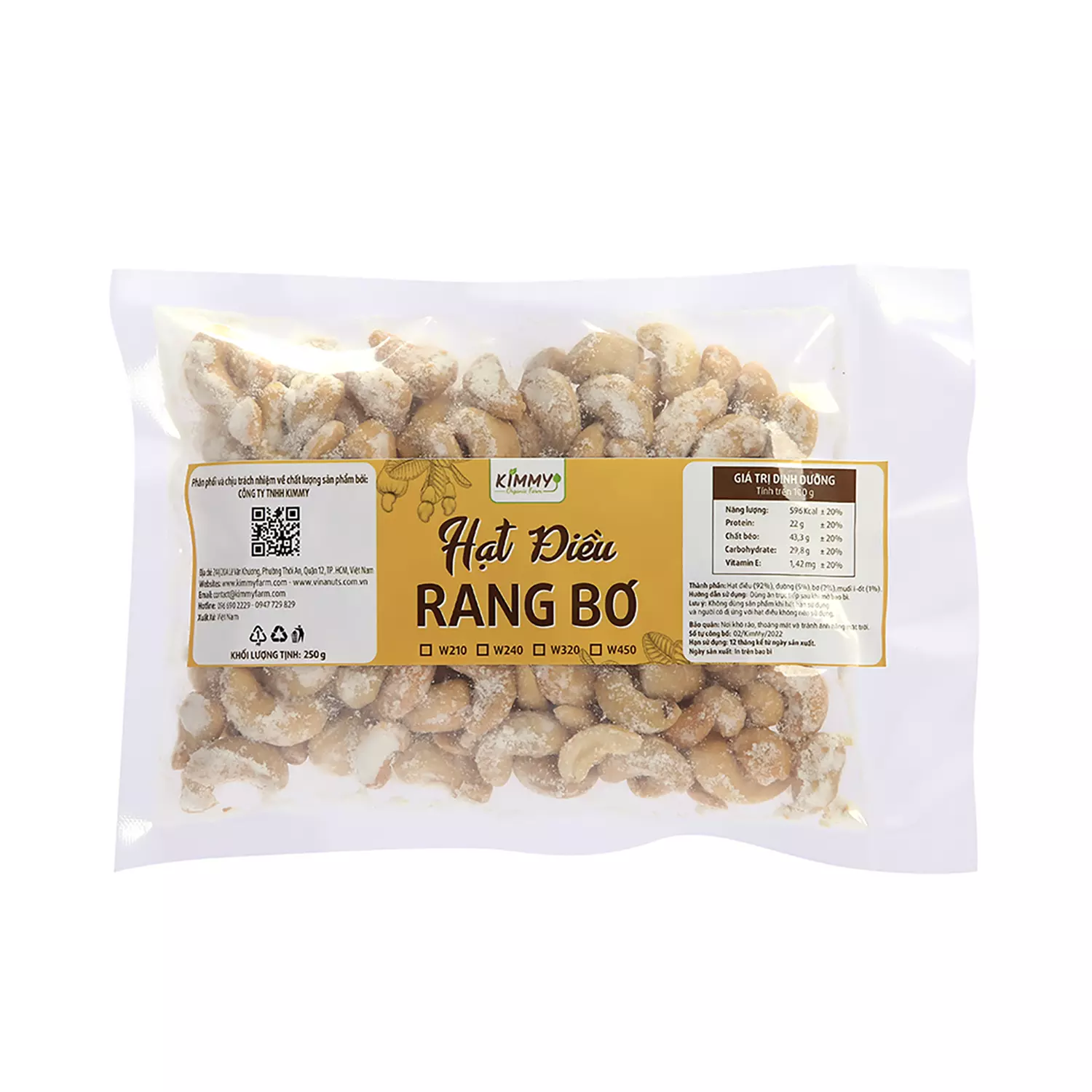
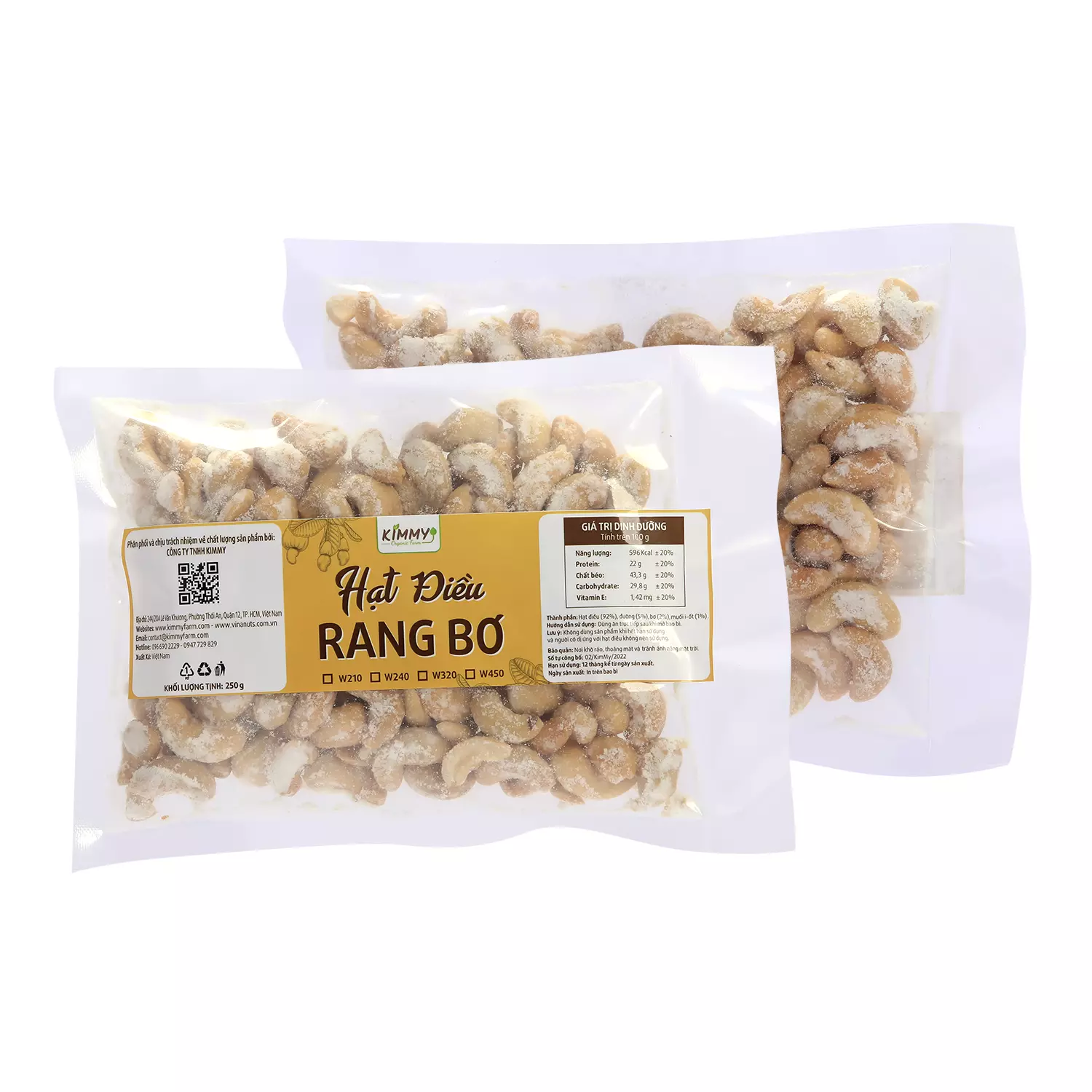
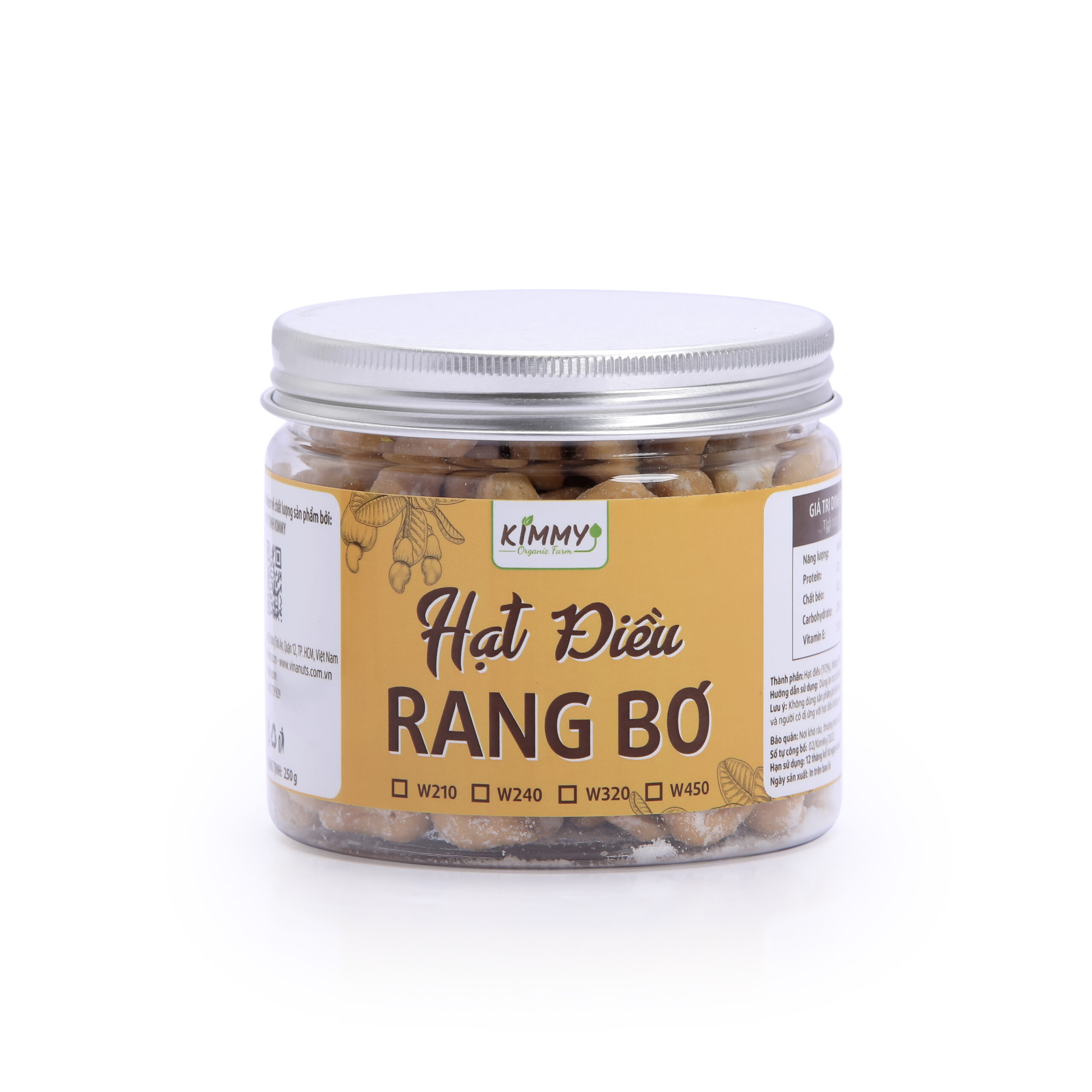
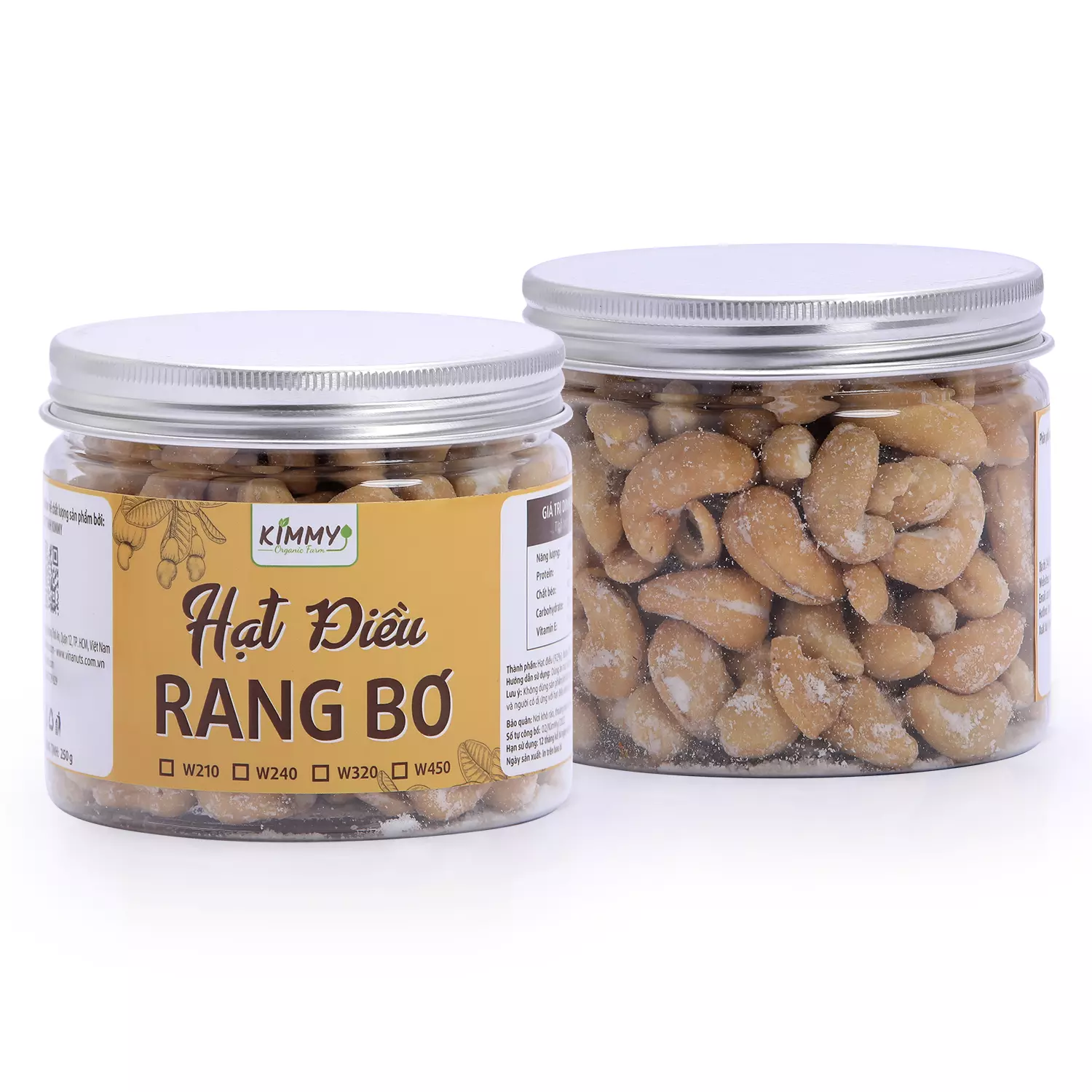
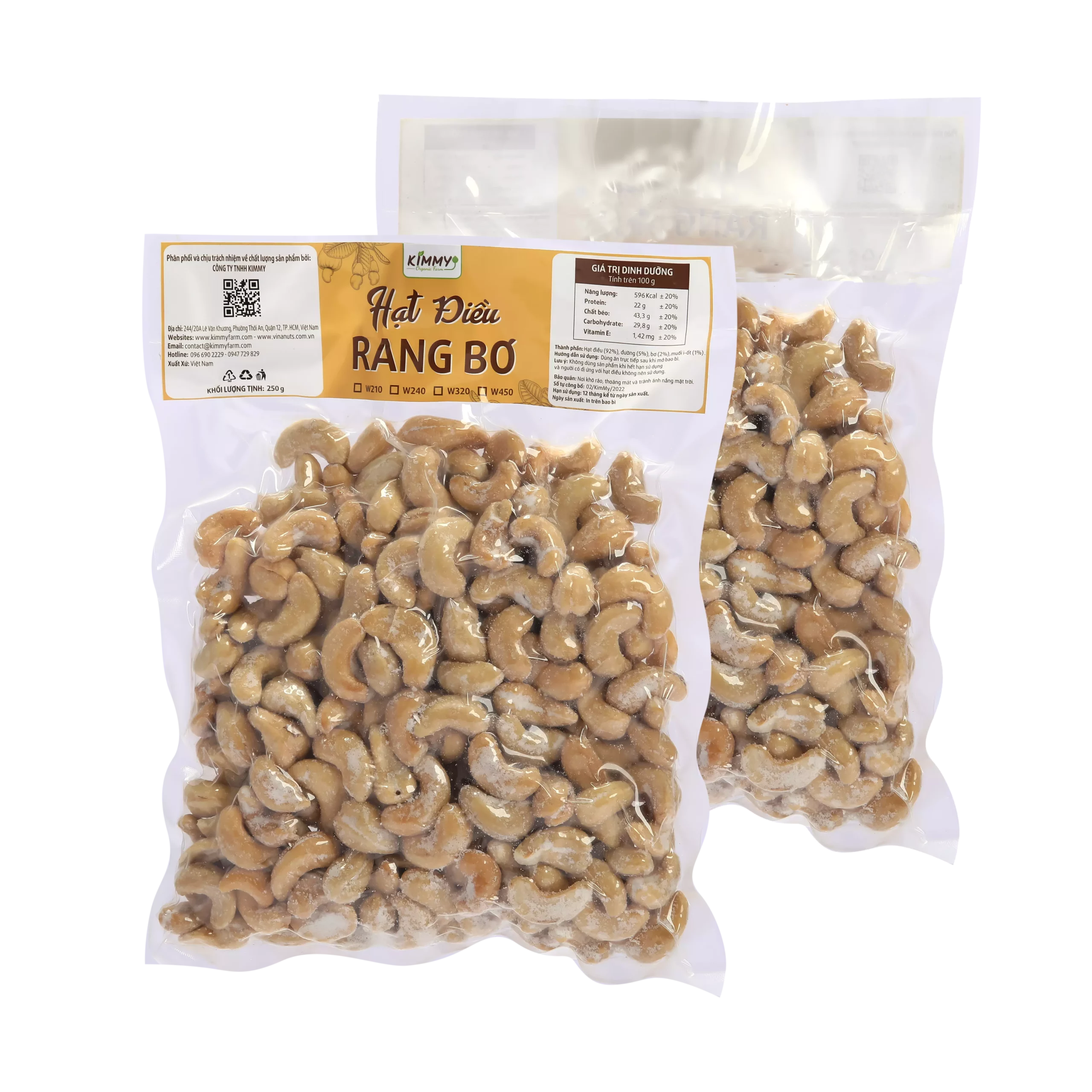
Butter roasted cashews are made by roasting or frying cashew kernels and mixing them with butter and sugar. The result is a snack with a crispy texture, creamy taste, light sweetness, and mild salty note.
Butter roasted cashews are often made with pure salt, white sugar, and high-quality butter to create a rich and memorable flavor.
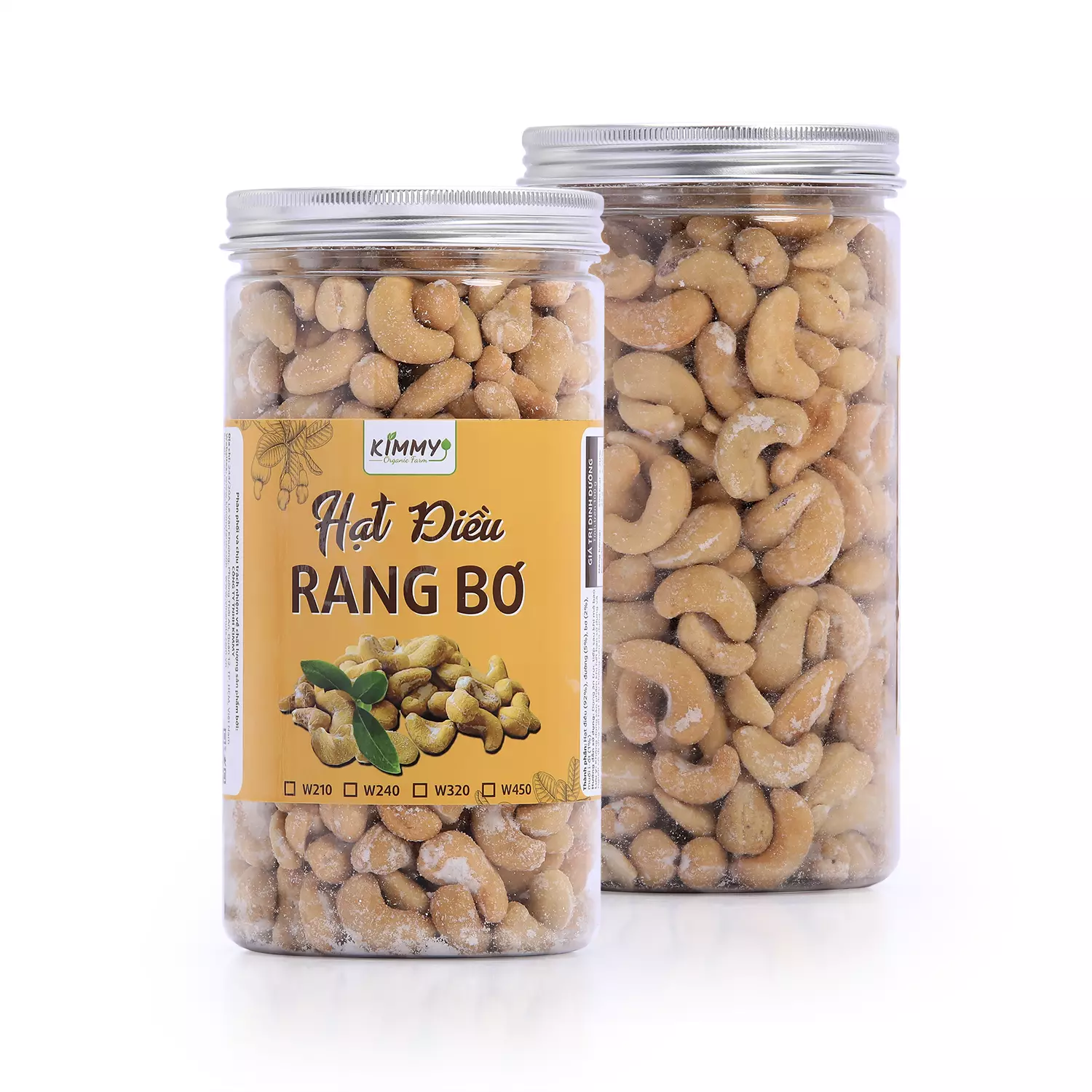
Butter roasted cashews are mixed with pure salt, white sugar, and high-quality butter – Kimmy Farm Vietnam

Chúng tôi là một thương hiệu chuyên sản xuất, thương mai và xuất khẩu các mặt hàng nông sản của Việt Nam. Chúng tôi có vùng trồng điều & nhà máy điều ở Bình Phước, trại nuôi ruồi lính đen ở Tây Ninh. Các mặt hàng xuất khẩu chính của Công ty là: hạt điều, hạt điều nhân, ruồi lính đen,… từ Việt Nam.