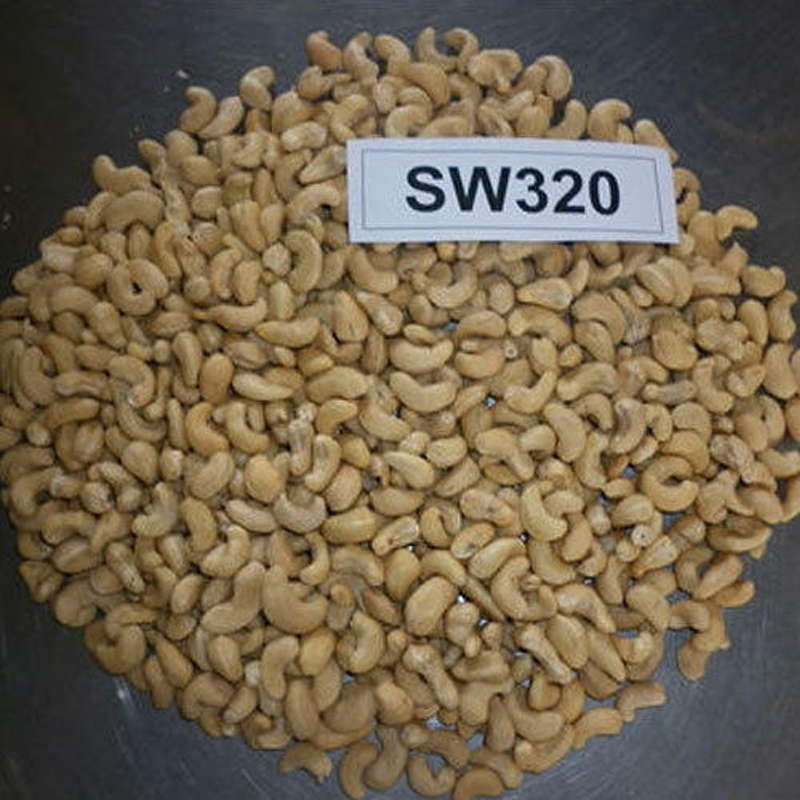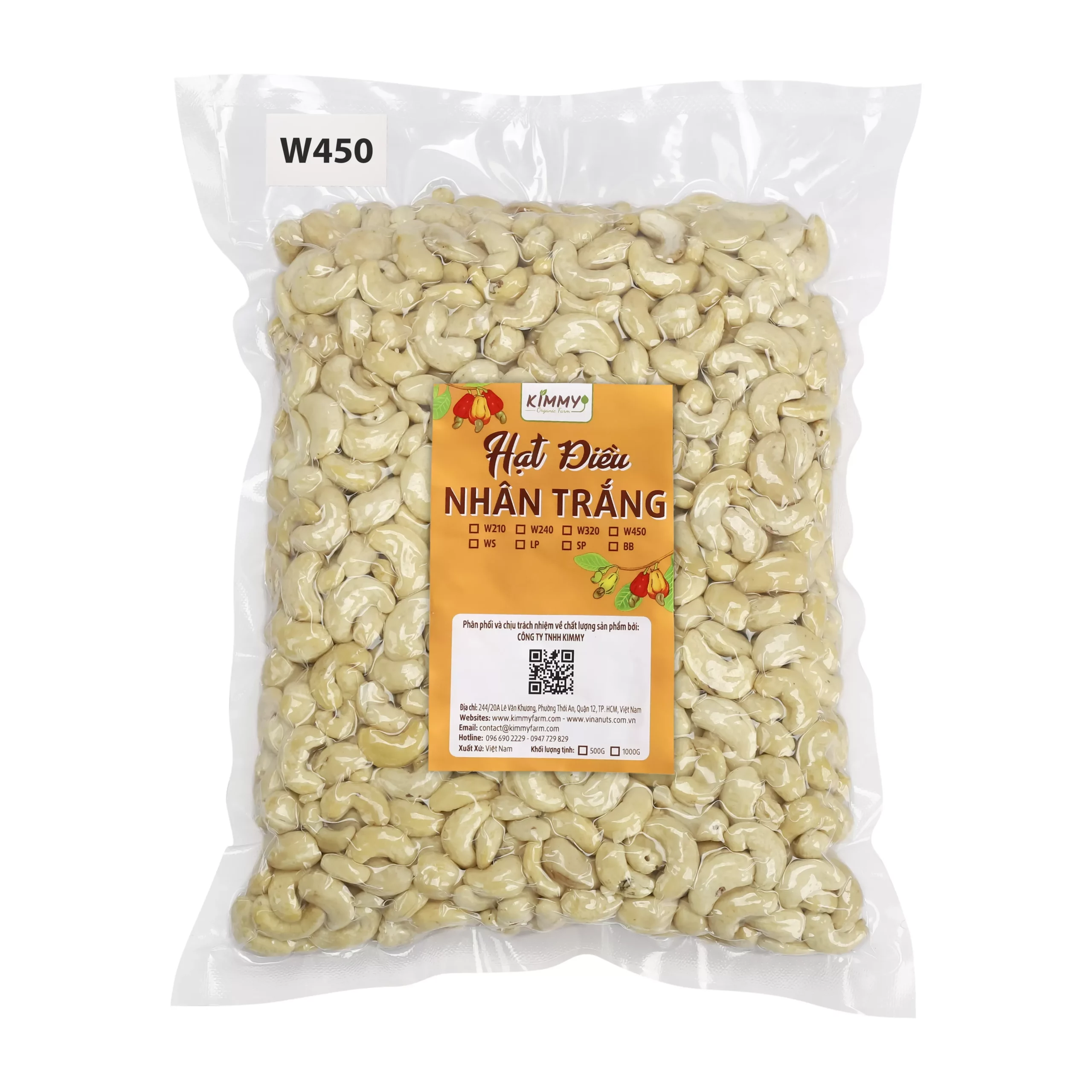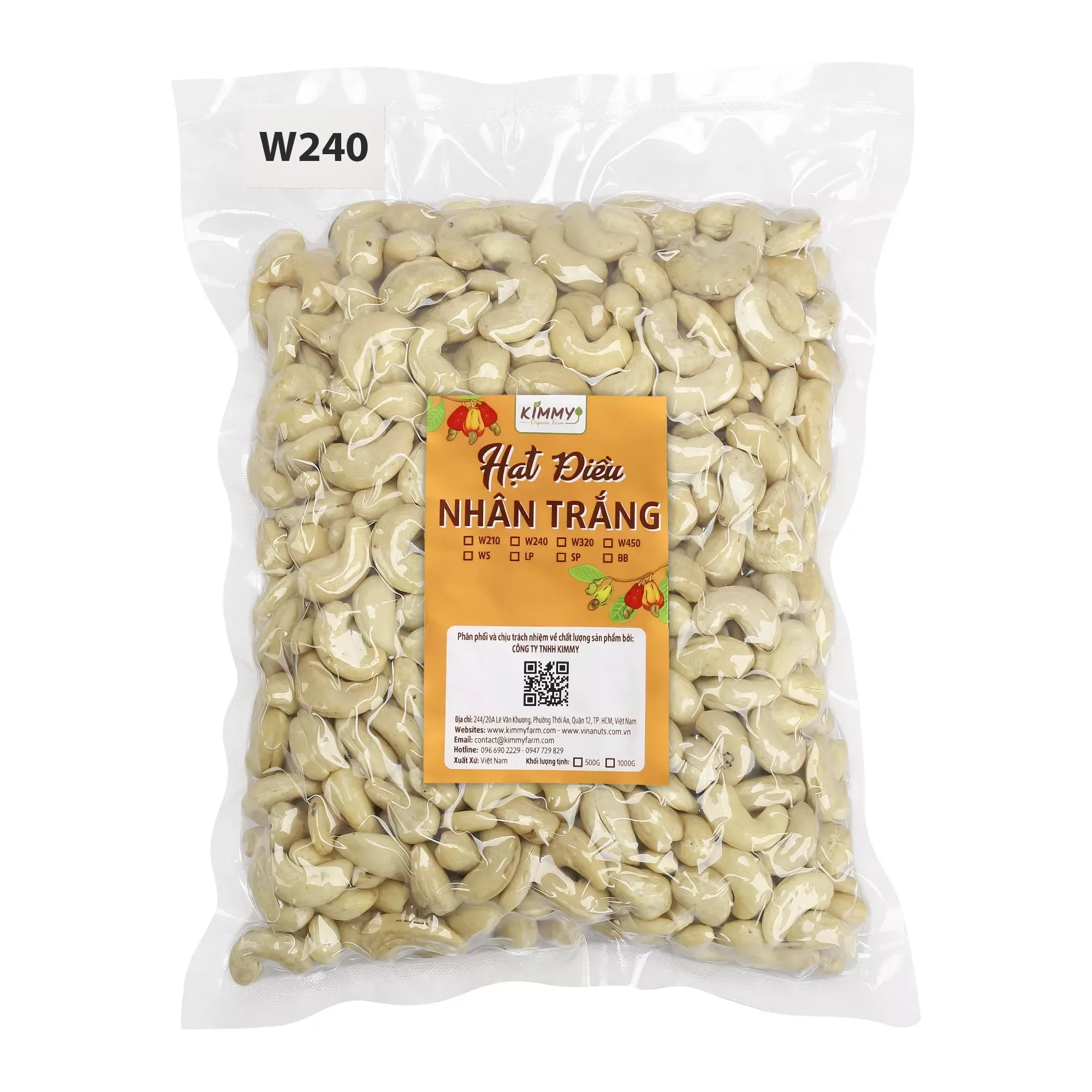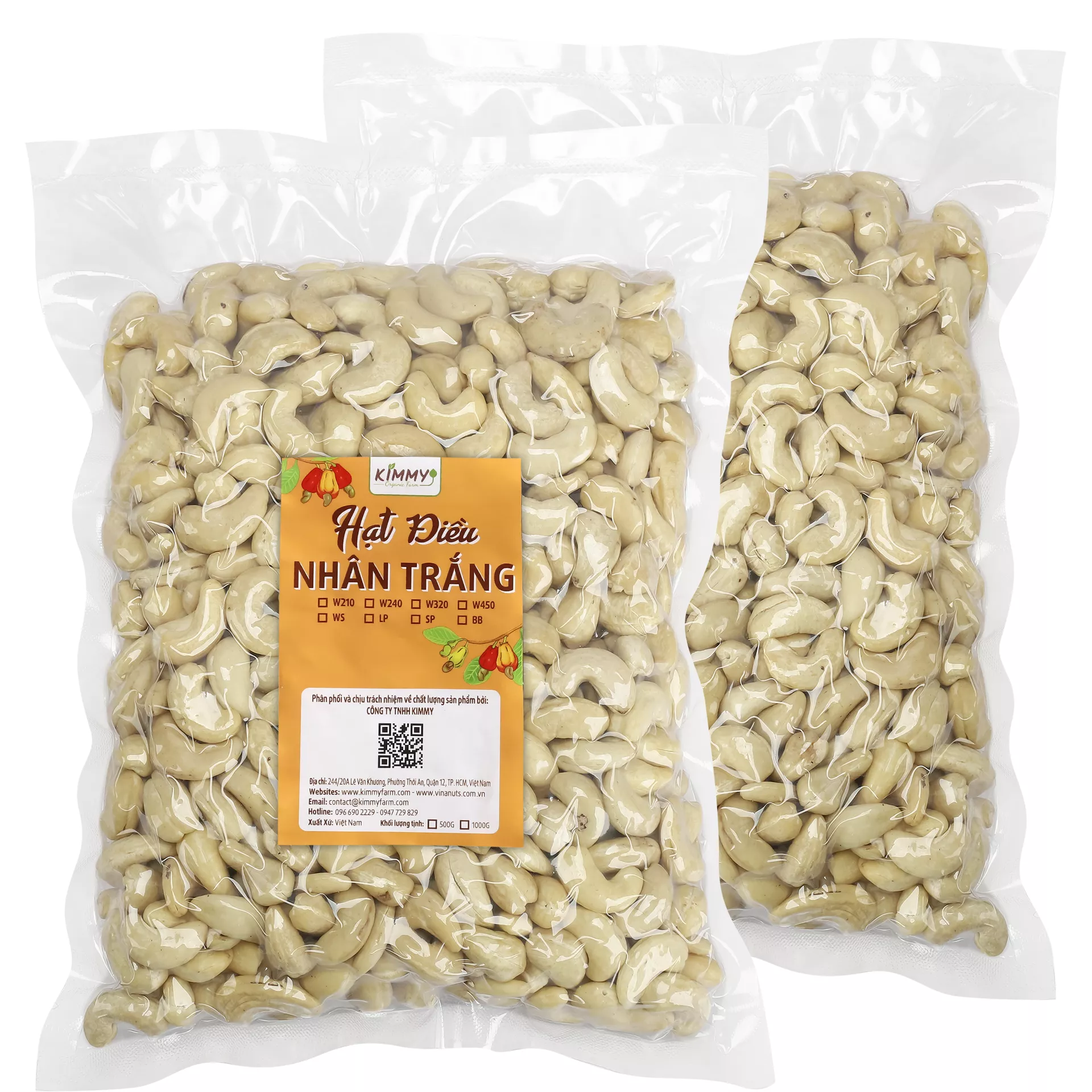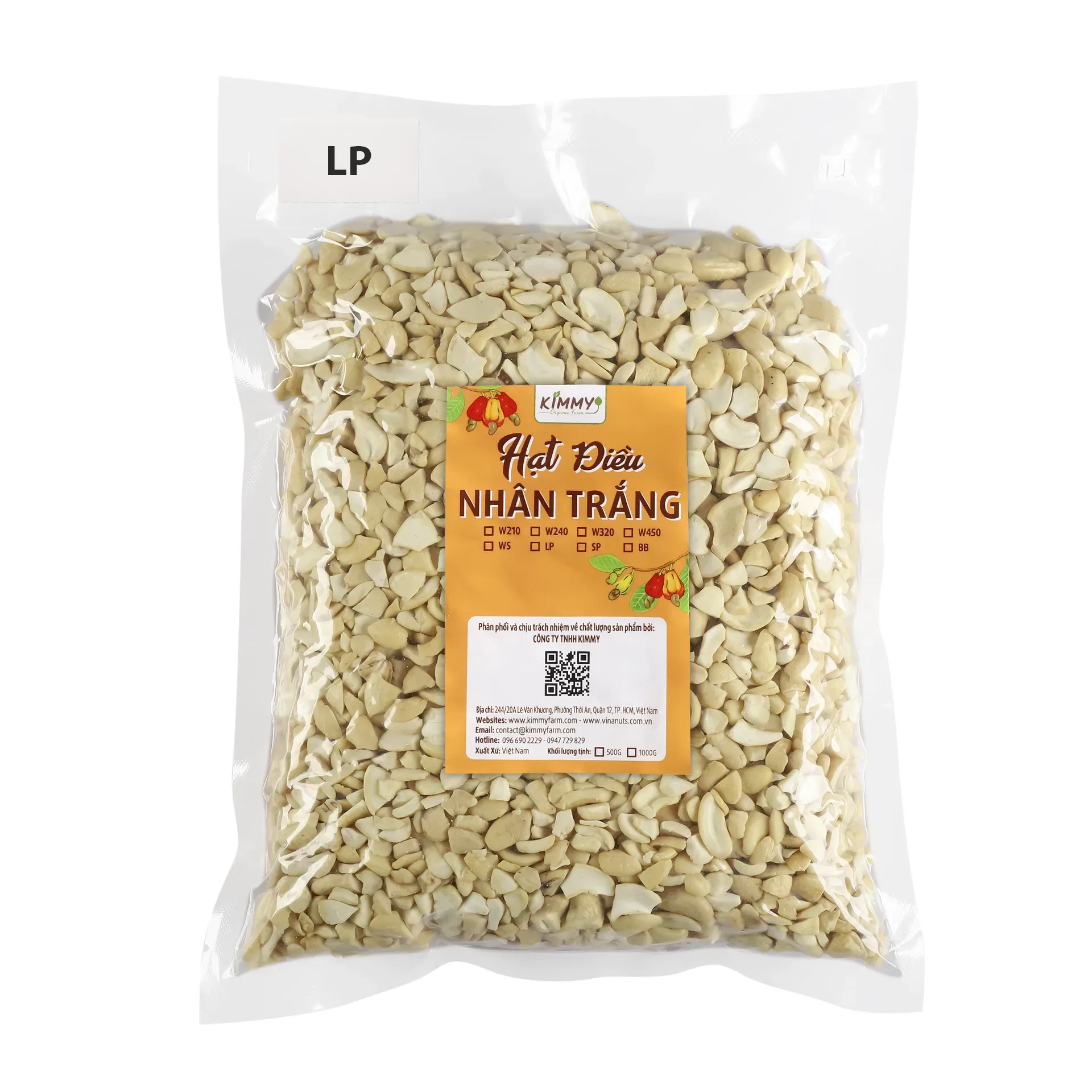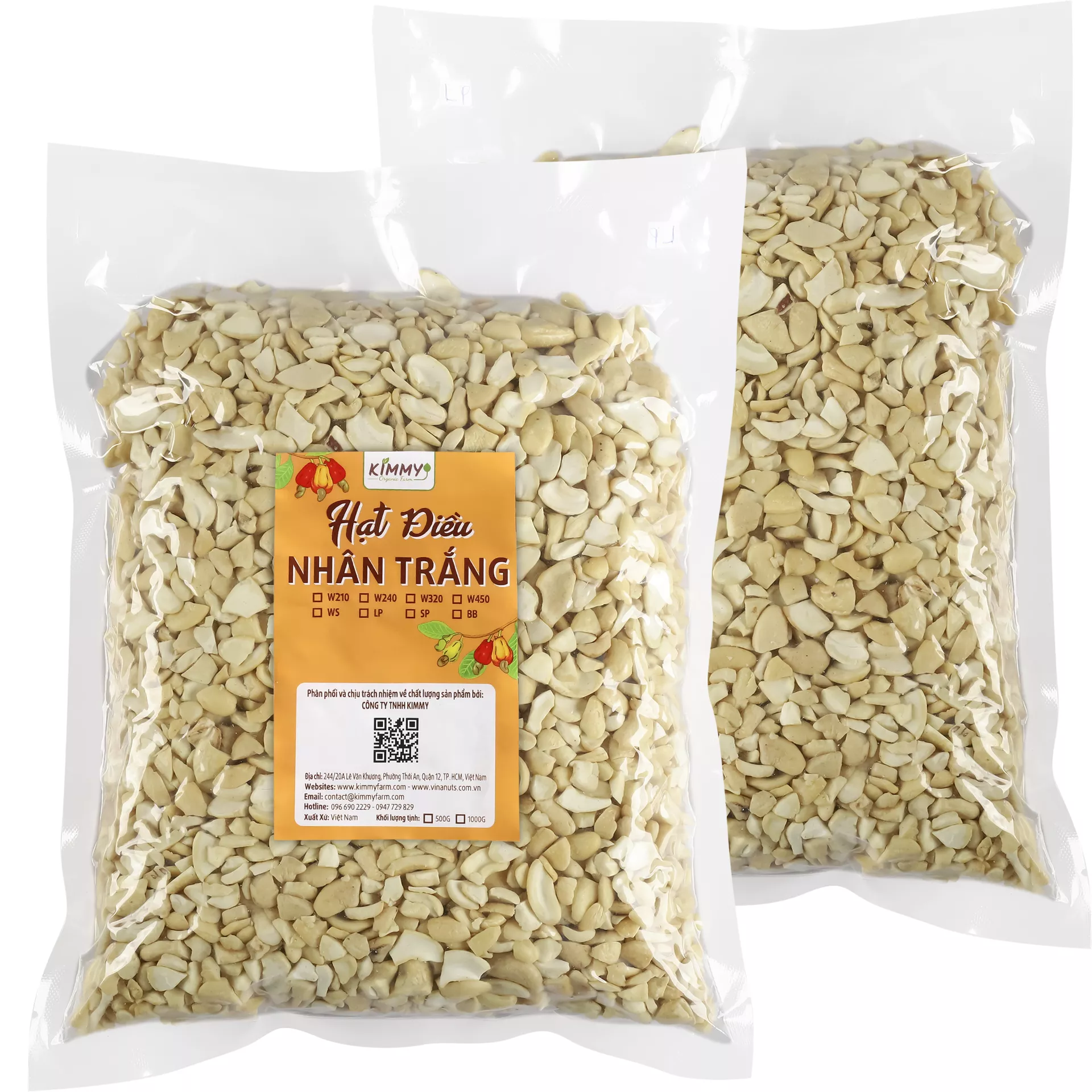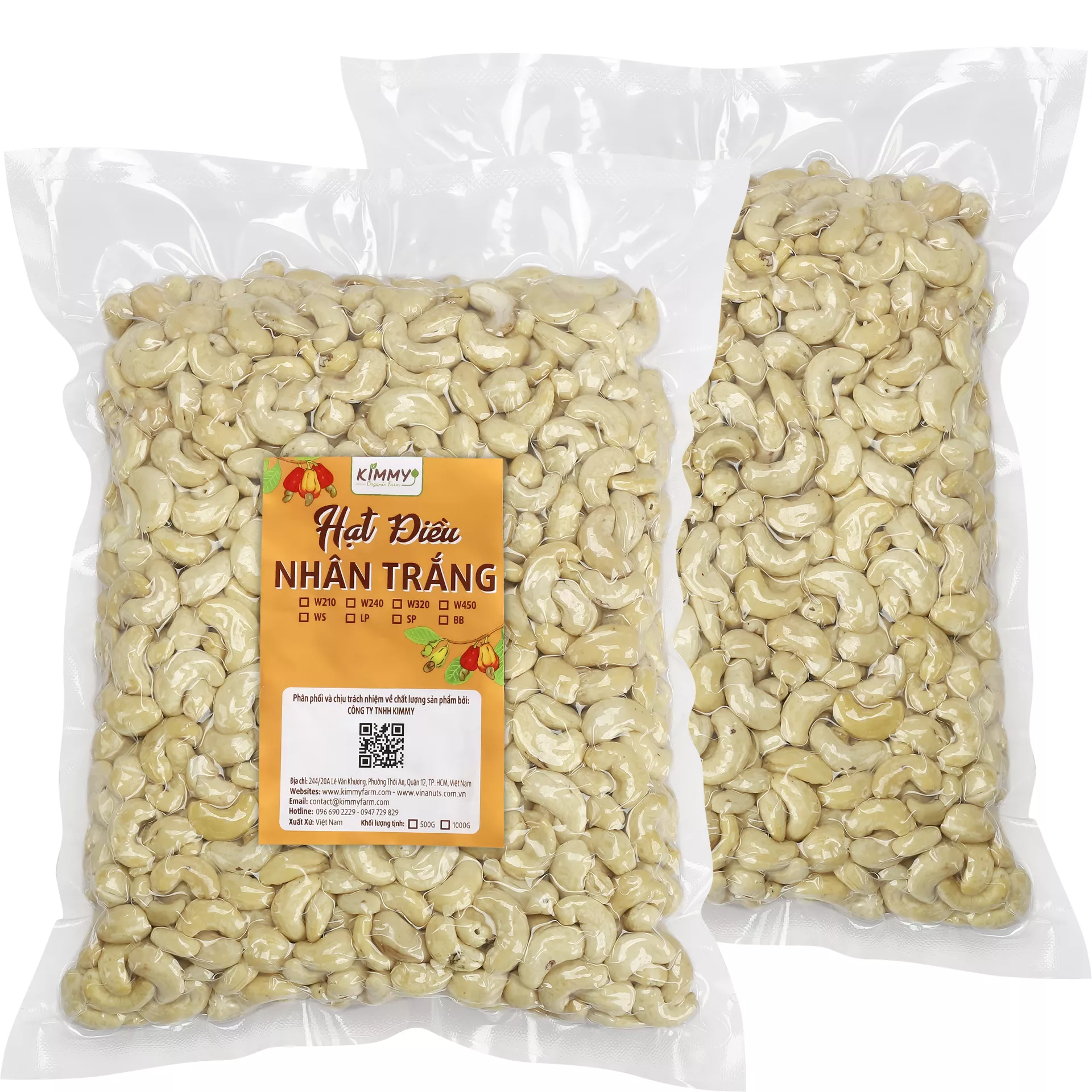

Vietnam Cashew Kernel Standard TCVN 4850:2010
TCVN 4850:2010 replaces TCVN 4850:1998. This Vietnamese standard was drafted by Coffee and Import-Export Goods Inspection Joint Stock Company (CAFECONTROL), proposed by the Ministry of Agriculture and Rural Development, appraised by the Directorate for Standards, Metrology and Quality, and officially published by the Ministry of Science and Technology.
Related articles about cashew standards:
- AFI Standard and Export Specifications for Cashew Kernels
- Vietnam Cashew Kernel Standard TCVN 4850:2010
- Types of Cashew Kernels, Standards, and Classification Methods
- HACCP Food Safety Certification for the Cashew Industry
- ISO 22000 Certification in Food Safety Management
- Vietnam Food Safety Certification for the Cashew Industry
1. Scope of Application of TCVN 4850:2010
This standard applies to cashew kernels processed from the true fruit of the cashew tree (Anacardium occidentale Linnaeus) and used for food processing.
2. Referenced Documents in TCVN 4850:2010
The following referenced document is essential for the application of this standard. For dated references, only the cited edition applies. For undated references, the latest edition applies, including any amendments or supplements.

TCVN 7087:2008, Labeling of Prepackaged Foods.
3. Terms and Definitions
For the purpose of this standard, the following terms and definitions apply:
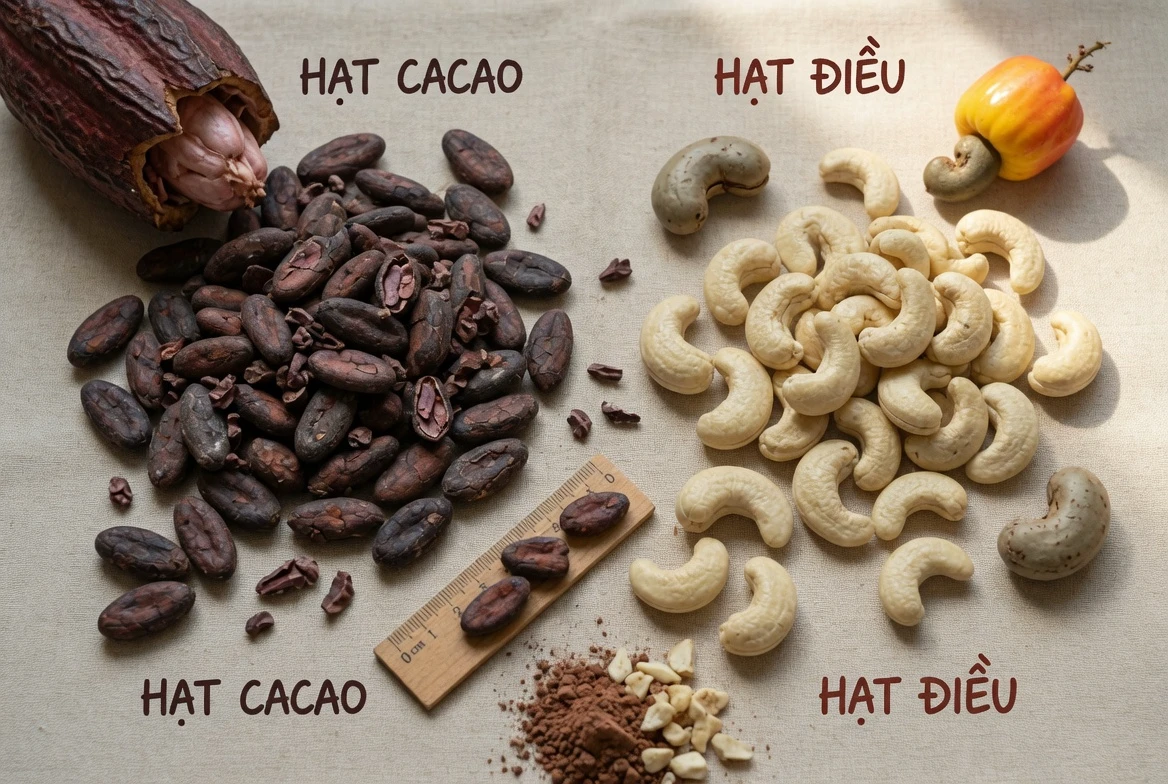
3.1 Cashew Apple
The mature pseudo-fruit of the cashew tree. It is the swollen stalk of the fruit, usually pear-shaped and may be red, orange, yellow, or similar in color.
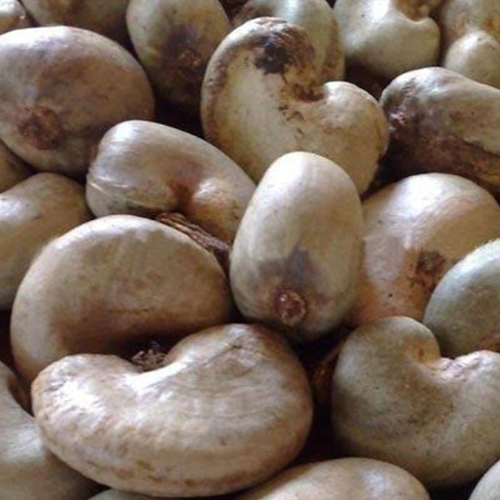
3.2 Cashew Nut
The true fruit of the cashew tree, consisting of the hard shell, testa, and cashew kernel.
3.3 Cashew Shell
The hard outer shell that covers the testa and the kernel.
3.4 Cashew Nut Shell Liquid (CNSL)

A viscous liquid contained in the cashew shell. It is harmful to humans and mainly contains anacardic acid and cardol.
3.5 Testa
The thin, reddish-brown skin that covers the cashew kernel.
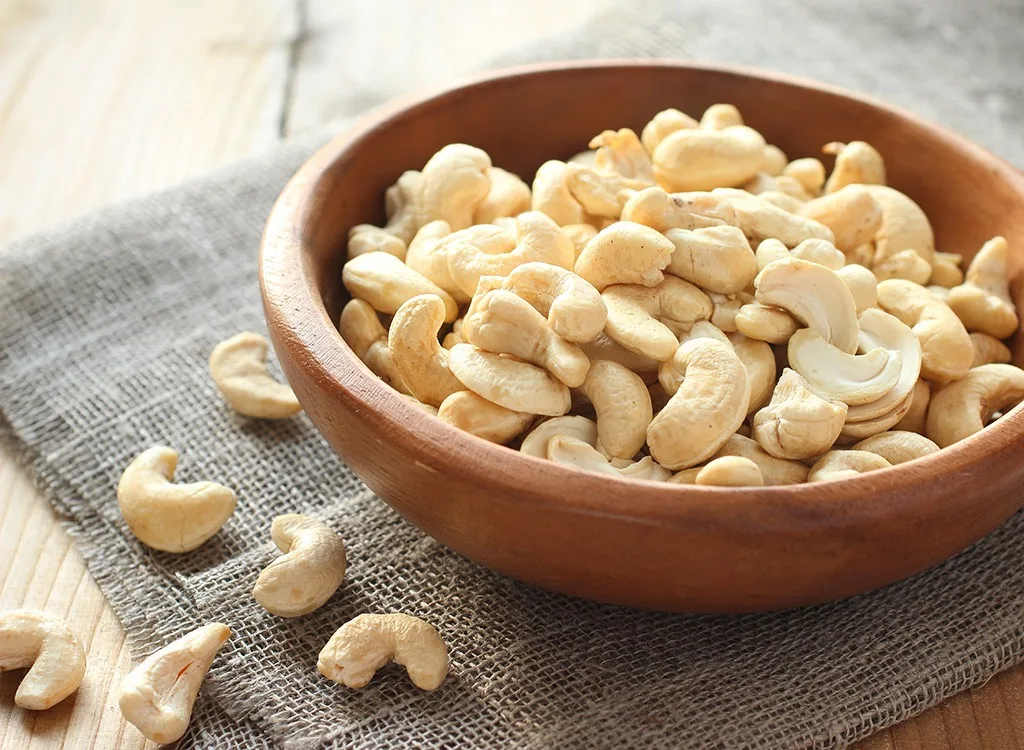
3.6 Cashew Kernel
The edible part obtained from the cashew nut after heat treatment, shelling, drying, testa peeling, and grading.
3.7 Whole Kernel
A whole kernel, or a kernel broken by no more than one-eighth of its original size, usually broken across the width.
3.8 Butt
A kernel broken across the width, with the two cotyledons still naturally attached. The remaining kernel is smaller than seven-eighths but larger than three-eighths of a whole kernel.
3.9 Split
A kernel split lengthwise, where the two cotyledons are separated and each cotyledon is not broken by more than one-eighth.
3.10 Large Piece
A broken kernel piece that passes through a sieve with 8 mm round holes and is retained on a sieve with 4.75 mm round holes.
3.11 Small Piece
A broken kernel piece that passes through a sieve with 4.75 mm round holes and is retained on a sieve with 2.8 mm round holes.
3.12 Baby Bit
Very small broken kernel pieces that do not pass through a sieve with 1.7 mm round holes.
3.13 Immature Kernel
A cashew kernel that has not fully developed, usually small in size and wrinkled on the surface.
3.14 Lot
A cashew kernel lot is a defined quantity of cashew kernels with the same quality grade and product code, packed in the same type of packaging and delivered or received at the same time.
4. Abbreviations
The abbreviations used in this standard are listed in Table 1.
Table 1 – Abbreviations
| Description | English Term | Abbreviation |
|---|---|---|
| White | White | W |
| Scorched | Scorched | S |
| Second Scorched | Second Scorched | SS |
| Light Blemish | Light Blemish | LB |
| Blemish | Blemish | B |
| Dark Blemish | Dark Blemish | DB |
| Butt | Butt | B |
| Blemish Butt | Blemish Butt | BB |
| Split | Split | S |
| Large Pieces | Large Pieces | LP |
| Small Pieces | Small Pieces | SP |
| Baby Bits | Baby Bits | B-B |
5. Technical Requirements
5.1 General Requirements
- 5.1.1. Cashew kernels must be properly dried, have their typical shape, and be graded or processed according to each grade. They must not be contaminated with cashew nut shell liquid. The proportion of kernels with remaining testa must not exceed 1.5% by weight. The total diameter of testa fragments remaining on a kernel must not exceed 2 mm.
- 5.1.2. Cashew kernels must be free from live pests, insect remains, mold, and visible contamination when inspected with the naked eye or, where necessary, with a handheld magnifying glass of approximately 10x magnification. Cashew kernels must have their natural smell and must not have a rancid odor or any other foreign smell.

Chúng tôi là một thương hiệu chuyên sản xuất, thương mai và xuất khẩu các mặt hàng nông sản của Việt Nam. Chúng tôi có vùng trồng điều & nhà máy điều ở Bình Phước, trại nuôi ruồi lính đen ở Tây Ninh. Các mặt hàng xuất khẩu chính của Công ty là: hạt điều, hạt điều nhân, ruồi lính đen,… từ Việt Nam.