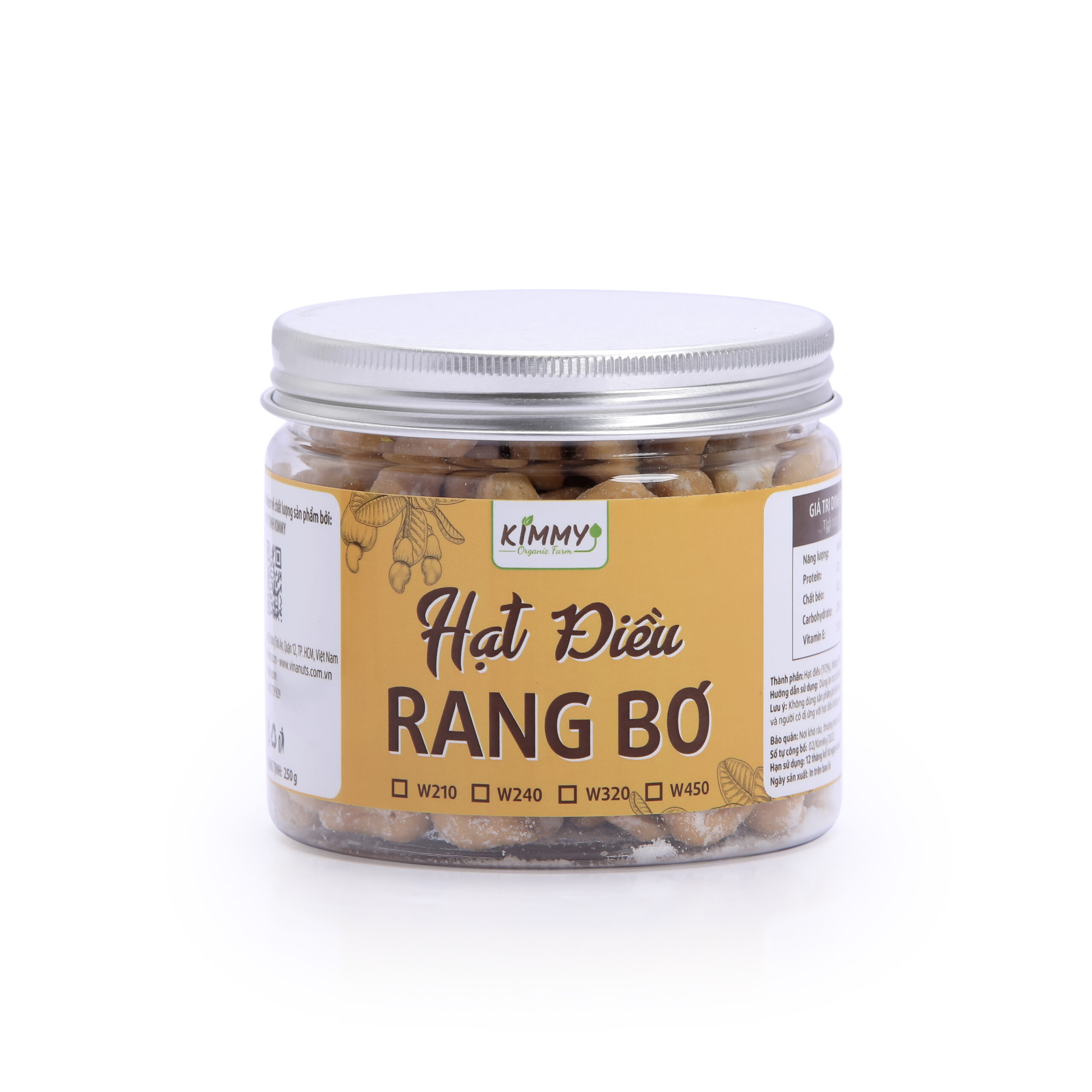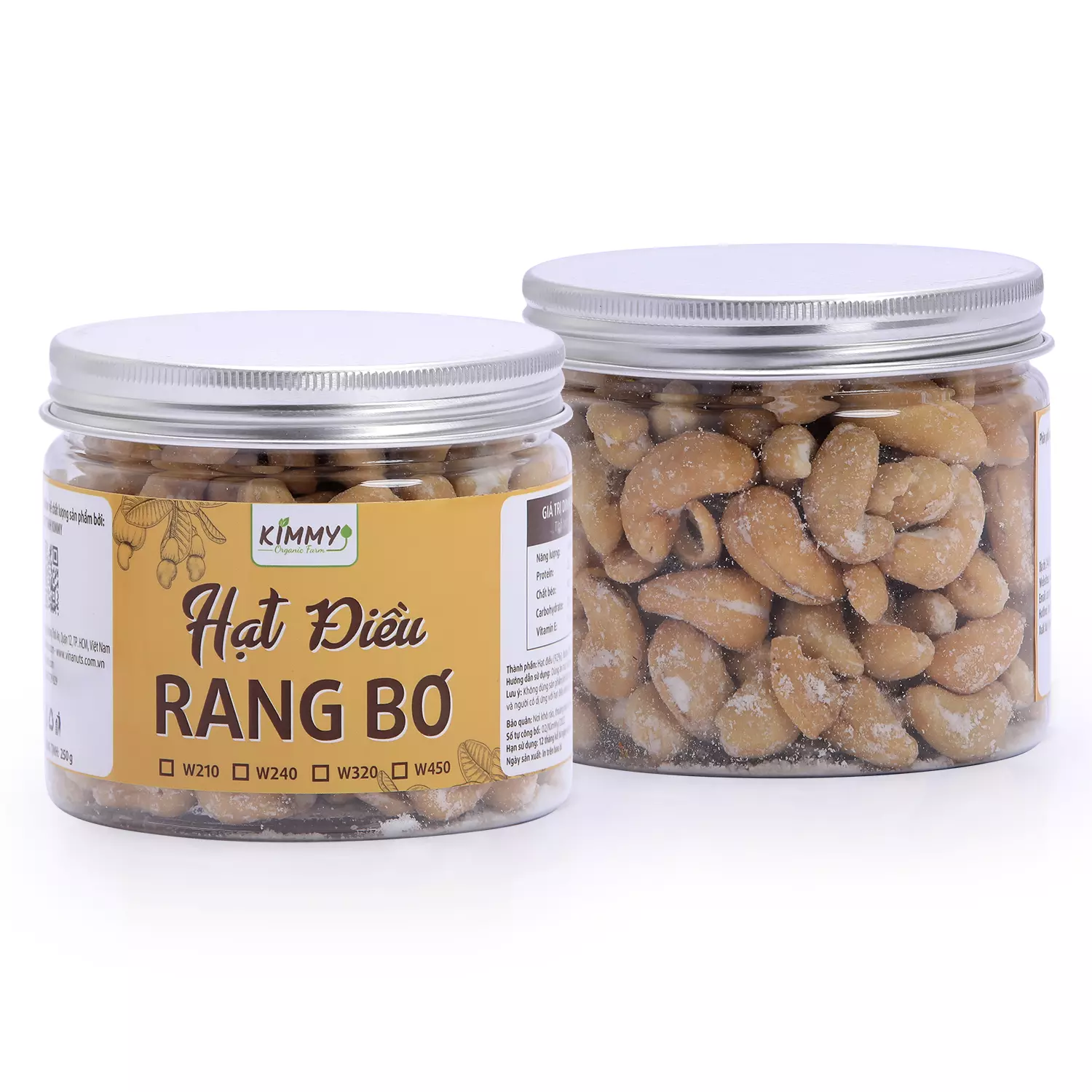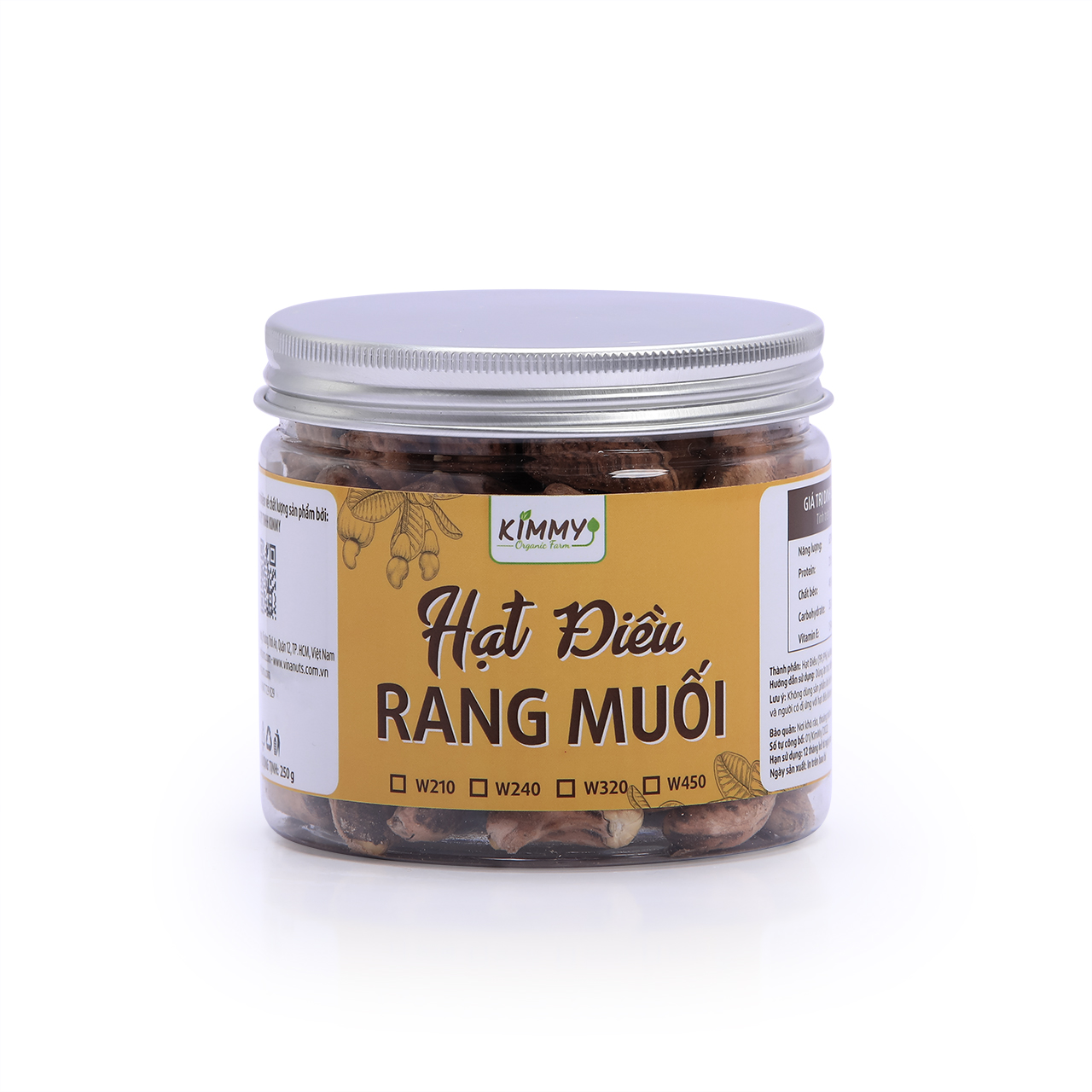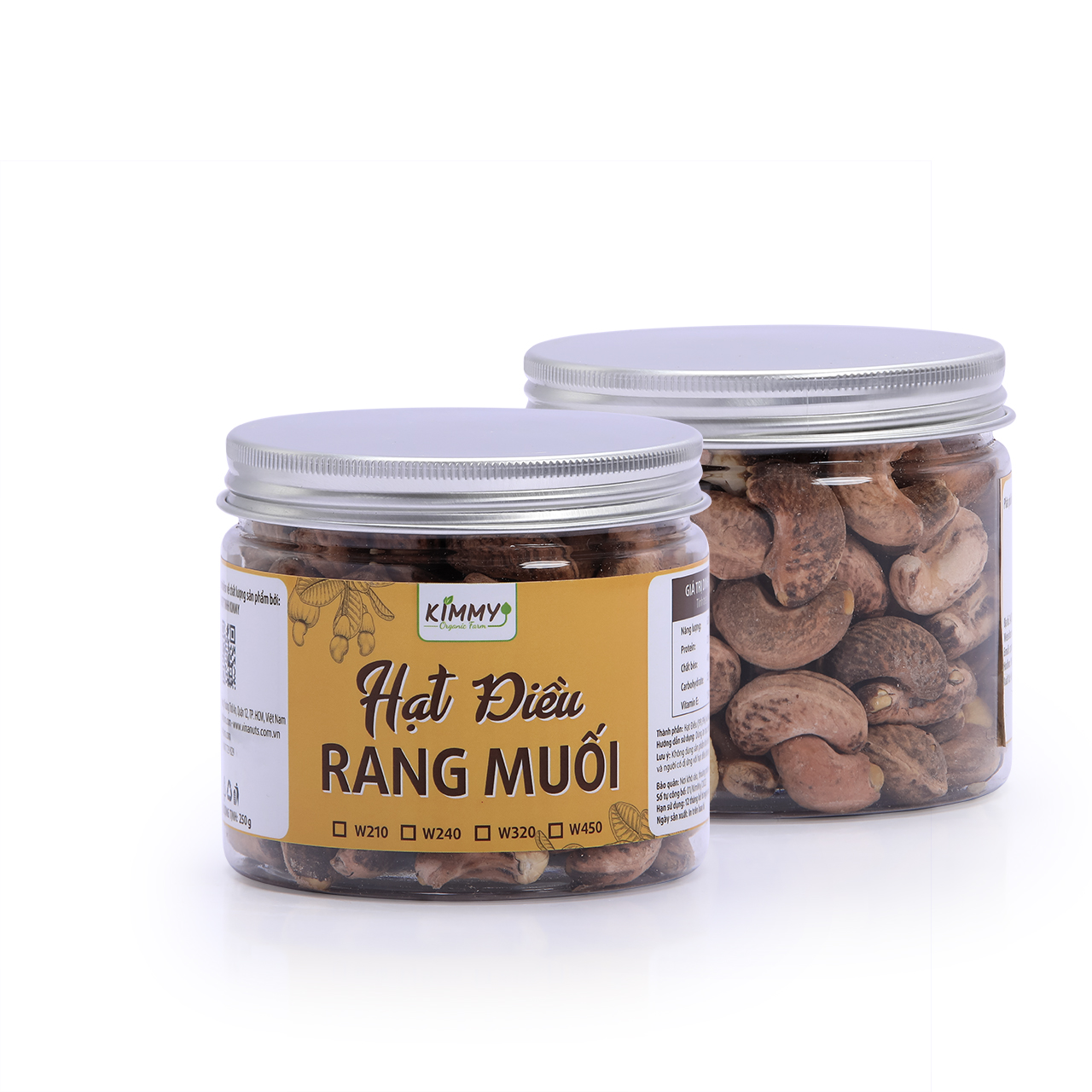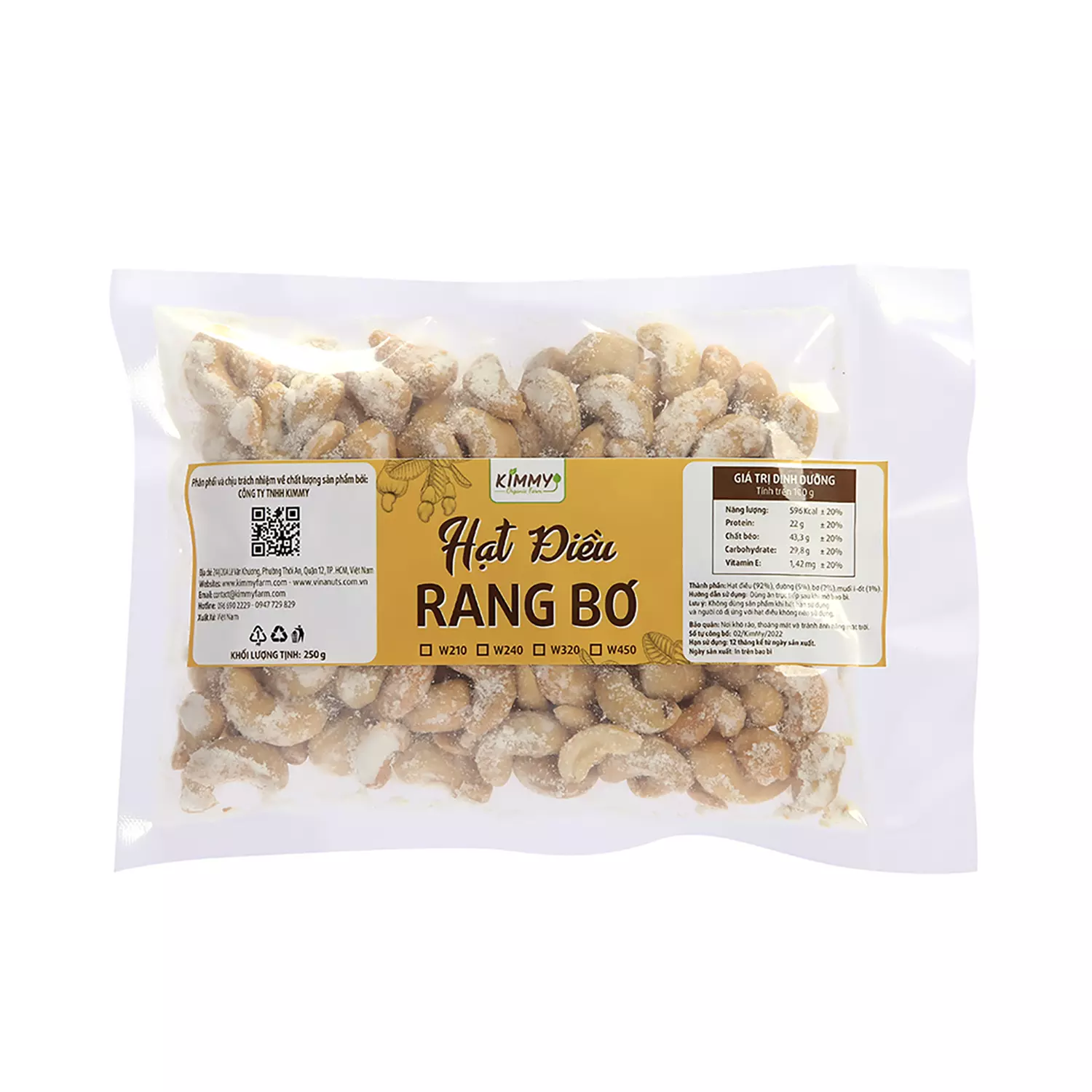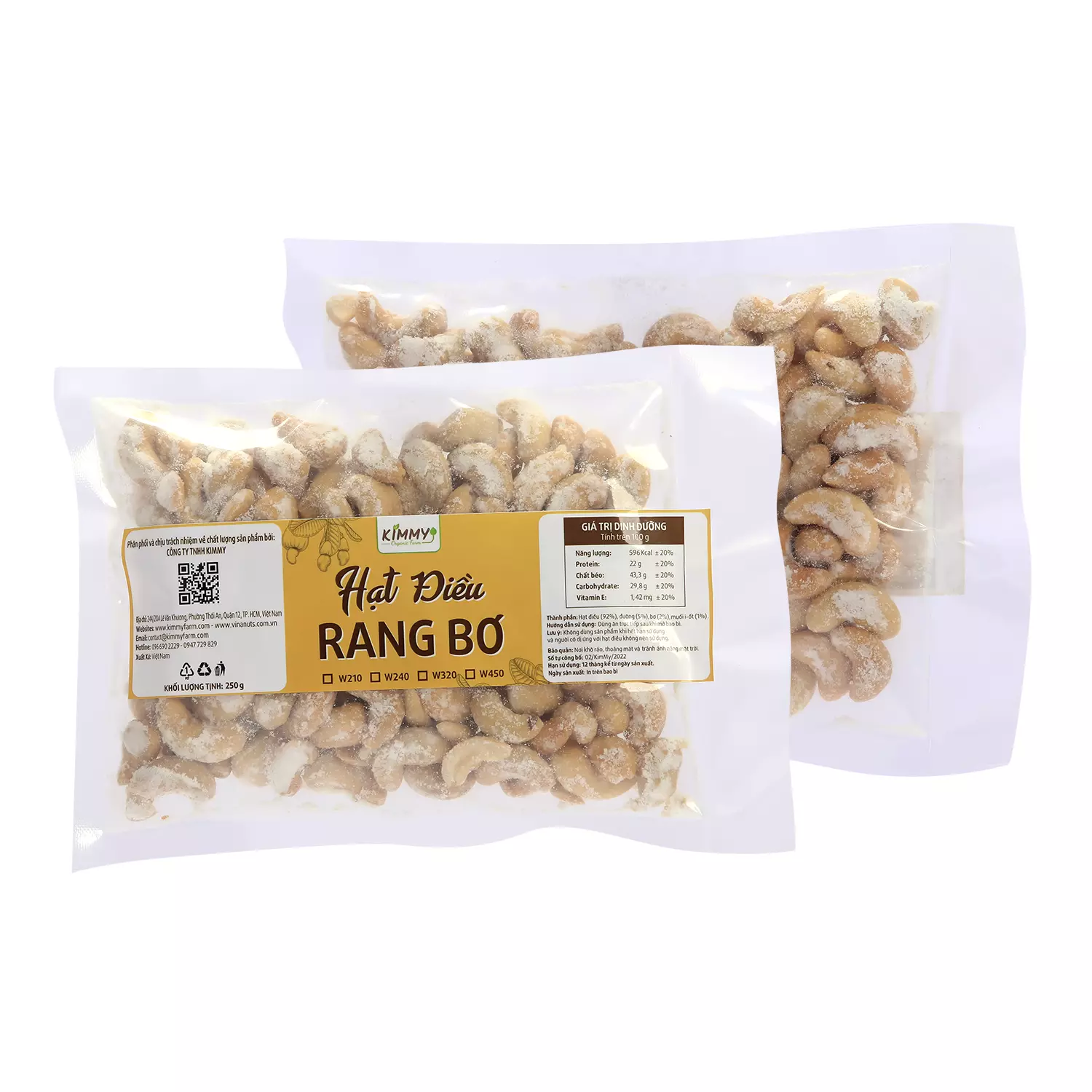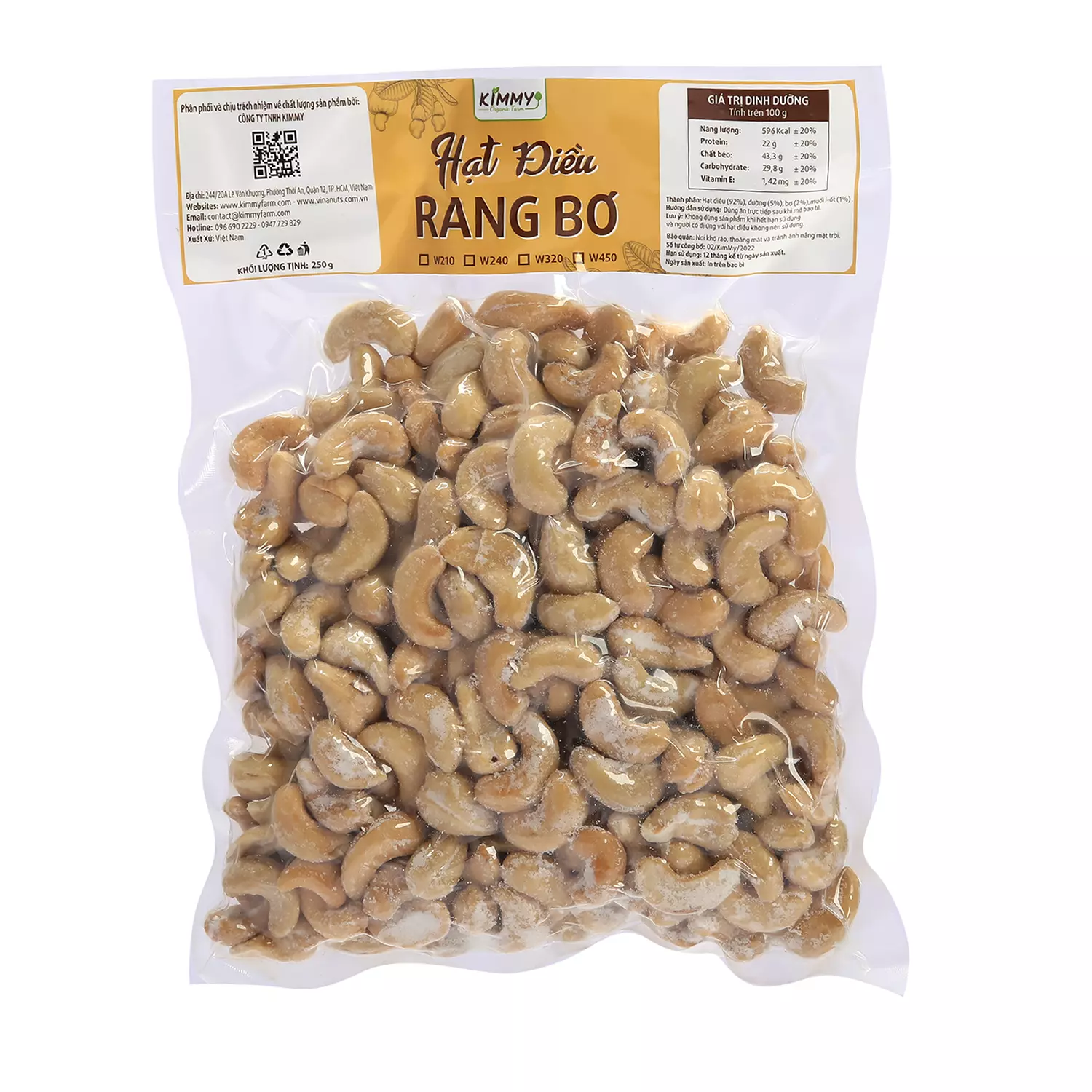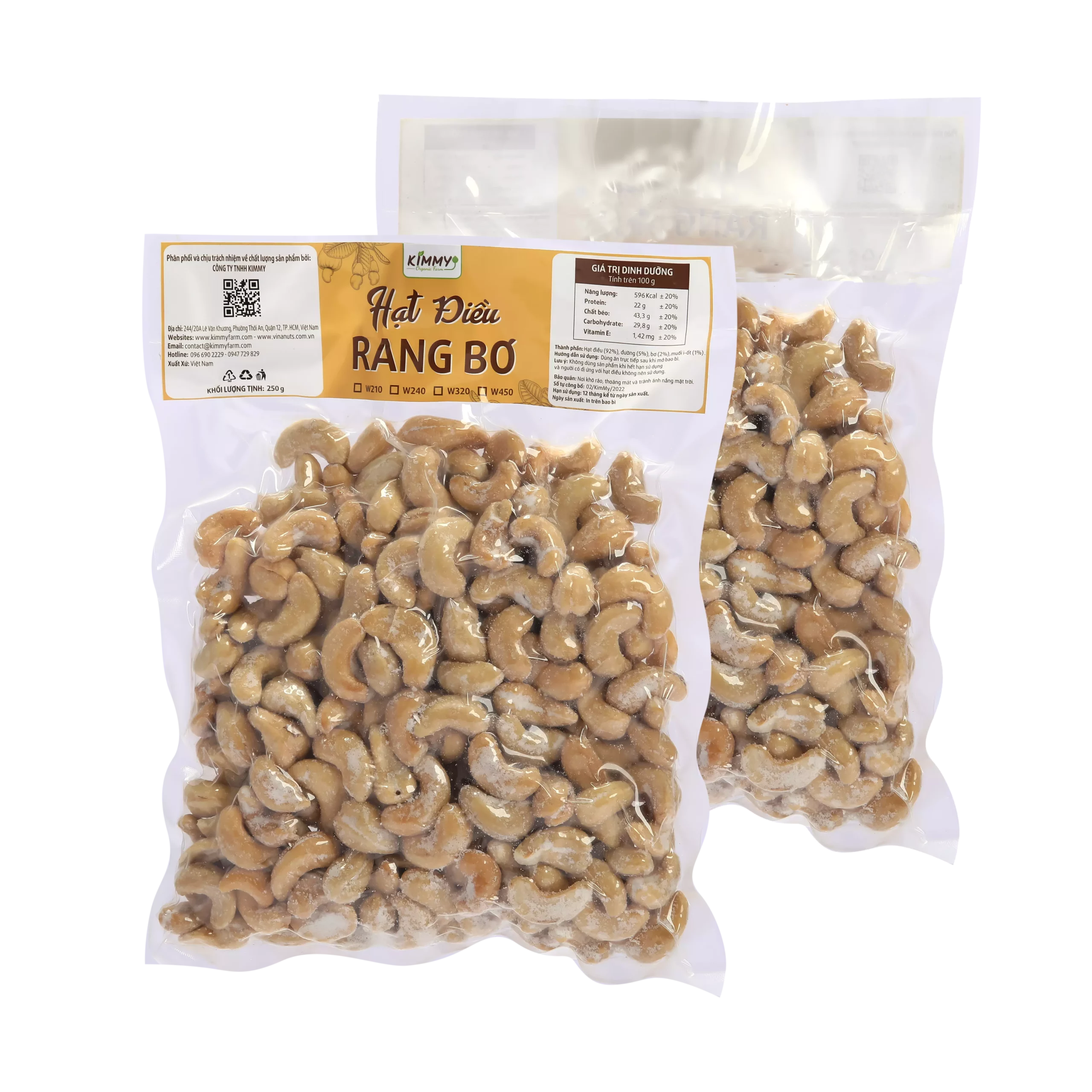
At Kimmy Farm, we specialize in supplying high-quality Vietnamese cashew nuts to customers around the world. One of the most important things our partners and clients often ask is:
“How many kilograms of raw cashew nuts do you need to produce 1 kilogram of cashew kernels?”
In this article, we’ll walk you through the raw cashew nut (RCN) to cashew kernel ratio, what affects it, and what types of kernels are typically produced after processing. Let’s take a closer look.
What Is the RCN to Kernel Ratio?
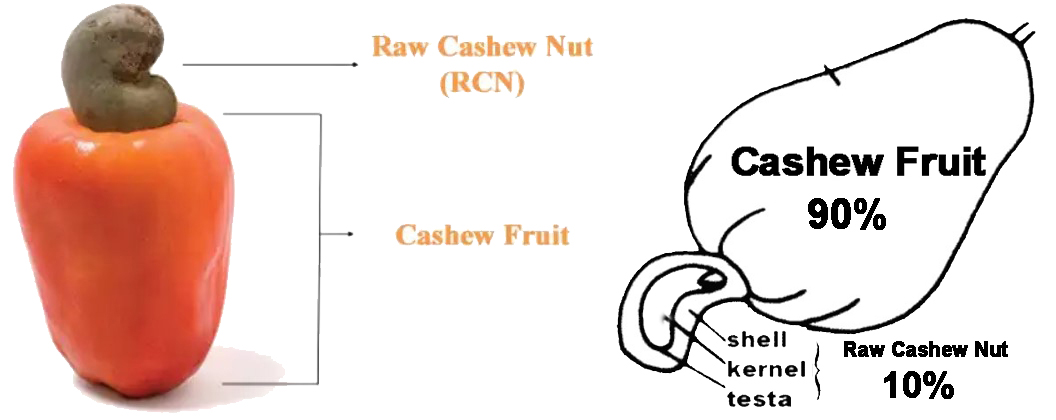
This is the most basic figure showing how much raw material (RCN) is needed to produce the finished product (cashew kernels). The conversion ratio is the amount of raw cashew nuts required to produce finished cashew kernels after shelling, drying, peeling, grading, and sorting.
A commonly used benchmark in the industry is that around 4.5 to 5 kilograms of raw cashew nuts are needed to produce 1 kilogram of cashew kernels, depending on raw nut quality and processing performance. That roughly translates to a kernel recovery rate of about 20% to 23%, while stronger lots and more efficient operations may recover more. This is why many buyers pay close attention to outturn before agreeing on a contract. Better raw nuts usually produce better kernel yield, fewer defects, and a more favorable grade mix.
- Typical ratio: On average, 4.5 kg of raw cashew nuts are needed to produce 1 kg of cashew kernels.
- Why it’s important: This 22–23% yield (known as the “outturn”) helps buyers and processors estimate costs, efficiency, and profitability. The rest (roughly 77–78%) includes: Cashew shells (a by-product often used for oil), Testa (the thin skin), Moisture loss, Processing wastage.

Grading of Cashew Kernels
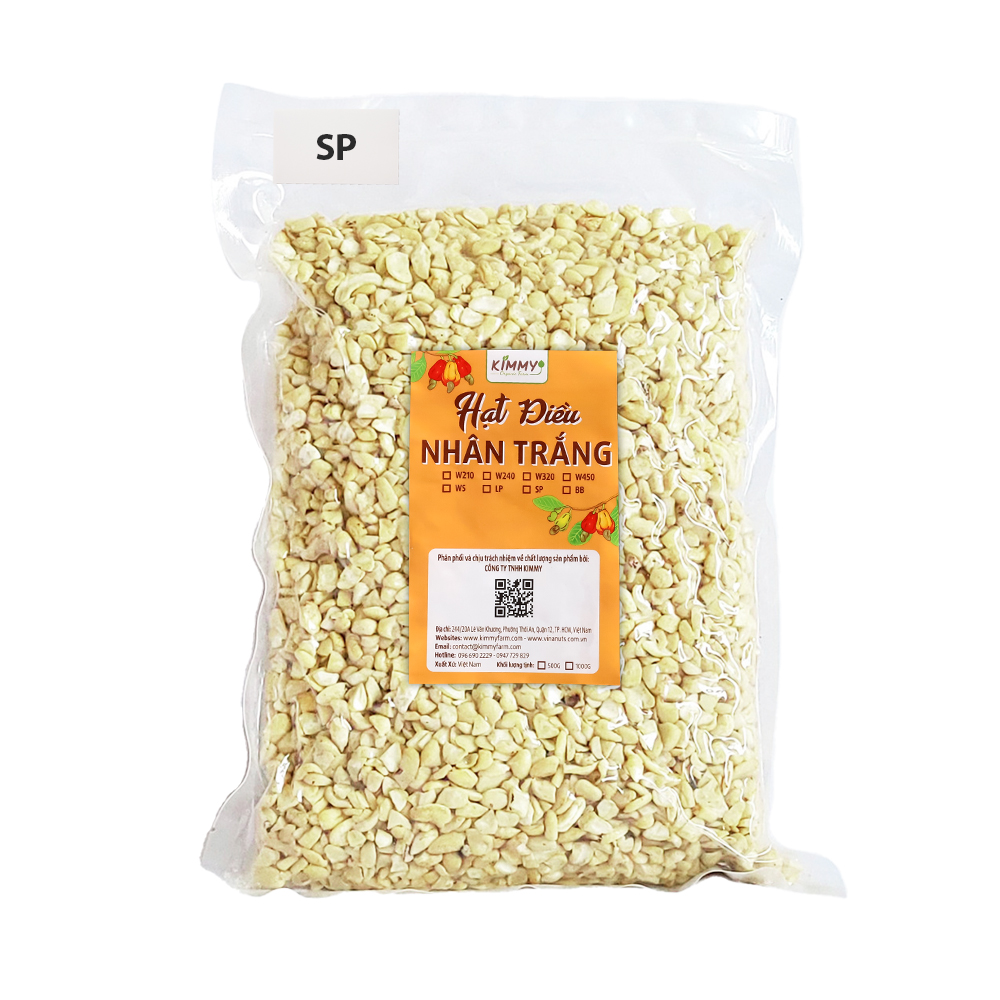
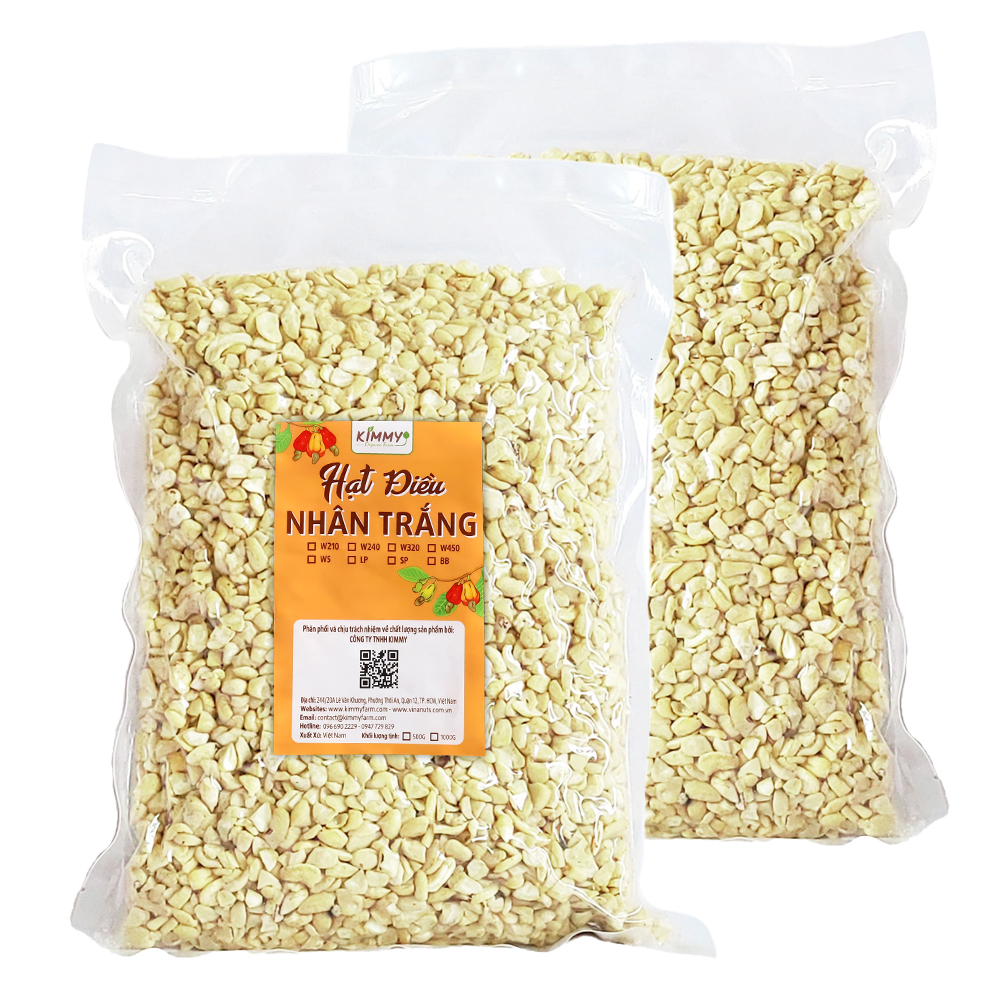
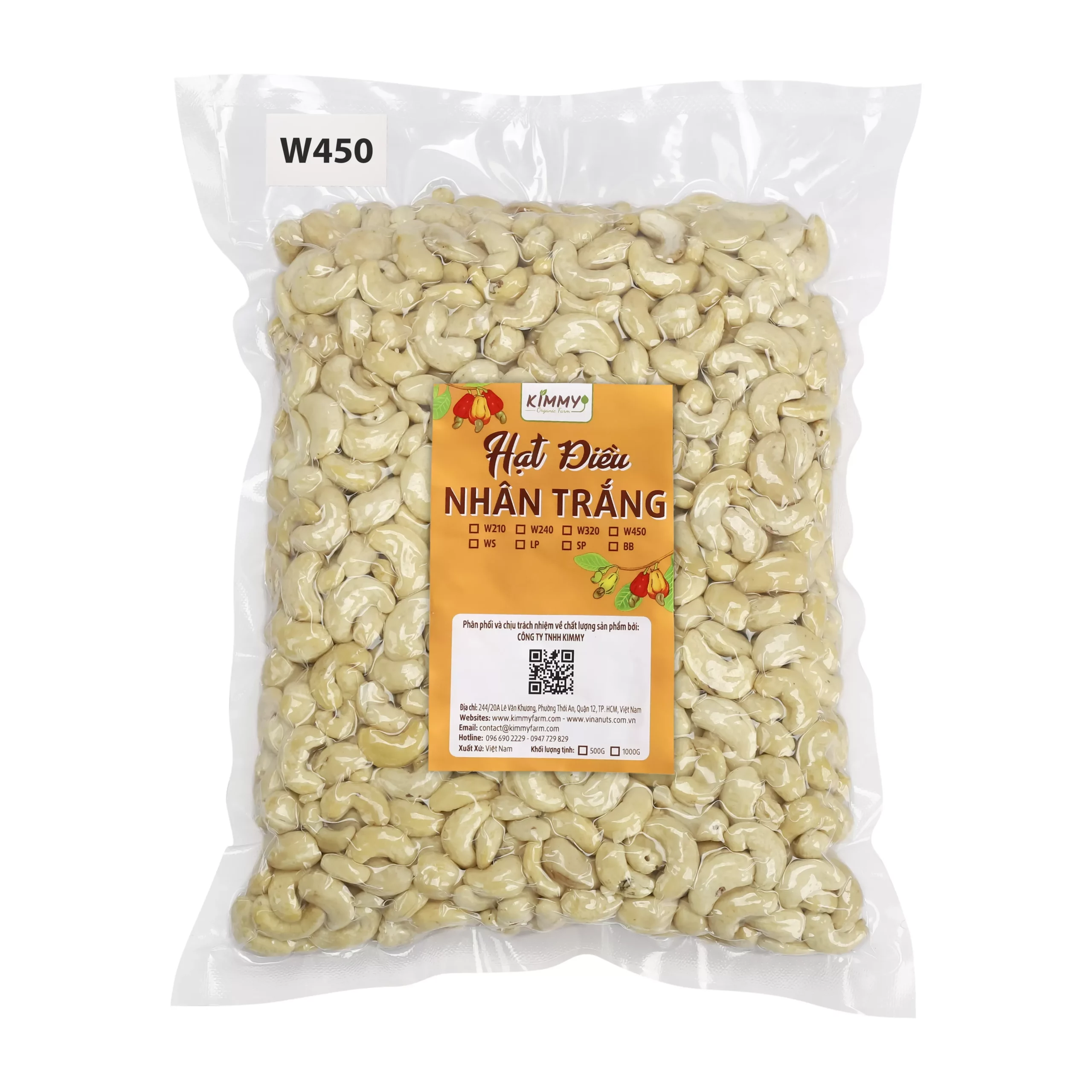
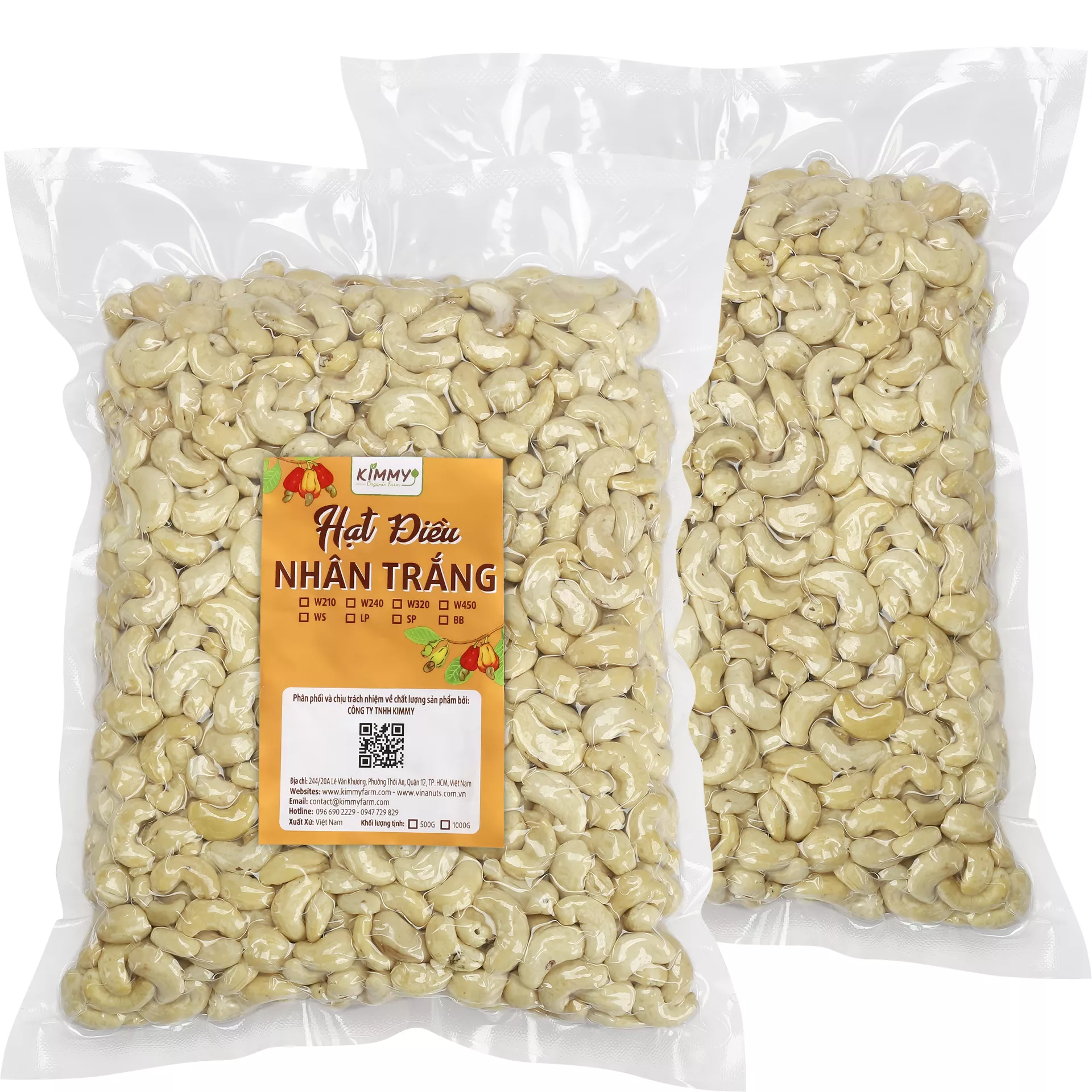
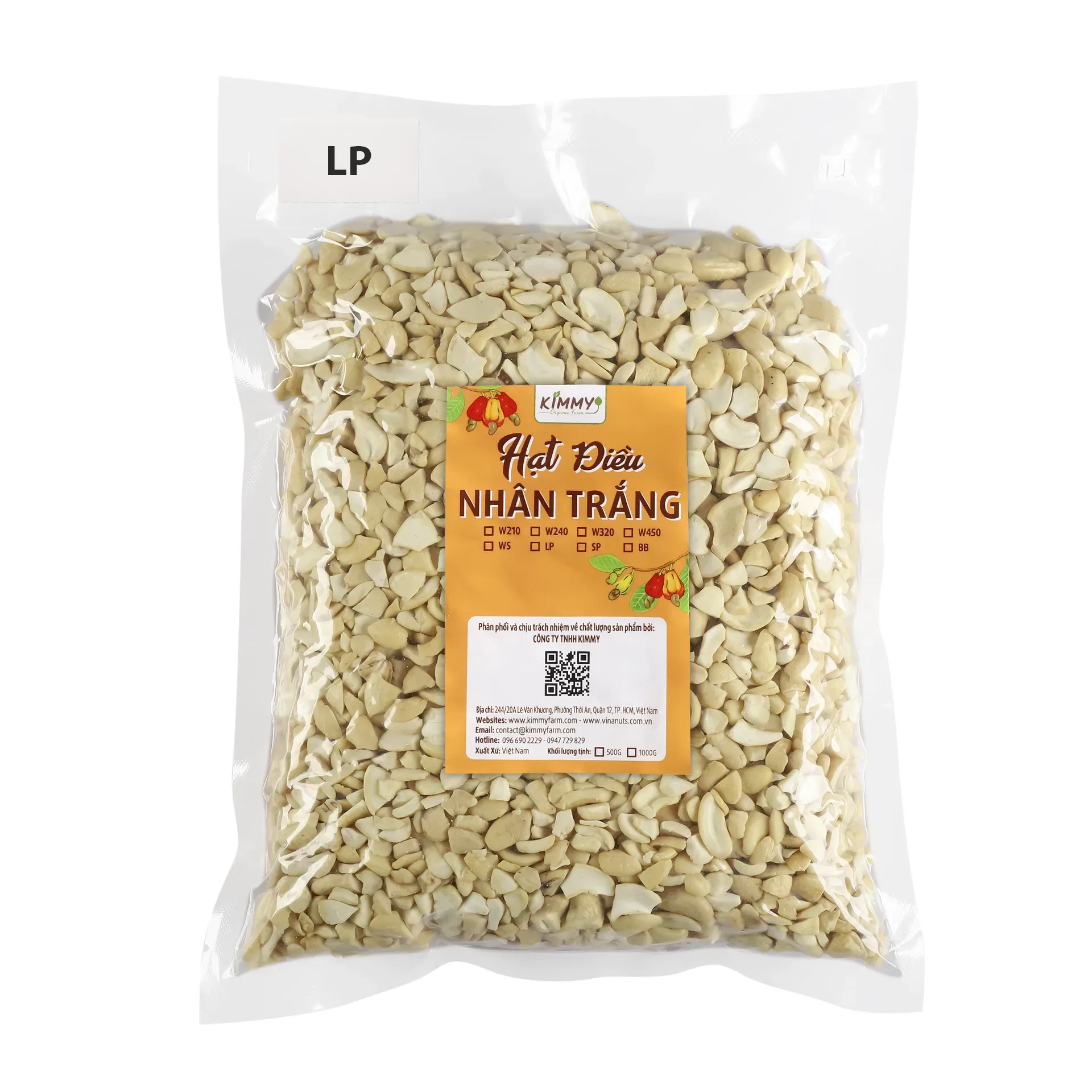
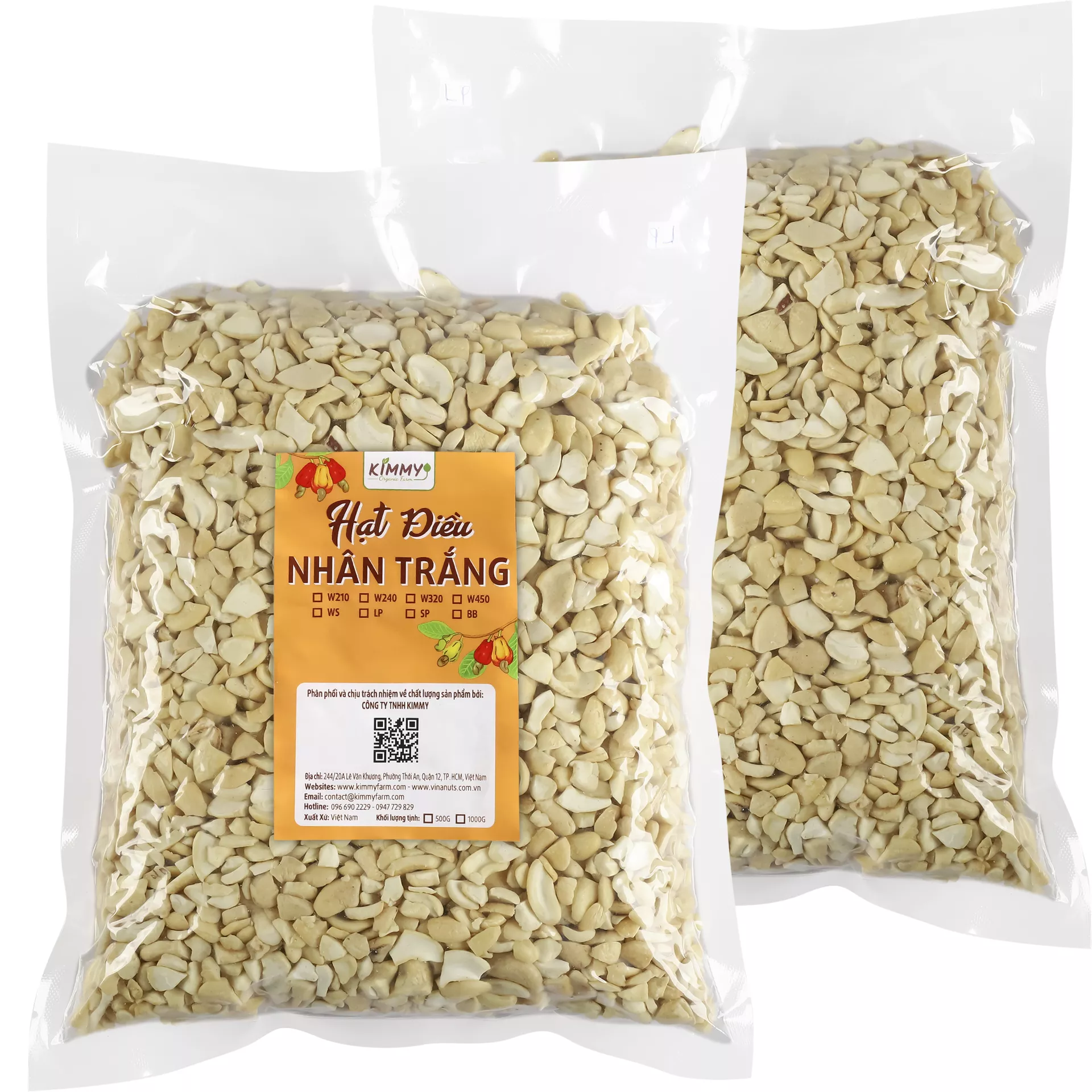
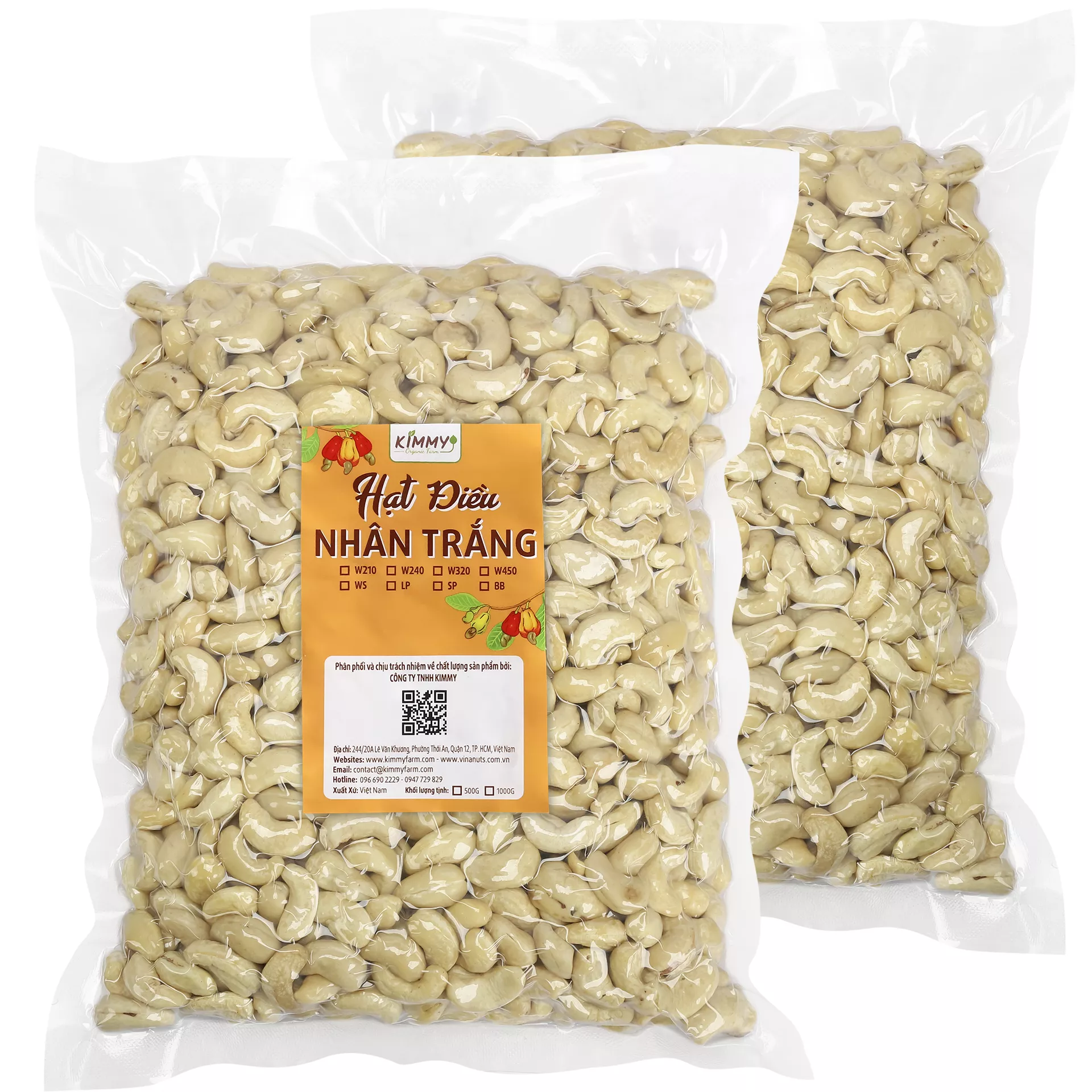
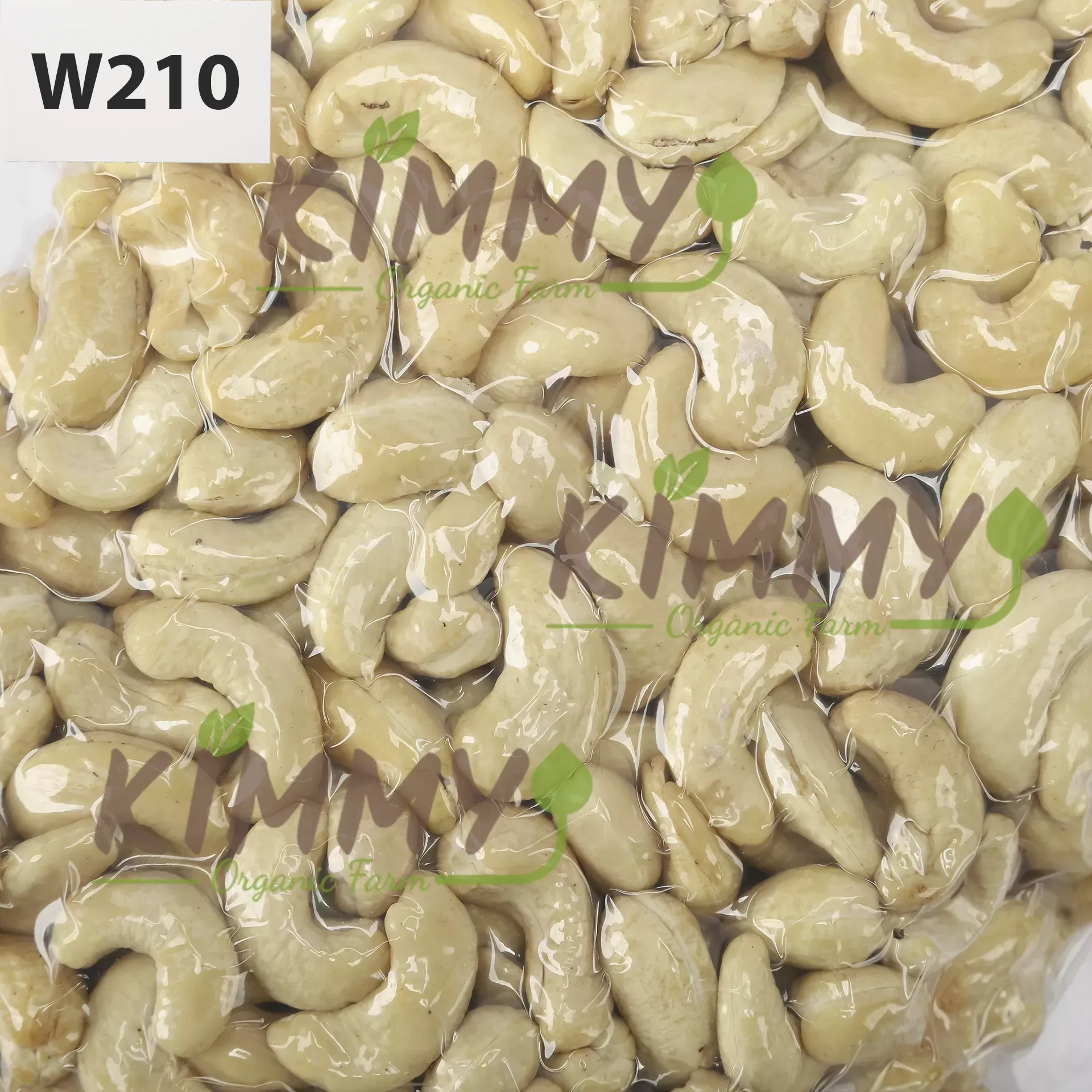
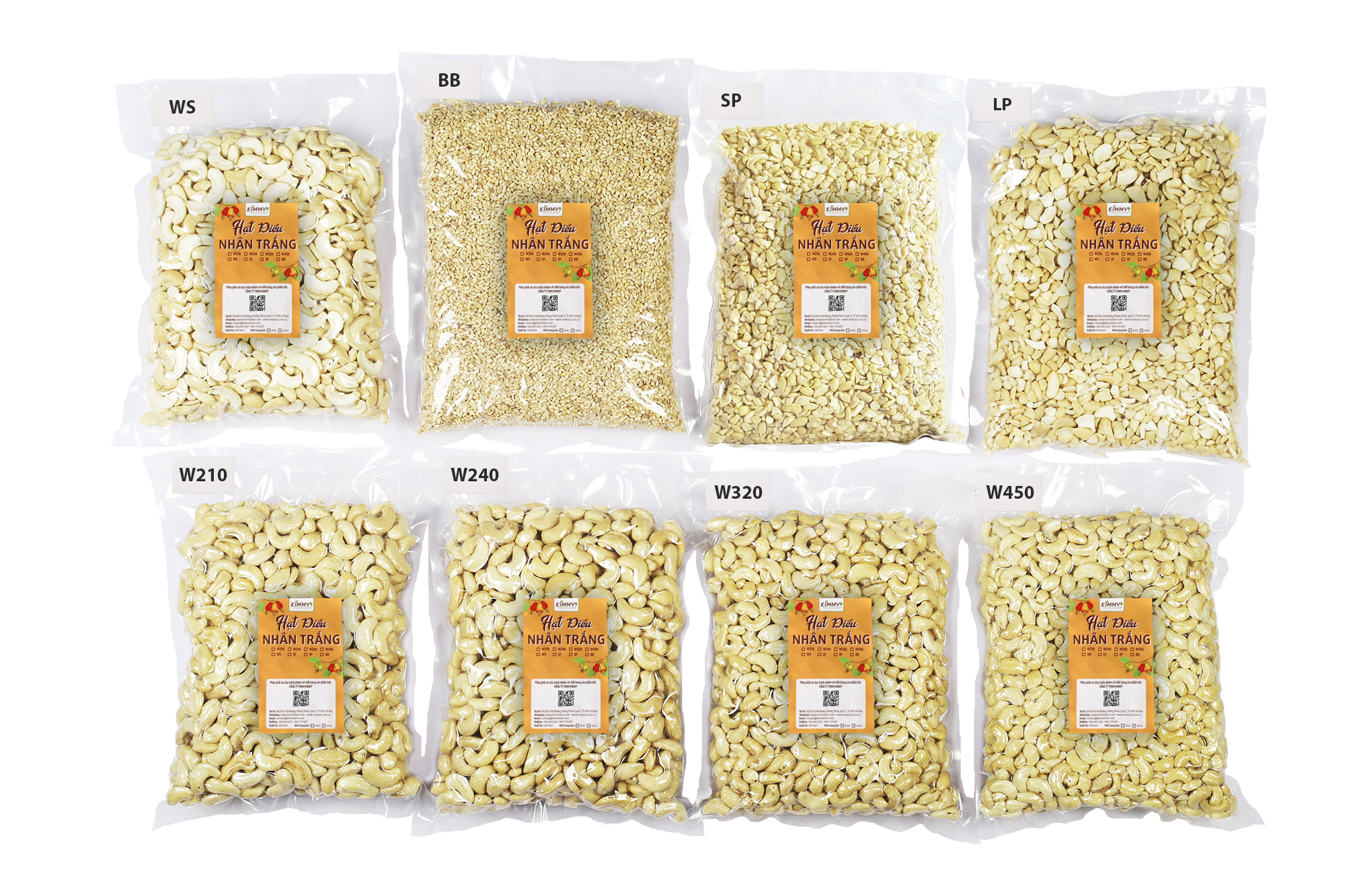
After processing, kernels are sorted by size, shape, and condition into various grades. This affects both pricing and usage (e.g., premium grades for export, broken grades for snacks or confectionery). Here’s how the kernel output is distributed from 1 kg of processed kernels, based on your image data:
| Kernel Grade | % Yield | Description |
|---|---|---|
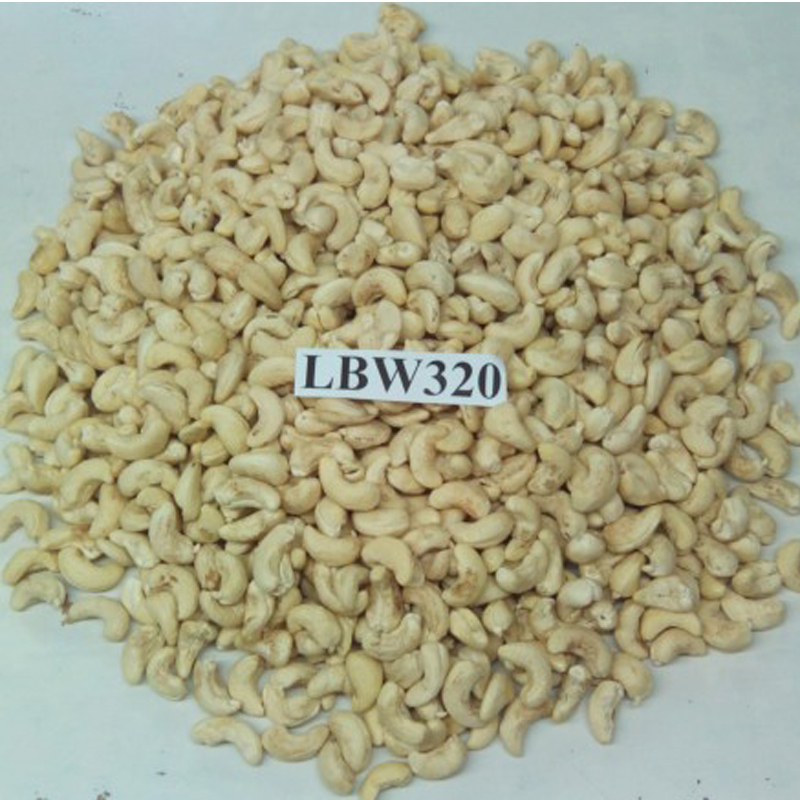
| W320 | 45% | Whole White kernels, 320 nuts per pound – most popular export grade due to balance of size and cost. |
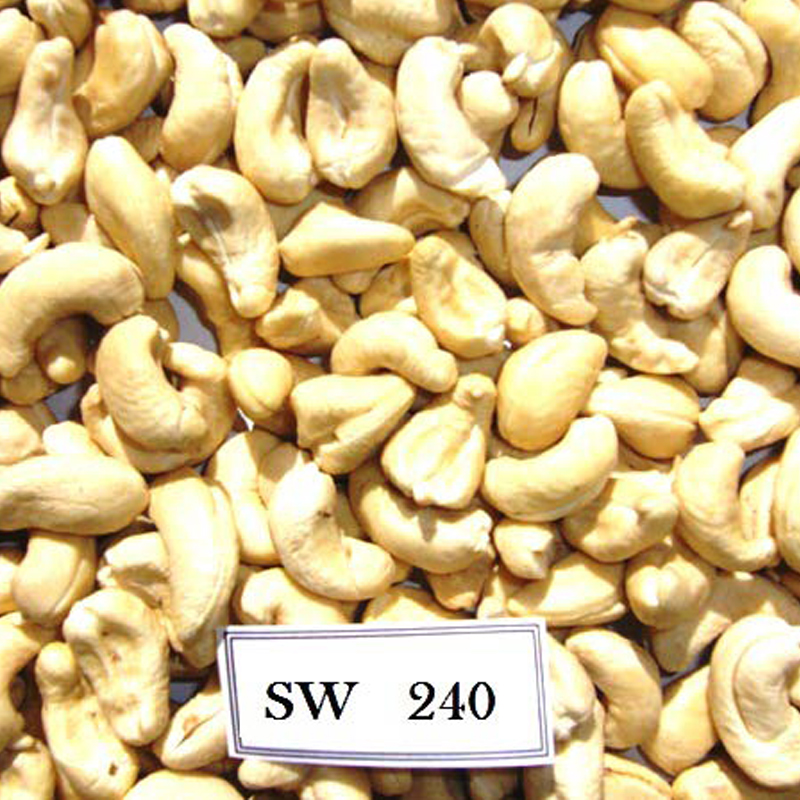
| W240 | 20% | Whole White, larger size (240 nuts per pound) – considered premium grade with higher value. |
| WS (White Splits) | 10% | Whole kernels that split naturally during processing – still white and high quality. |
| W450 | 5% | Smaller whole white kernels – lower price, but still desirable for certain markets. |
| LP (Large Pieces) | 3% | Broken large pieces – used in snacks, granola, and baking. |
| SP (Small Pieces) | 2% | Smaller broken pieces – suitable for processed foods and pastes. |
| BB (Baby Bits) | 1% | Very small bits – often used in sweets, flours, or cashew butter. |
Putting It Together: Yield Breakdown from 100 kg RCN
Let’s apply this to real numbers.
- From 100 kg of raw cashew nuts, you get approximately 22 kg of cashew kernels.
- That 22 kg would include:
| Kernel Grade | Approx. Weight (kg) |
|---|---|
| W320 | 9.9 kg |
| W240 | 4.4 kg |
| WS | 2.2 kg |
| W450 | 1.1 kg |
| LP | 0.66 kg |
| SP | 0.44 kg |
| BB | 0.22 kg |
Cashew shells are not always “waste” in the usual sense, because they can be used in other industrial applications such as shell liquid extraction. But from a kernel-yield standpoint, they are outside the edible output.
Why It Matters for Buyers and Processors
The raw cashew nut to cashew kernel ratio matters for both buyers and processors because it affects nearly every business decision tied to cashew sourcing.
- Cost Planning: If you know how many kilograms of raw nuts are required for 1 kilogram of kernels, you can estimate raw material cost more accurately and compare supply offers more fairly.
- Production Forecasting: Processors use this ratio to plan factory input, labor, line efficiency, and export volume. A small change in yield can make a big difference over large shipments.
- Pricing and Profitability: Kernel recovery rate directly affects margin. If the raw nuts deliver fewer whole kernels or more broken grades than expected, profitability can drop fast.
- Quality Control: The ratio also gives buyers a quick signal about raw nut quality, moisture management, shelling performance, and peeling efficiency.
At Kimmy Farm, we provide full transparency about kernel yield and grade ratios in every shipment. Whether you are sourcing for wholesale, retail, or private label, we help you understand exactly what you’re getting.
Need to Buy Cashew Kernels?
We can provide cashew kernels in customized ratios and packaging to suit your business needs. Whether you’re looking for premium W240 or economical broken kernels, Kimmy Farm is ready to supply with consistent quality and competitive prices. Contact us today for a quotation or more information about our cashew products.
Final Thoughts / Conclusion
The conversion ratio from raw cashew nut to cashew kernel is one of the most useful indicators in the cashew trade. It helps explain how raw material becomes finished product, how yield affects cost, and why kernel grade distribution matters so much. As a general rule, buyers can expect that around 4.5 to 5 kg of raw cashew nuts are needed to produce 1 kg of cashew kernels, though the actual outcome depends on raw nut quality, moisture control, defects, and processing efficiency. For anyone sourcing cashew products, the smartest approach is to look beyond headline pricing and understand the deeper numbers behind outturn, kernel recovery, and grade mix. That is where the real value becomes clear.

A brand specializing in the production and export of agricultural products in Vietnam. We have a black soldier fly farm in Tay Ninh and a cashew growing area in Binh Phuoc. The main export products of the company are: cashew nuts, cashew nut kernels, black soldier fly, frozen seafood, shrimp, prawns, catfish… from Vietnam.