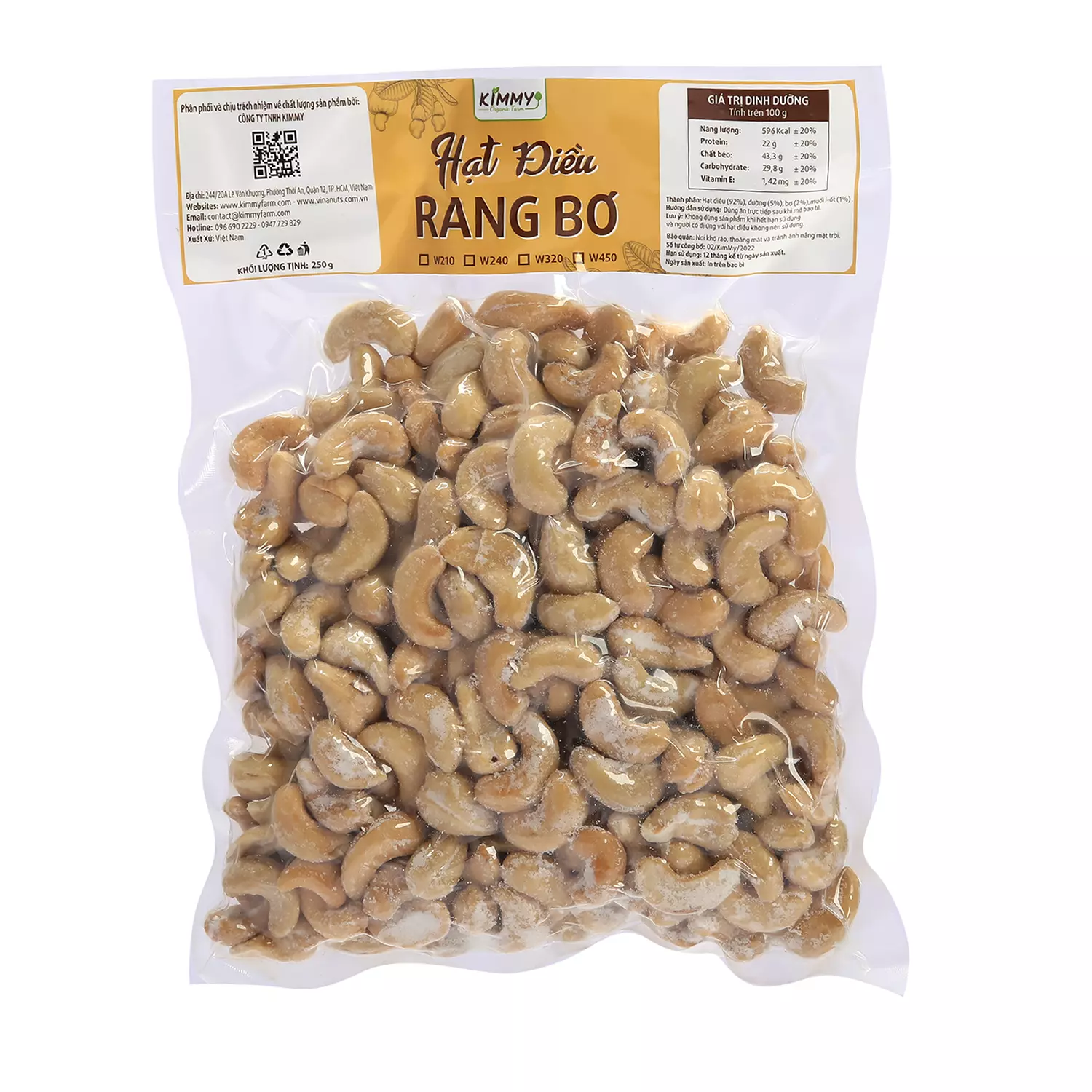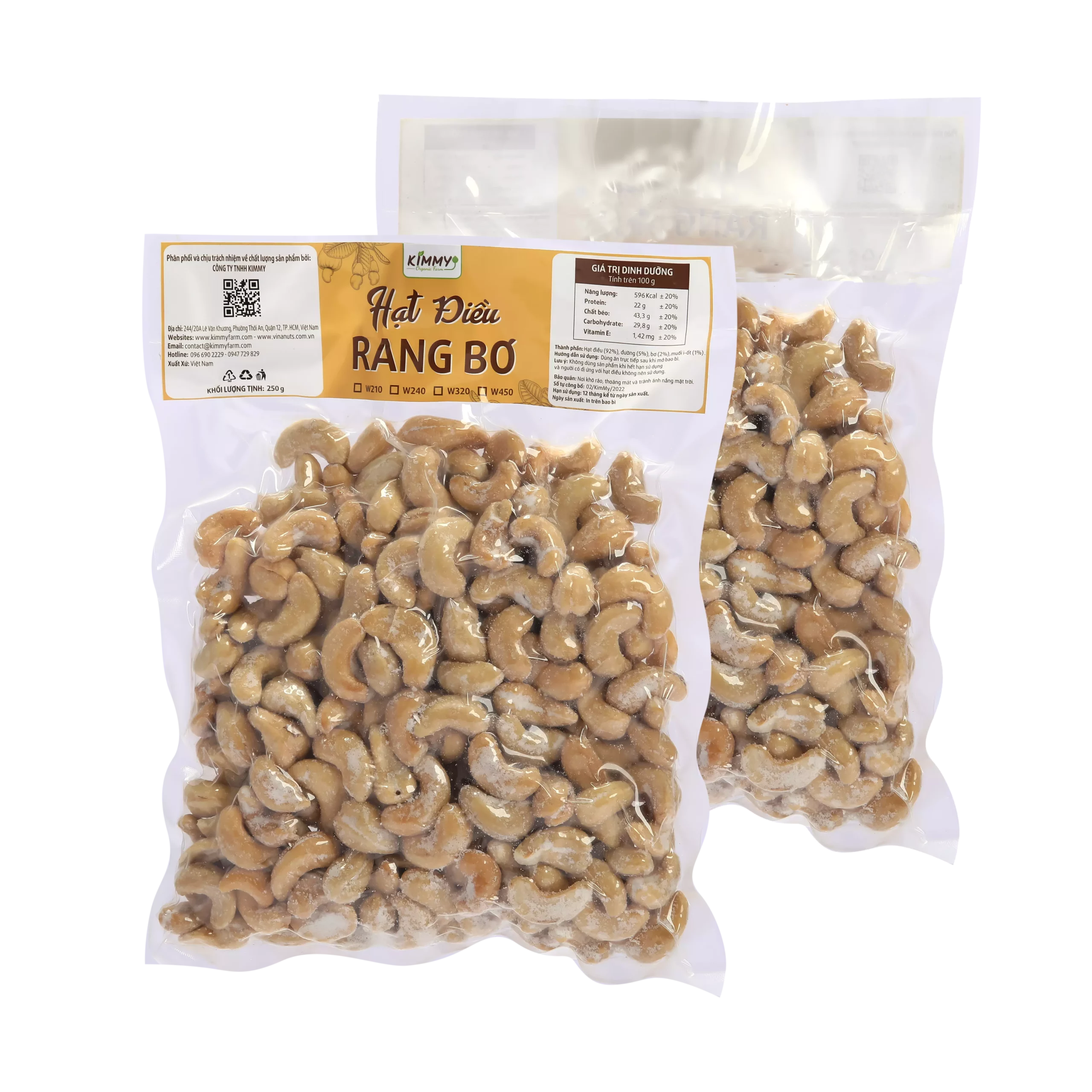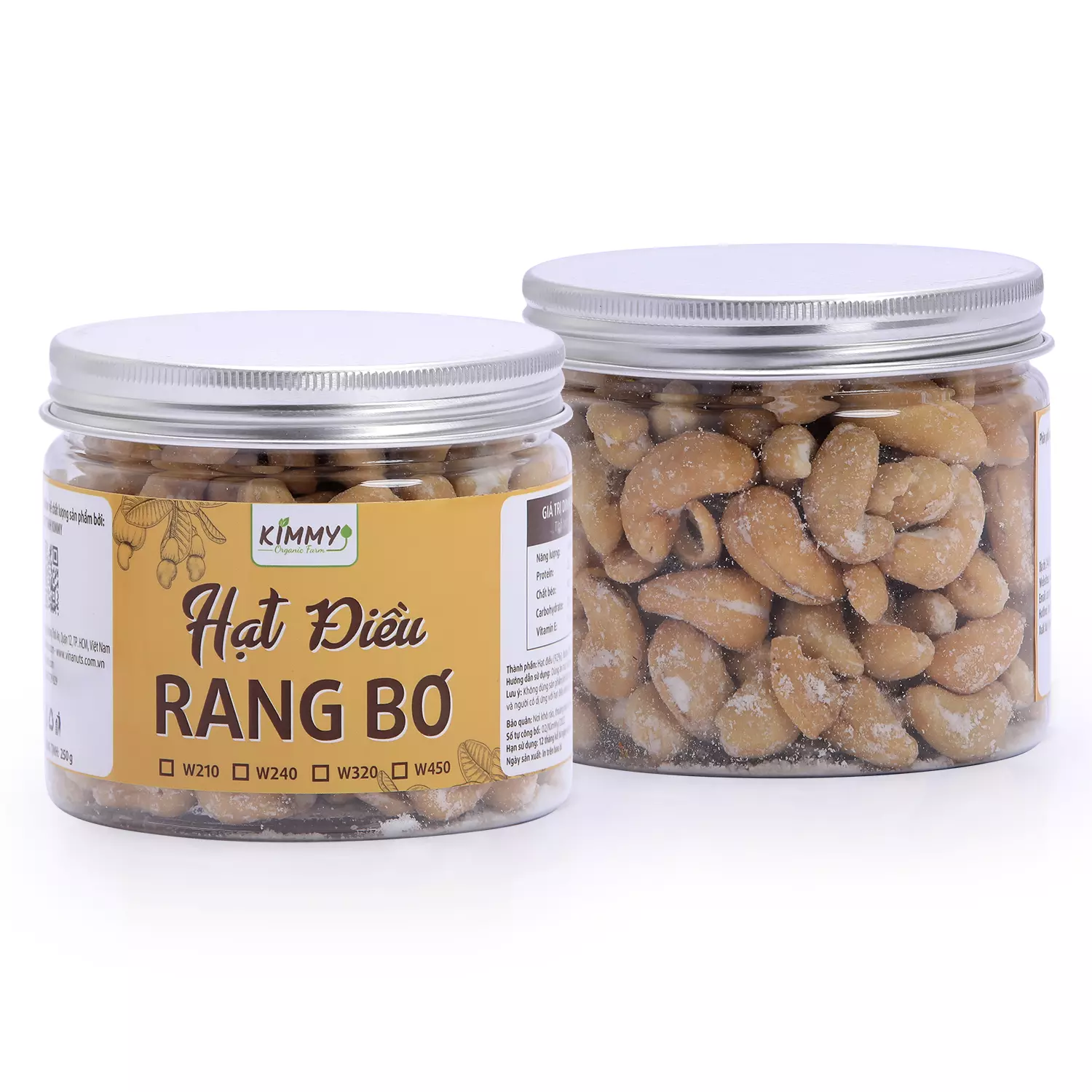
Are cashews good for children? Yes, cashews can be very nutritious for children when served in the right form and amount. Cashews contain natural nutrients such as vitamins, minerals, antioxidants, healthy fats, protein, and fiber, which can support children’s growth, development, and learning.
However, many parents still wonder: Are cashews suitable for young children? At what age can babies eat cashews? And how can parents prepare nutritious cashew dishes safely for babies and toddlers?
In this article, Kimmy Farm will answer the common question: “Can babies eat cashews?” and share useful tips for adding cashews to a child’s diet safely.
=> Read more: Are Cashews Good for Pregnant Women? Benefits for Both Mother and Baby
Can Babies Eat Cashews?
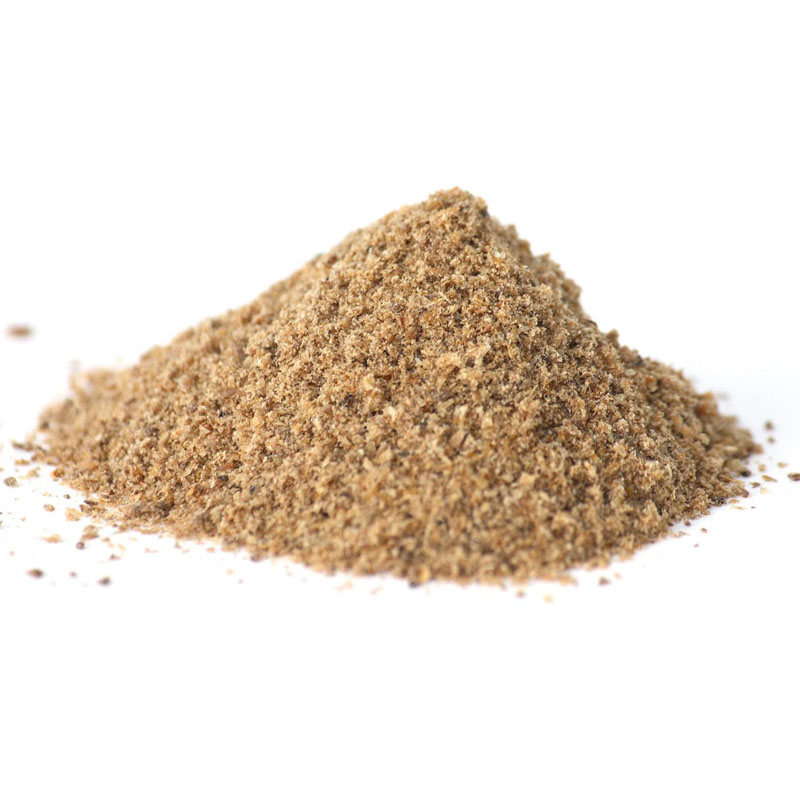
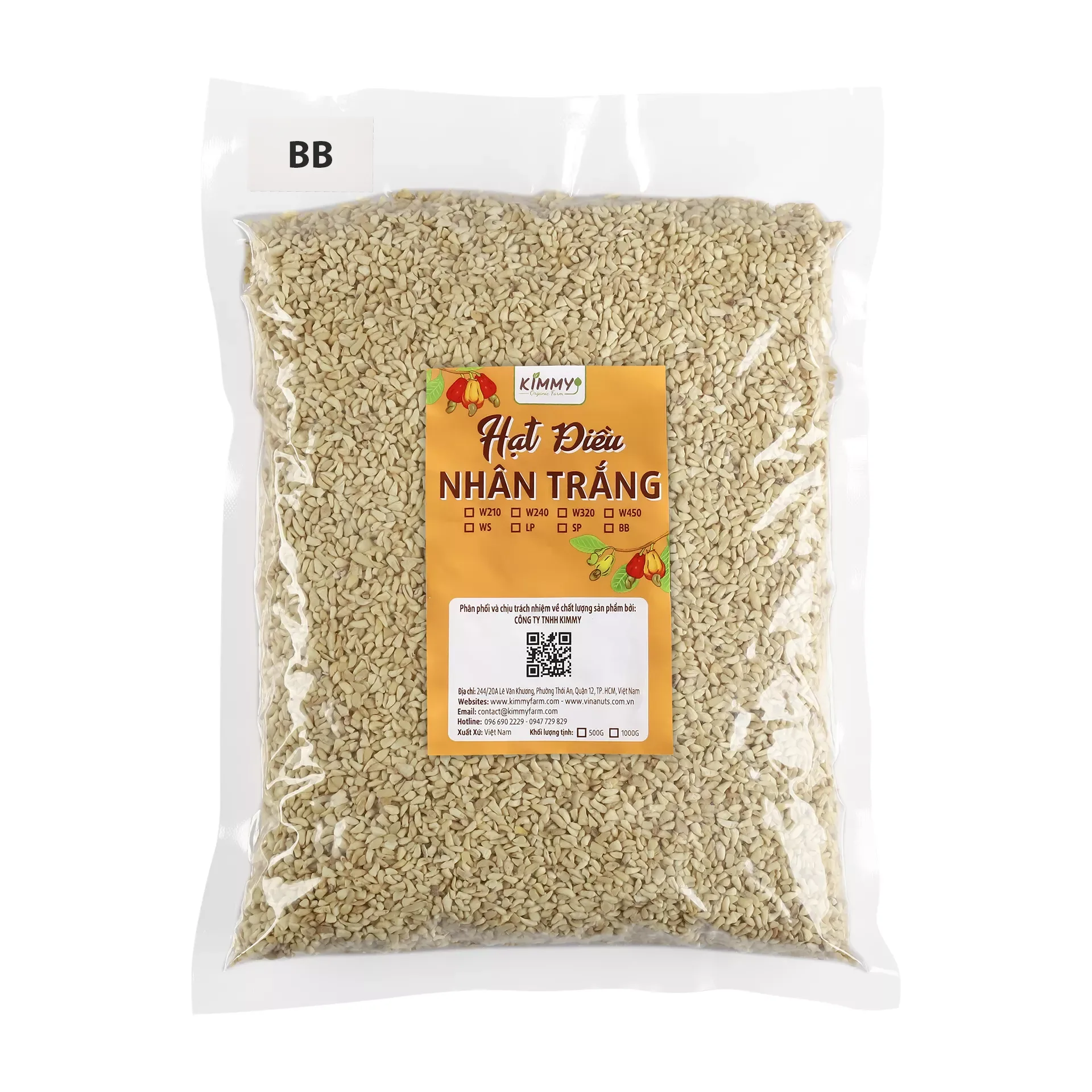
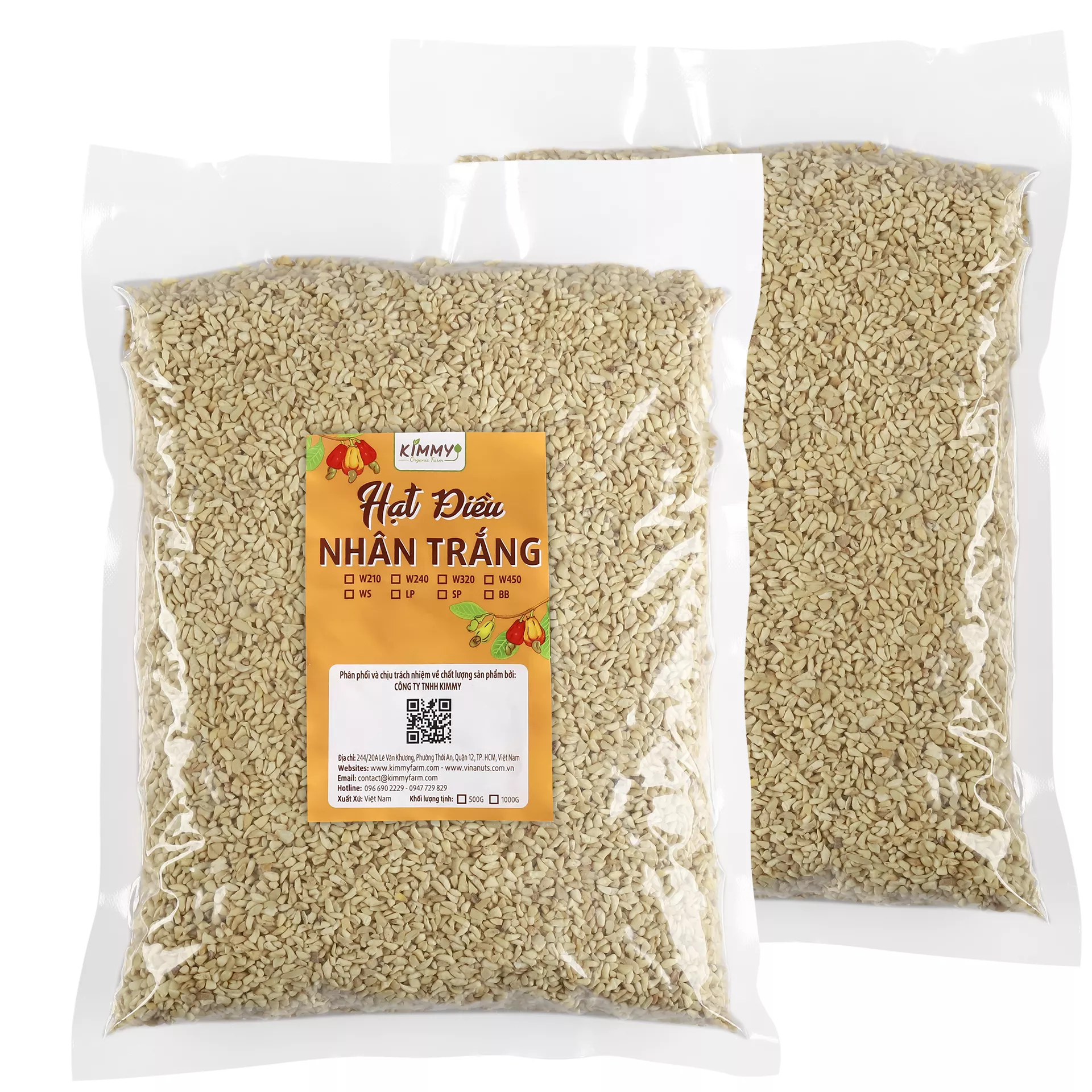
The answer is yes, but cashews must be prepared safely. For babies who are starting solid foods at around 6 months old, parents should offer cashews only in smooth and soft forms, such as finely ground cashew powder, smooth cashew butter, or cashew milk.
Whole cashews, chopped cashews, and thick cashew butter can be choking hazards for babies and young children. Therefore, parents should always check the texture carefully before serving.
A safer age for children to start eating whole or larger pieces of cashews is usually after 3 years old, when they can chew solid foods more confidently. Even then, parents should supervise closely.
=> Read more:
- What Is Cashew Powder? How to Make Cashew Powder at Home
- What Is Cashew Butter? How to Make Cashew Butter at Home
- How to Make Fresh and Delicious Cashew Milk
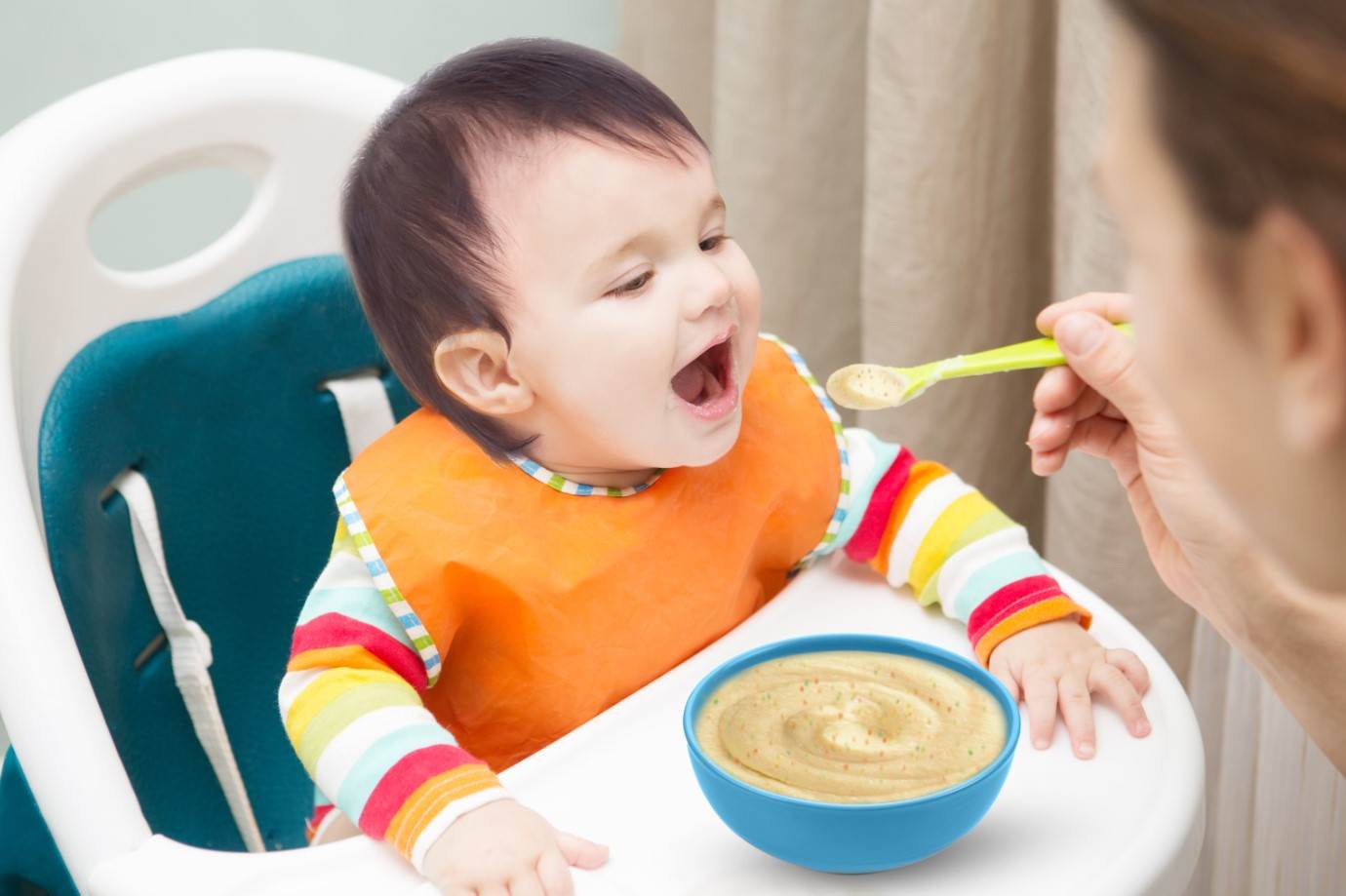
Can babies eat cashews? The answer is yes, but cashews should be served as finely ground powder, smooth cashew butter, or cashew milk when babies start solids at around 6 months old.
=> Note: Start with a very small amount, such as the equivalent of 1 to 2 cashews, then gradually increase if the child tolerates it well. For children under 3 years old, parents can prepare cashew smoothies, cashew milk, or cashew porridge for weaning meals. A serving may use around 5 to 6 cashews, depending on the child’s appetite and age.
When feeding babies cashews, choose unsalted and unsweetened cashews or smooth cashew butter whenever possible.
What Benefits Do Cashews Offer Children?
- Cashews are rich in healthy fats, which can support the nervous system and brain development.
- Cashews contain zinc and fiber, both of which are important for healthy growth and digestion.
- Nuts in general, including cashews, are a good source of plant-based iron and protein.
- Cashews also contain vitamin K, a nutrient needed for normal blood clotting.
=> Read more: Health Benefits of Cashews
Like most nuts, cashews can turn rancid if stored incorrectly. Cashews and opened jars of cashew butter should be kept in the refrigerator to extend shelf life. Cashews can usually stay fresh in the refrigerator for up to 6 months and in the freezer for up to 1 year.
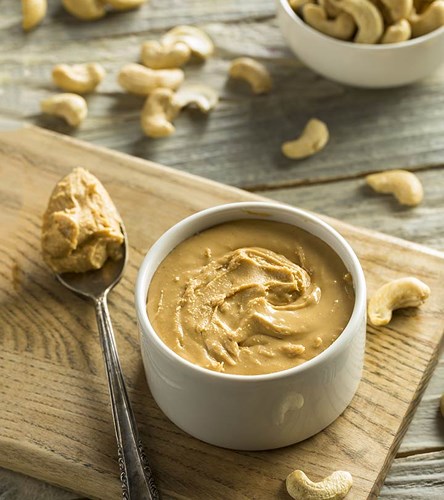
Cashew butter can help children get used to nutritious nuts more easily.
Supports Healthy Muscles and Nervous System
Cashews are a source of many minerals that are useful for children’s health. One important mineral is magnesium, which supports the development of muscles, bones, body tissues, and organs.
Magnesium also helps support heart health, immune function, and nerve function. In addition, it plays a role in metabolism and is involved in insulin activity and blood sugar balance.
A lack of magnesium may affect how calcium and other hormones work in the body.
=> Read more: Can Eating Cashews Cause Coughing?

Cashews can be included in a nutritious diet during pregnancy – Kimmy Farm Vietnam
Helps Prevent Constipation in Children
Cashews and cashew butter may help support regular bowel movements. They provide fiber and magnesium, both of which can support digestion and help move stool through the intestines more smoothly.
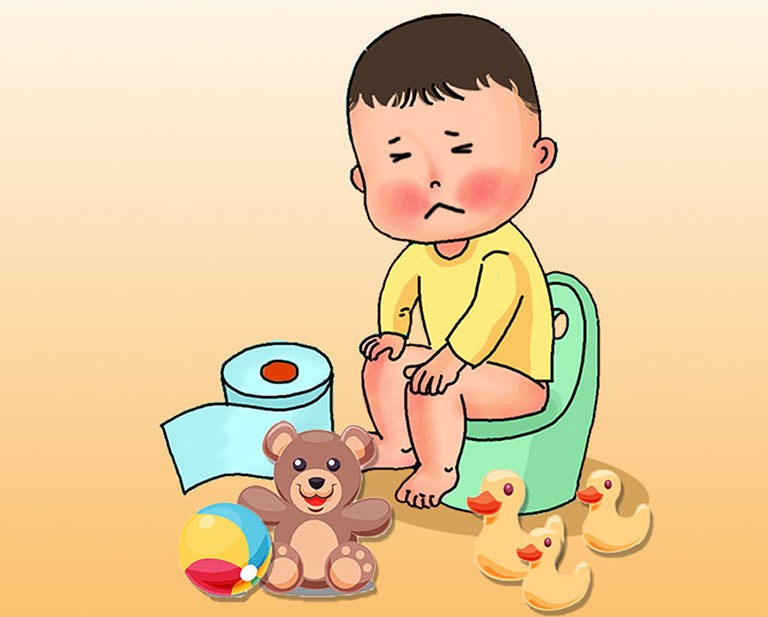
Cashews and cashew butter may help support healthy digestion and reduce constipation in children – Kimmy Farm Vietnam
Supports Blood Cell Production
Cashews are often recommended as part of a nutrient-rich diet for children who may need more iron and minerals. Cashews contain copper and iron. Copper helps the body use iron and supports the production of red blood cells.
Copper also plays a role in nutrient metabolism. A lack of copper may be linked with weak bones, abnormal heartbeat, and anemia.
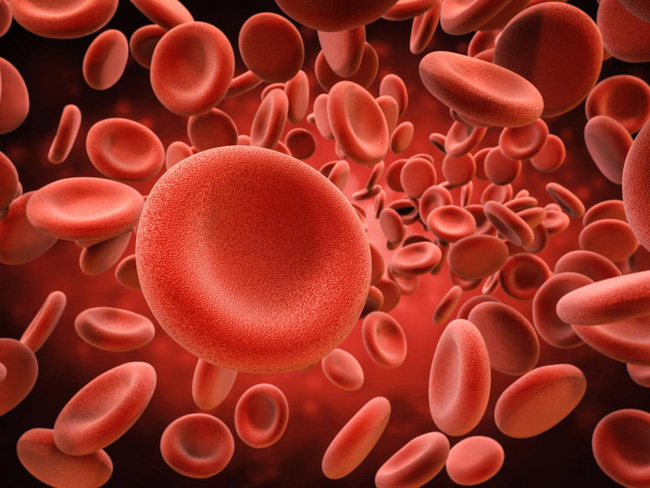
Cashews contain copper and iron, which help support iron metabolism and red blood cell production.
Supports Bone and Teeth Development
Cashews contain calcium and phosphorus, two minerals that support healthy bones and teeth in children. Phosphorus also helps the body synthesize protein, absorb carbohydrates and fats, and maintain normal cell function.

Cashews contain calcium and phosphorus, which support healthy teeth and bones in children.
Supports the Immune System
Cashews contain zinc, an important trace mineral that helps support the immune system. Zinc also plays a role in protein synthesis and wound healing.
Because cashews provide many useful nutrients, parents can add them to children’s meals in suitable amounts and safe forms.

Cashews contain zinc, an important mineral that supports the immune system.
How to Feed Cashews to Children Safely
Children from 6 to 12 Months Old
At this age, babies can choke easily. Therefore, cashews must be prepared very carefully before serving.
Parents can mix smooth, unsalted, and unsweetened cashew butter with applesauce, yogurt, milk, formula, or water until the texture is thin and smooth. This mixture can be used as a sauce for porridge or cooked vegetables.
You can also grind cashews into a fine powder and sprinkle a small amount over soft fruits such as avocado or banana, or over cooked porridge.
Another option is cashew cream. Soak cashews in water for several hours until soft, then blend until completely smooth.
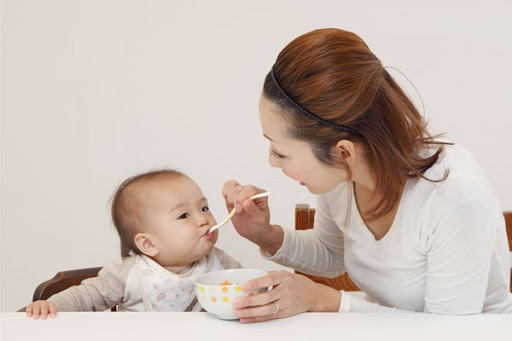
Babies from 6 to 12 months old can eat small amounts of cashews in smooth powder or butter form.
Children from 12 to 24 Months Old
Continue to grind cashews finely and sprinkle them over fruits and vegetables. You can also mix cashew butter or cashew cream into yogurt, warm cereal, mashed vegetables, or porridge.
At this age, parents may also serve a thin layer of smooth cashew butter on toast. Make sure the layer is not too thick, as thick nut butter can be hard for young children to swallow.
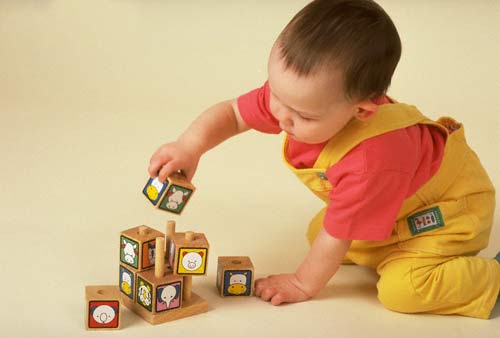
Children from 12 to 24 months old can eat small amounts of finely crushed cashews in soft foods.
Children Over 24 Months Old
Continue using finely ground cashews or smooth cashew butter as needed. If your child can bite small pieces, move food to the side of the mouth, chew well before swallowing, avoid stuffing food into the mouth, and spit out food when needed, they may be ready to learn how to eat cashews in larger pieces.
However, whole nuts and nut pieces are still considered choking hazards until at least 4 years old, and sometimes longer. Parents should always supervise children closely when serving nuts.

=> Note: Only serve nuts when your child is sitting upright in a chair and actively focused on eating. Do not give nuts to children in strollers, car seats, or while they are walking or playing.
Cashew Recipes for Children
Cashew and Coconut Oatmeal Bites
Ingredients:
- 1/2 cup water
- 1/2 cup unsweetened coconut milk
- 1 cup oats or quick rolled oats
- 1 tablespoon unsalted cashew butter with no added sugar
- 1/4 cup unsalted cashews
- 2 tablespoons unsweetened shredded coconut
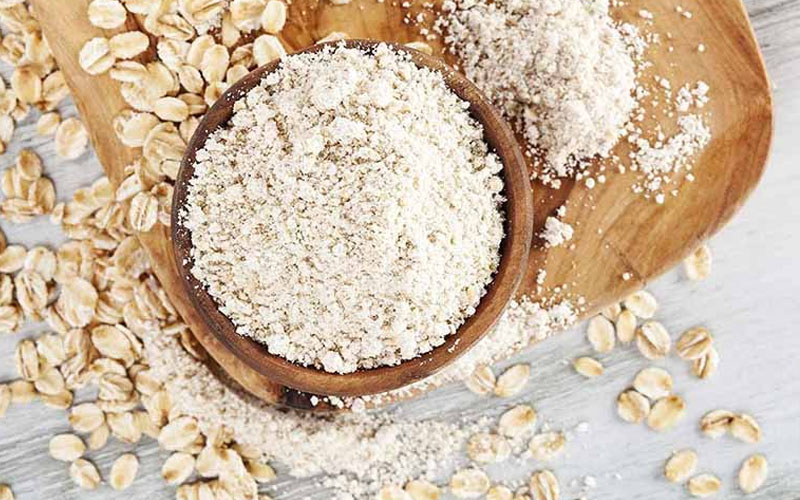
Instructions:
- Step 1: Bring the water and coconut milk to a boil in a small pot.
- Step 2: Add the oats to the boiling liquid. Cook and stir occasionally for about 2 minutes.
- Step 3: Stir the cashew butter into the oatmeal. Cover the pot and remove it from the heat. Let it sit for 1 minute, then allow the mixture to cool to room temperature.
- Step 4: Line a tray with parchment paper. Roll the oatmeal mixture into small balls about 2 inches wide. Place them evenly on the tray.
- Step 5: Grind the cashews into a fine powder. Mix the ground cashews with shredded coconut.
- Step 6: Roll the oatmeal balls in the cashew and coconut mixture.
Storage:
Store the cashew and coconut oatmeal bites in an airtight container in the refrigerator for up to 3 days or in the freezer for up to 2 months. To prevent them from sticking together in the freezer, freeze them on a tray for 30 minutes first, then transfer them to an airtight container for later meals or snacks.
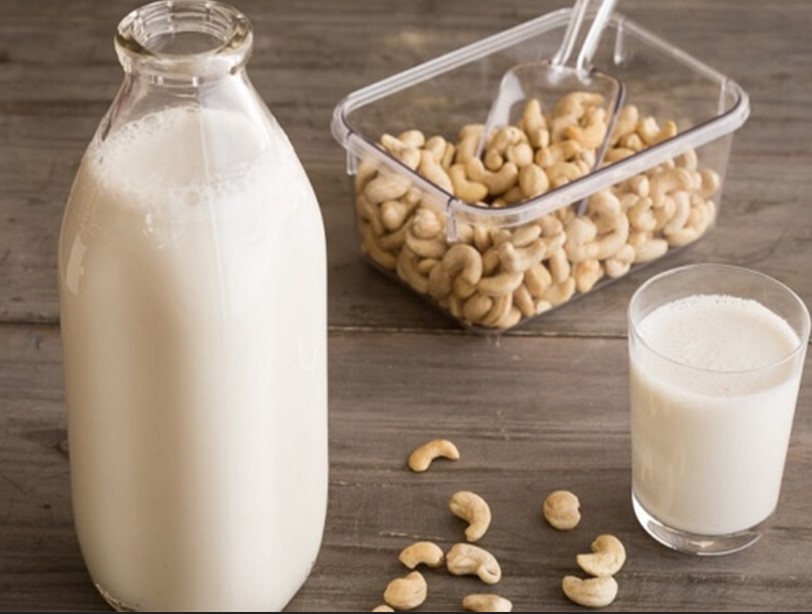
Nutritious Cashew Milk
Ingredients:
- 500 ml cooled boiled water
- 200 ml fresh milk or filtered water
- 100 g whole peeled cashew kernels
- 1 teaspoon cinnamon powder
- Sugar, optional
- 1 clean cloth or fine sieve
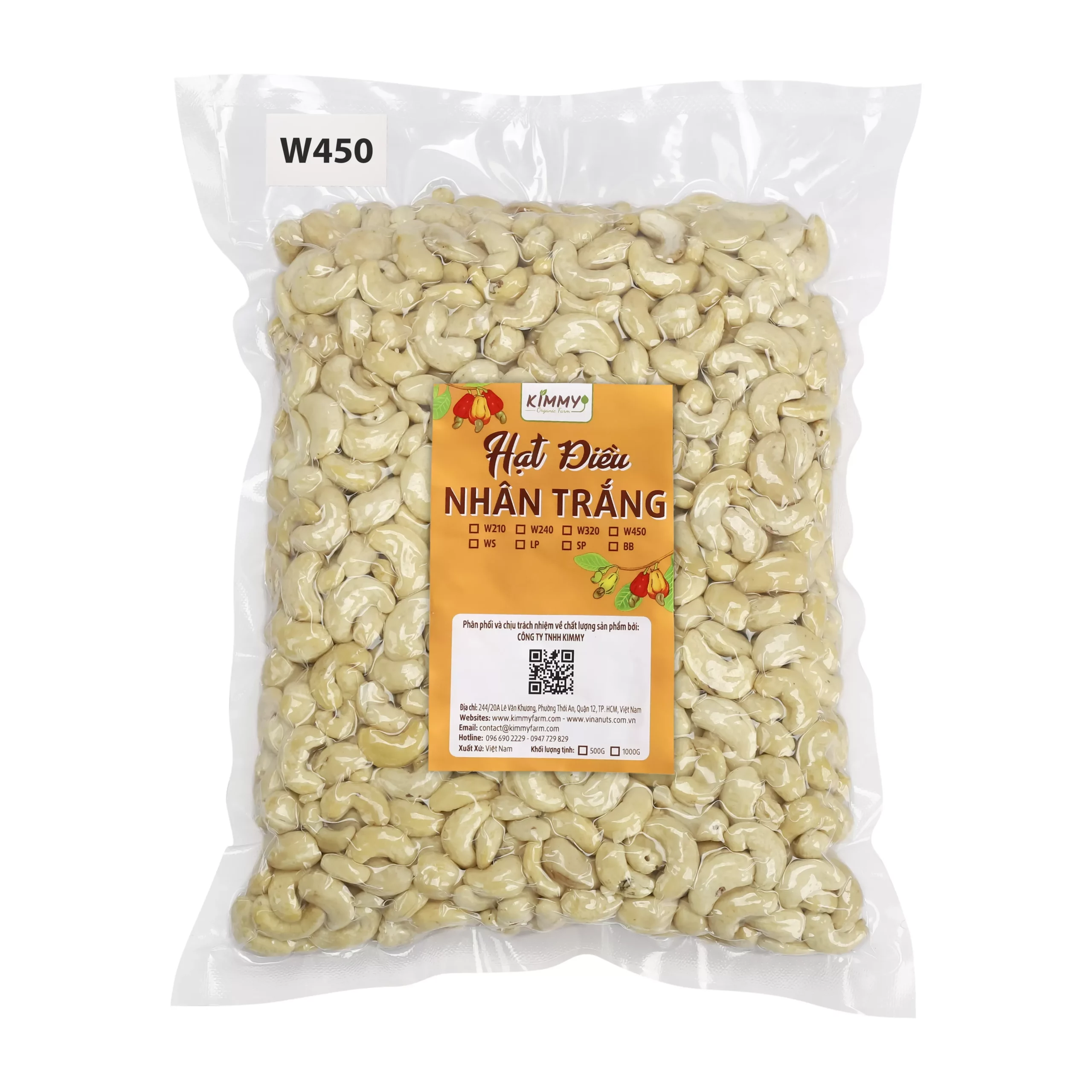
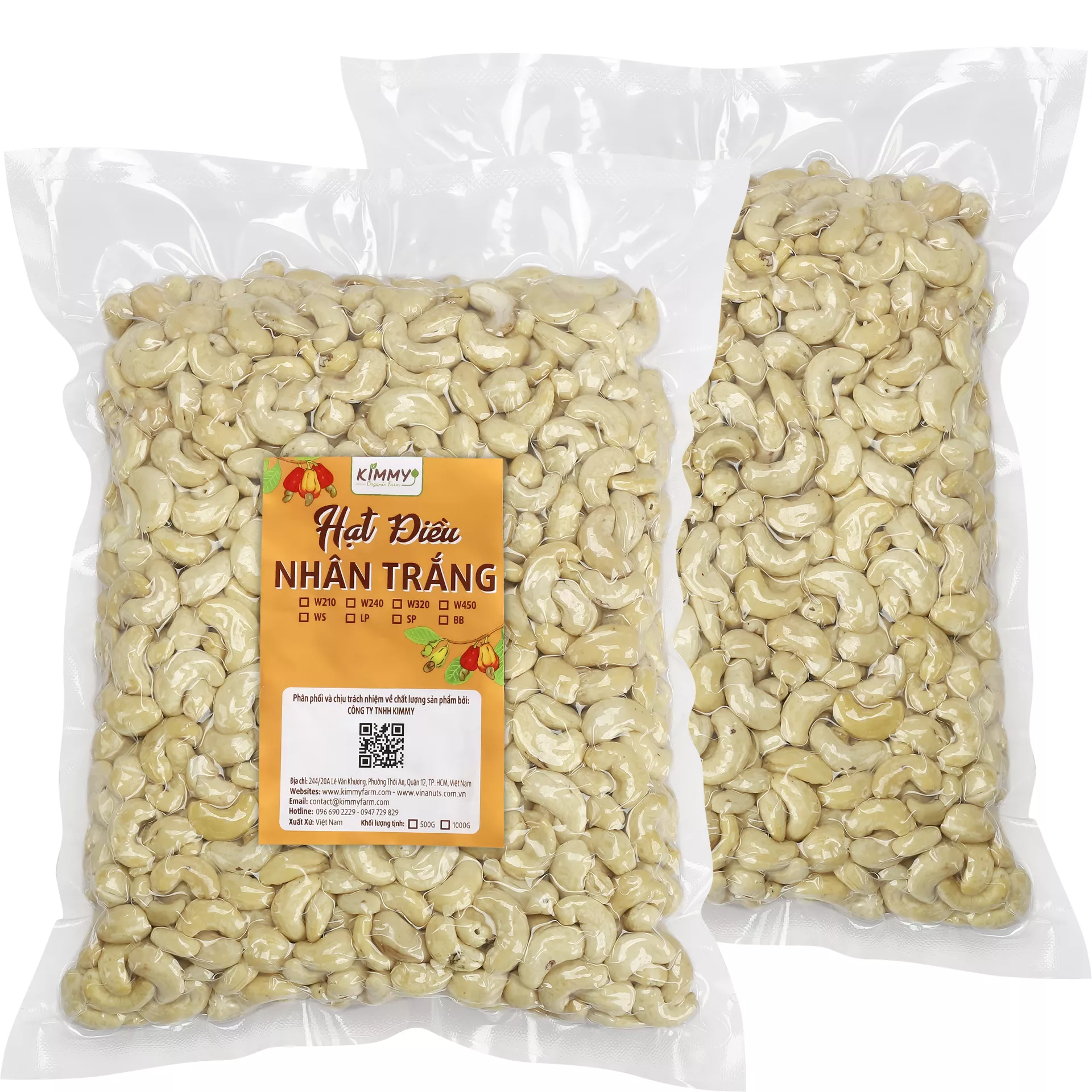
=> Read more: White Cashew Kernels with Skin Removed
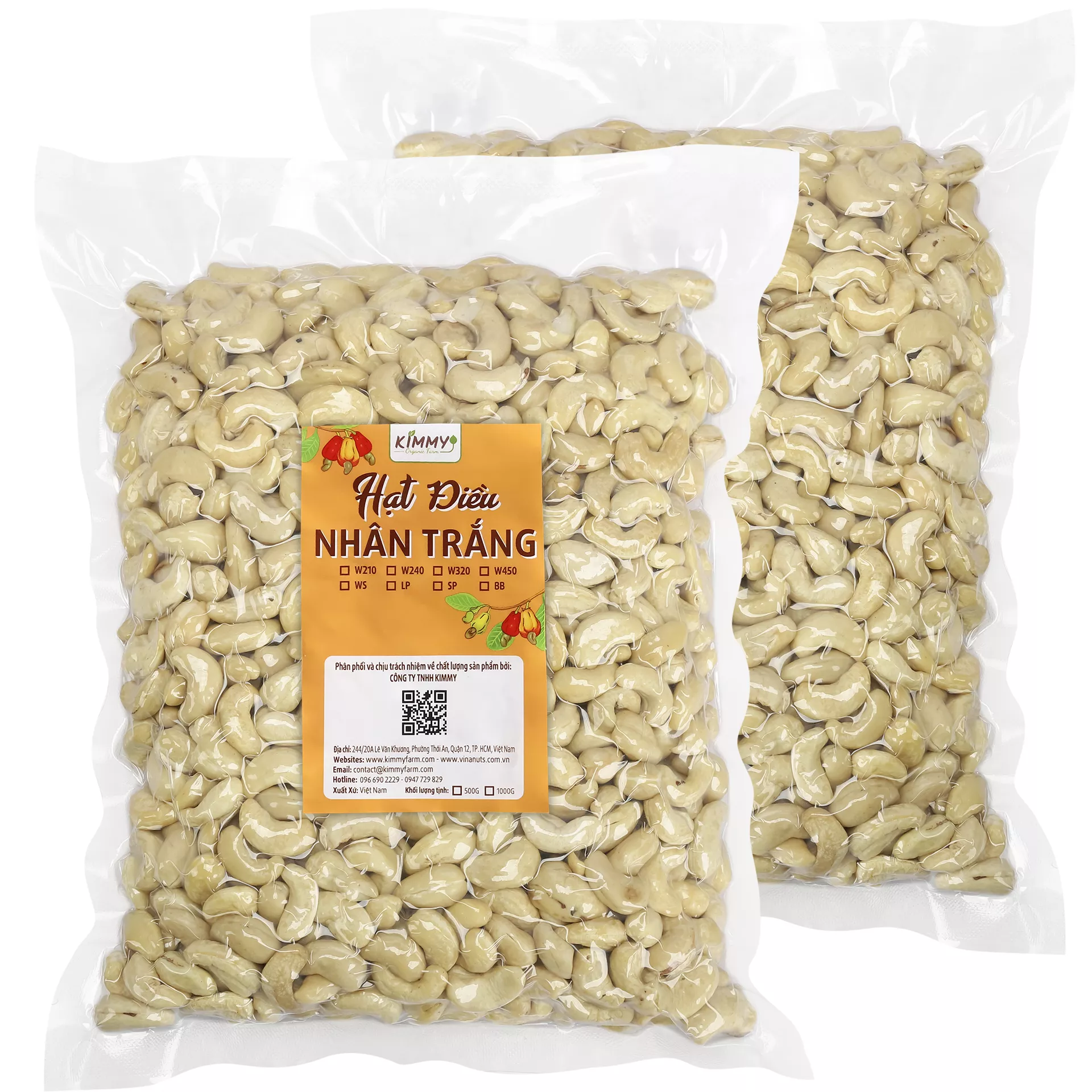
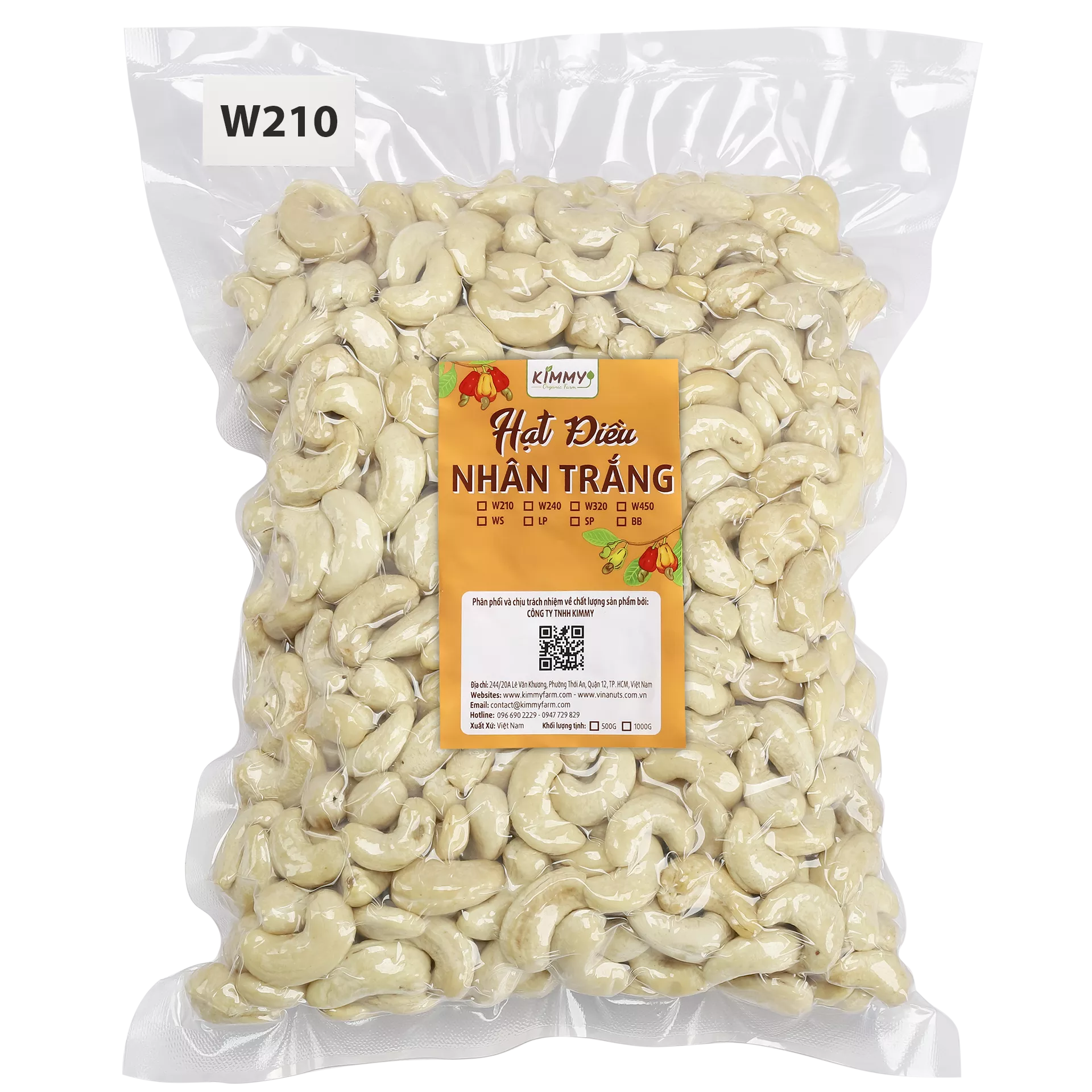
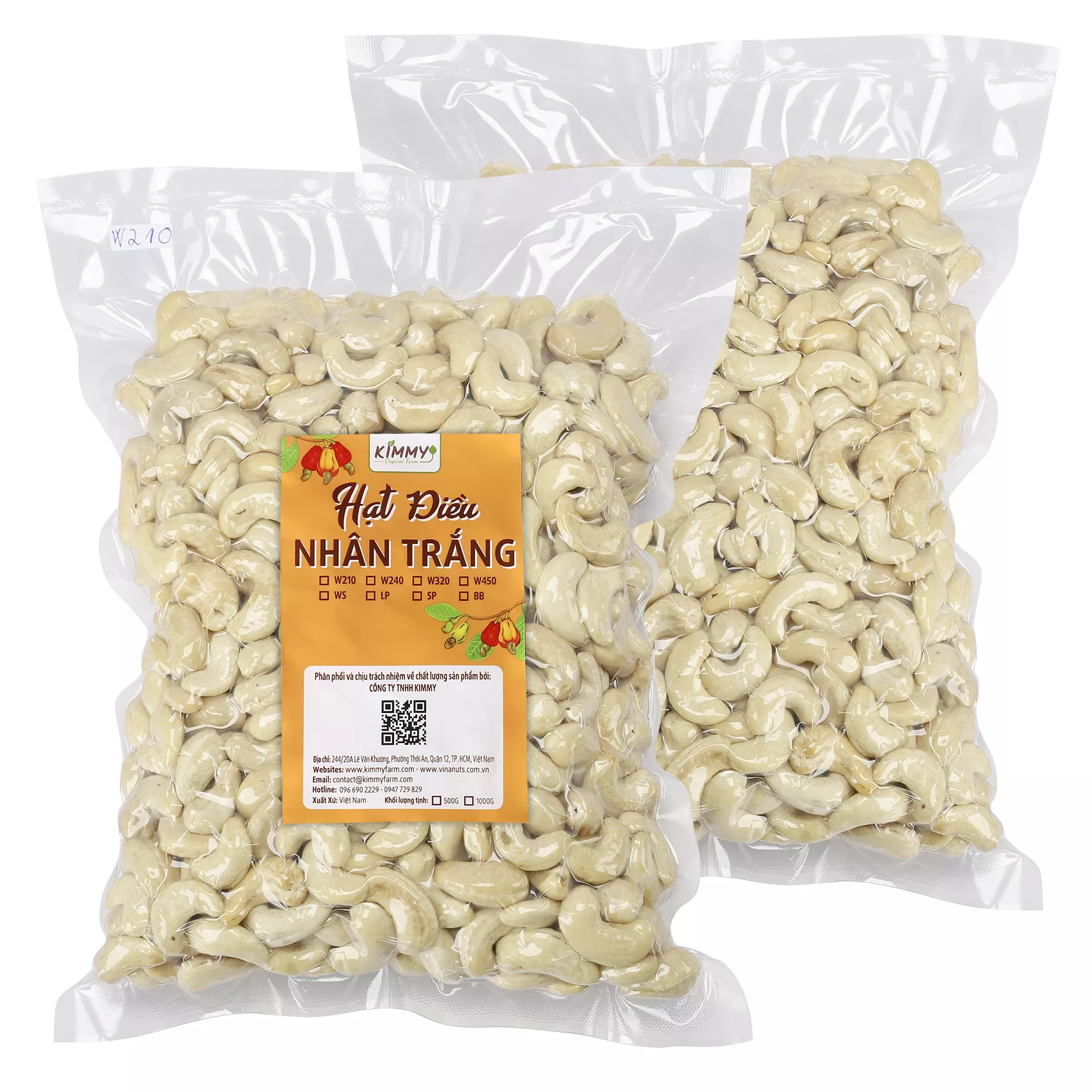
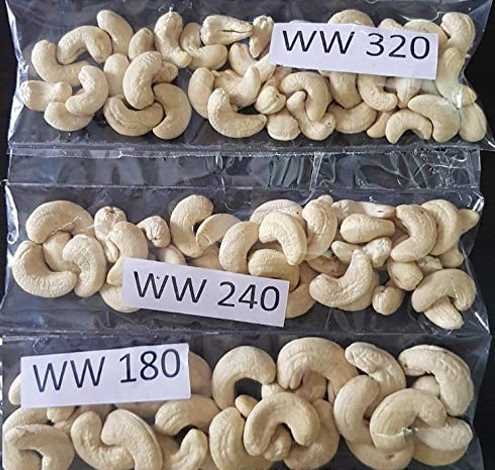
W320 whole cashew kernels for making milk – Kimmy Farm Vietnam
Instructions:
- Step 1: Wash and soak the cashews.
- Step 2: Blend the cashews until smooth, then prepare the fresh milk.
- Step 3: Cook the cashews with milk, then strain the mixture to remove any remaining solids.
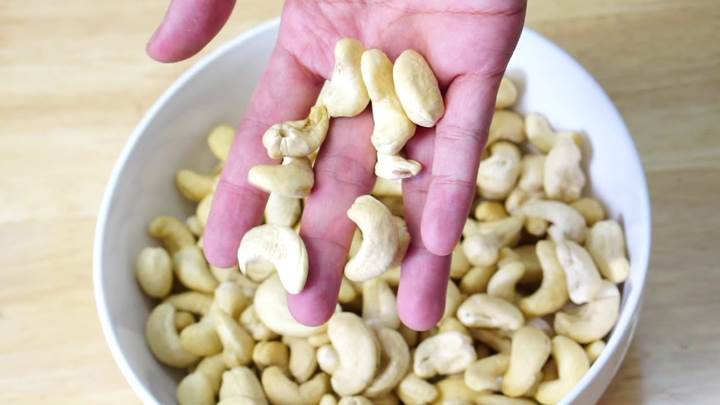
Cleaned white cashew kernels
Storage:
Because homemade fresh cashew milk does not contain preservatives, it should be stored carefully after preparation.
5 steps to store cashew milk for longer use:
- After cooking the cashew milk, let it cool completely.
- Only put it in the refrigerator when it is fully cool and no longer warm to the touch.
- Store cashew milk in the refrigerator at around 3–5°C.
- When pouring the milk into a glass, avoid leaving the bottle outside for too long, as this can make it spoil faster.
- Cashew milk can be warmed, but it should be consumed right away. Do not warm it and then place it back in the refrigerator.
Nutritious Cashew Porridge
Ingredients:
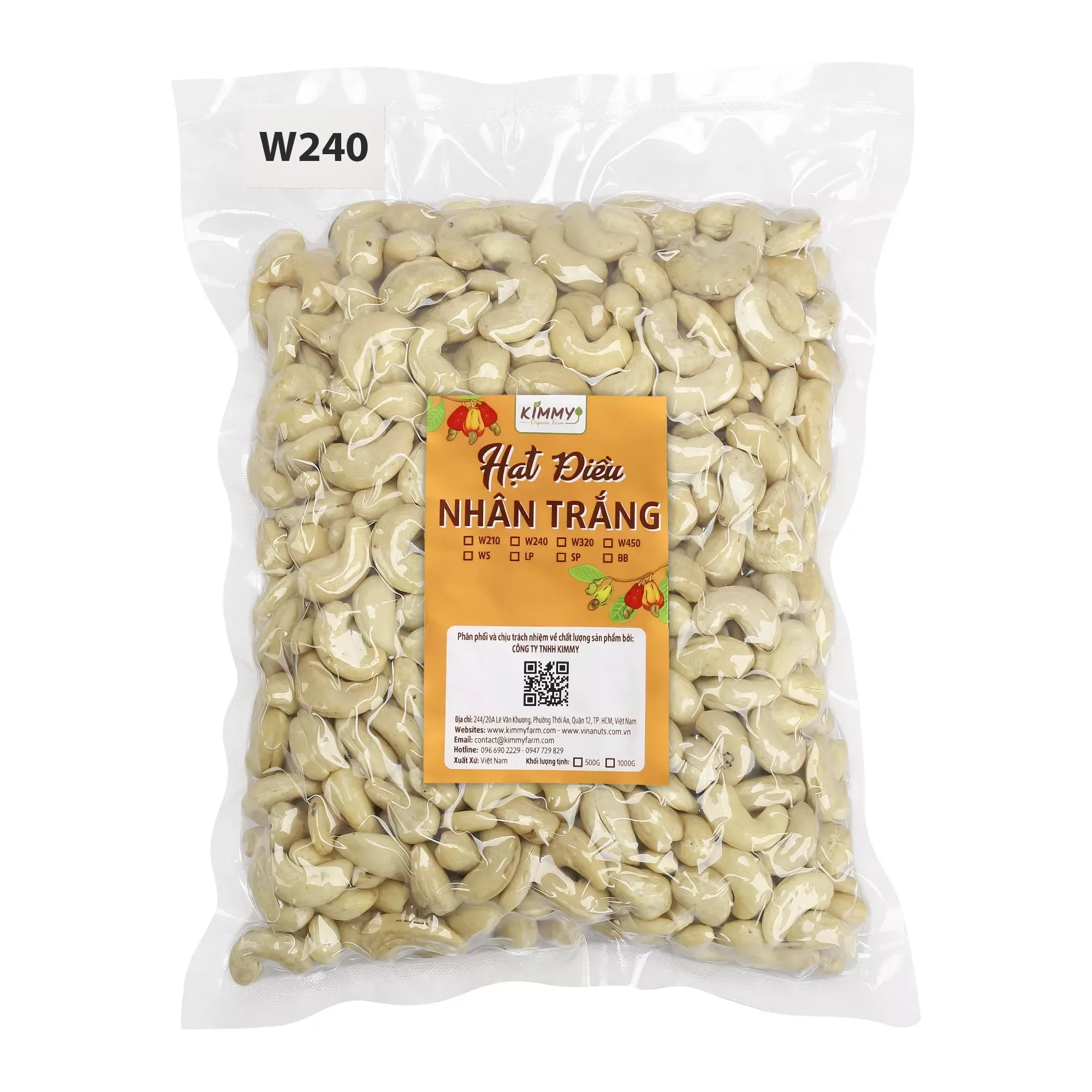
The ingredients used for cashew porridge for babies should be clean, high-quality white cashew kernels. Good cashew kernels are usually white, ivory, or light grayish in color.
- Cashew powder
- or cashew kernels
- or broken cashews about 20 g, equal to around 12–15 cashews
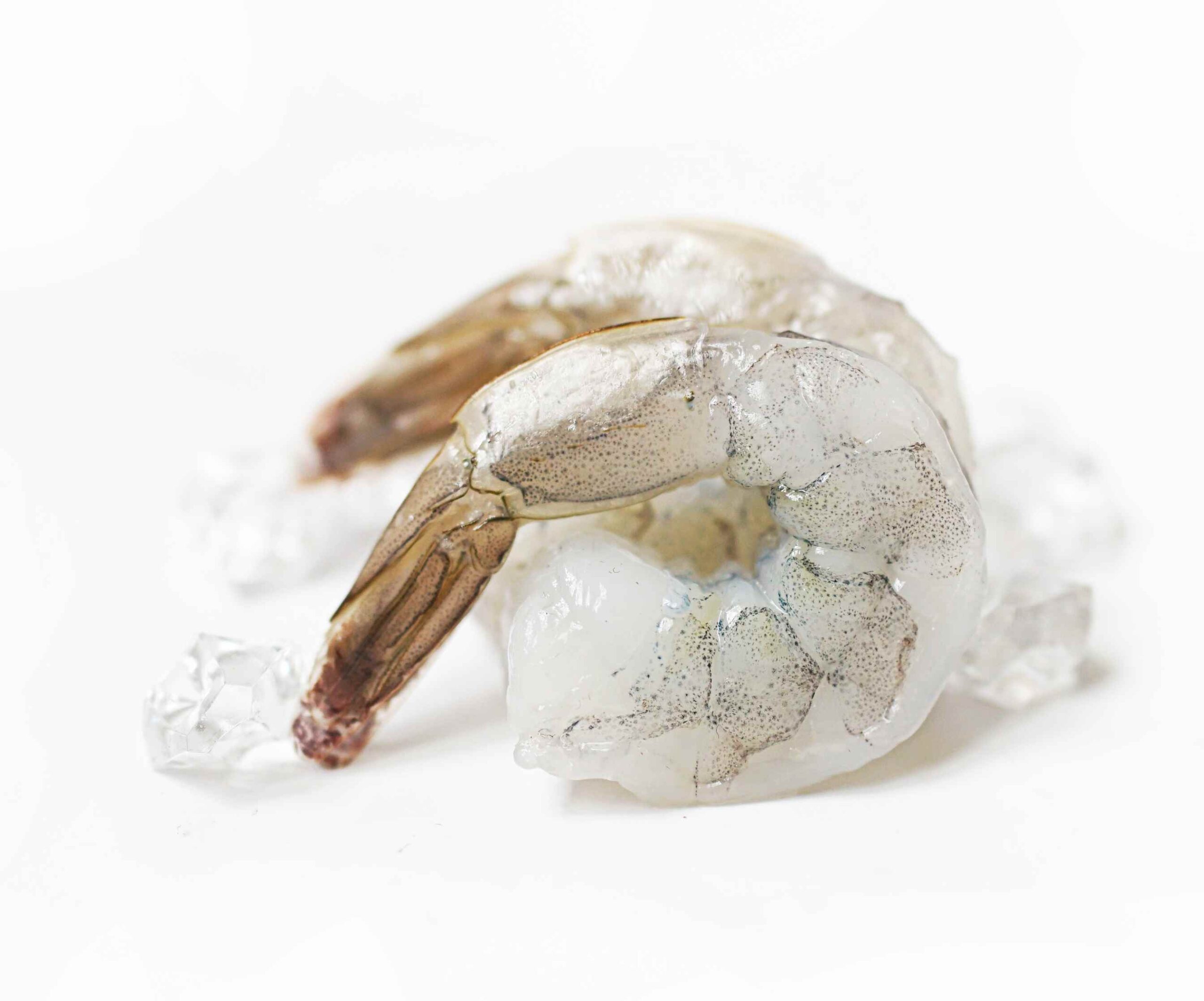
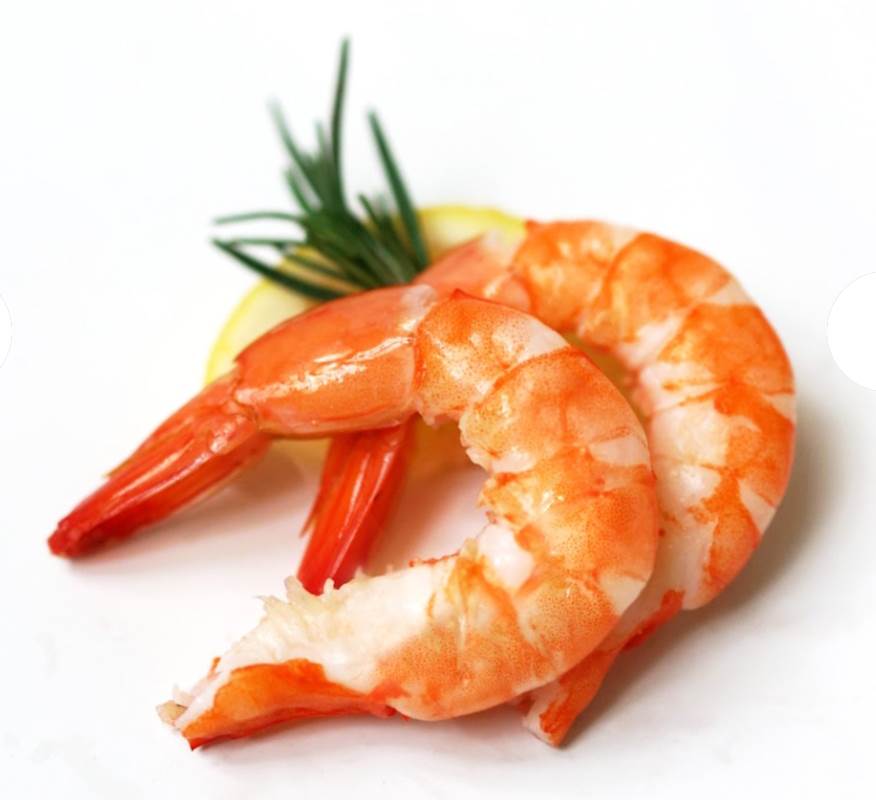
- Shrimp meat 10 g
- Rice flour 30 g
- Spinach 5–6 leaves
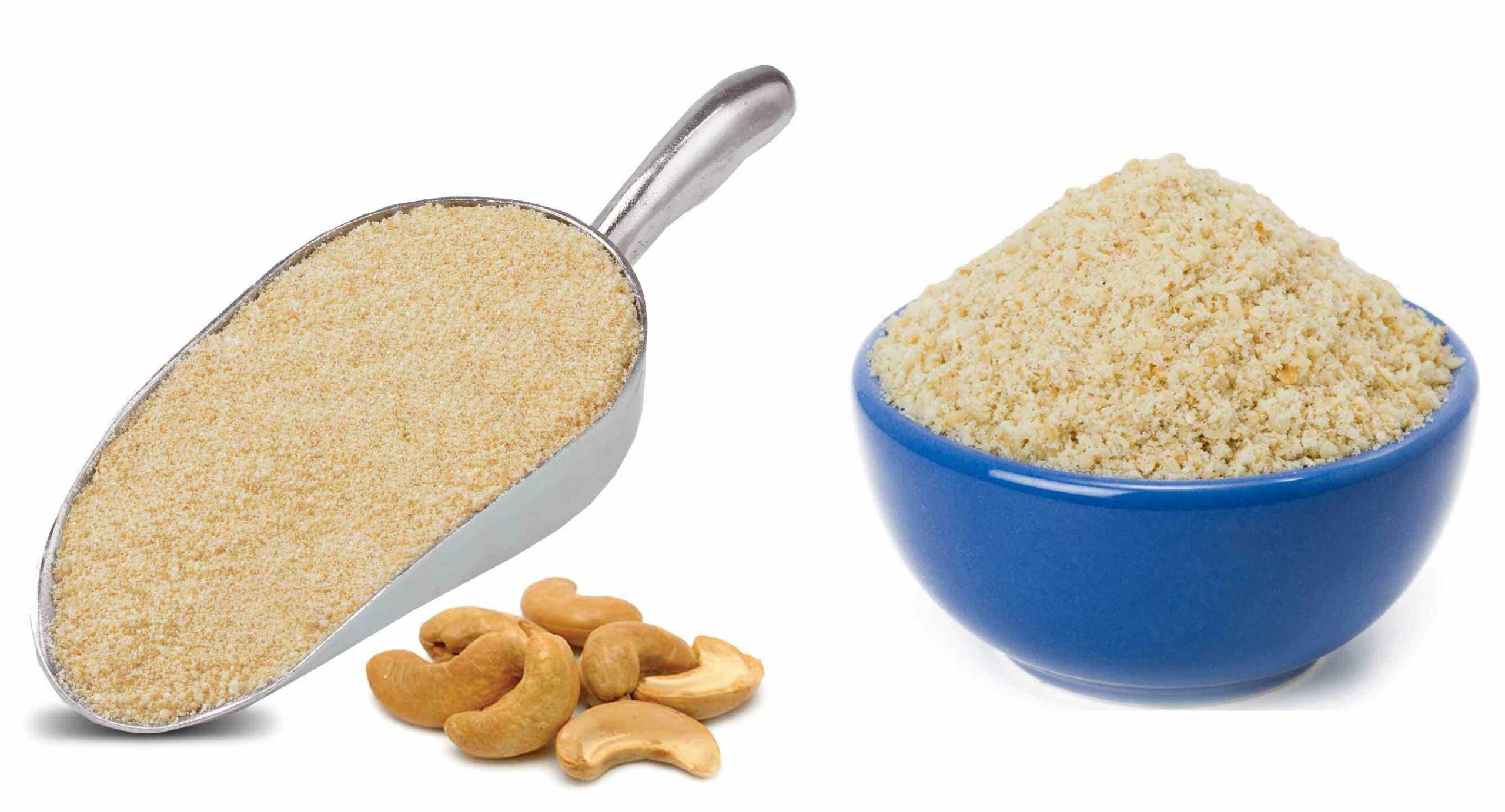
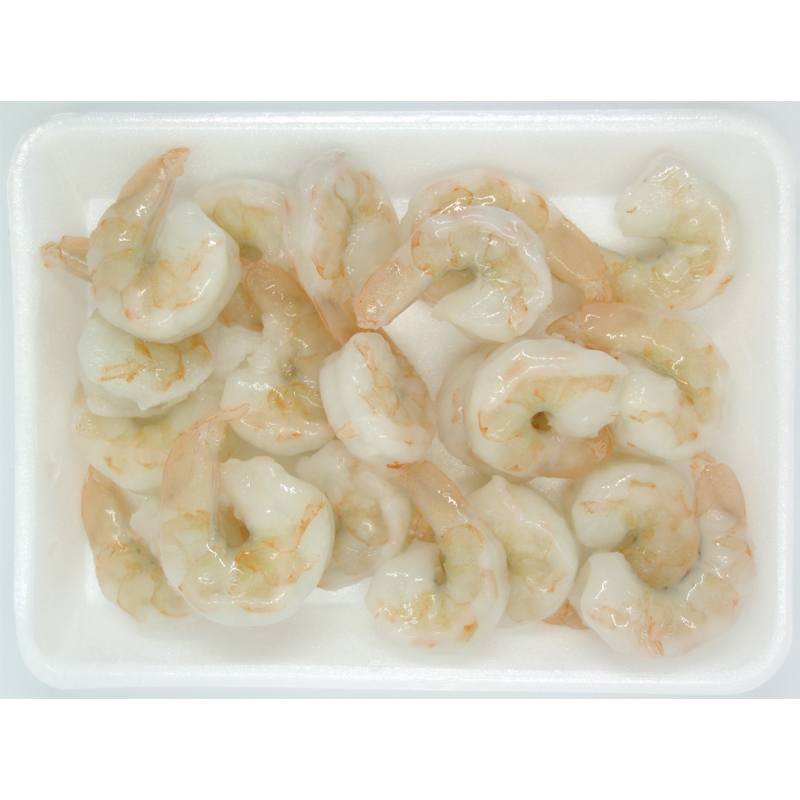
Ingredients for cashew porridge include: cashew powder, cashew kernels, or broken cashews; shrimp meat; rice flour; and spinach.
Instructions:
- Step 1: Prepare the cashew kernels, rinse them well, and soak them.
- Step 2: Wash the rice or rice flour and cook the porridge base.
- Step 3: Prepare and finely blend the shrimp meat.
- Step 4: Mix the porridge with shrimp and cooked spinach until soft and suitable for the child’s age.
=> Read more: How to Cook Nutritious Cashew Porridge for Children
Chúng tôi là một thương hiệu chuyên sản xuất, thương mai và xuất khẩu các mặt hàng nông sản của Việt Nam. Chúng tôi có vùng trồng điều & nhà máy điều ở Bình Phước, trại nuôi ruồi lính đen ở Tây Ninh. Các mặt hàng xuất khẩu chính của Công ty là: hạt điều, hạt điều nhân, ruồi lính đen,… từ Việt Nam.