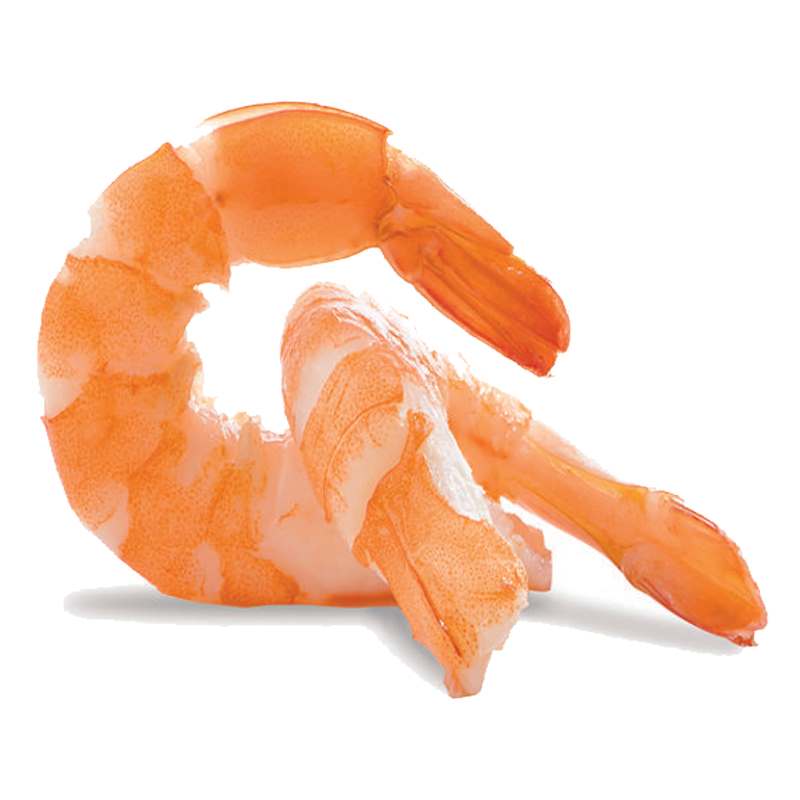
Shrimp shells are one of the richest and most available raw materials for chitin extraction. In Vietnam, shrimp processing creates a large amount of shells and heads every year. Instead of treating this material as low-value waste, many factories are now using it to produce high-value biopolymers such as chitin and chitosan.
Chitosan is widely used in agriculture, food processing, cosmetics, medicine, water treatment, and many other industries. As demand continues to grow, the process of producing chitosan from whiteleg shrimp shells has become an important topic for Vietnam’s seafood and biotechnology sectors.
=> Related production processes:
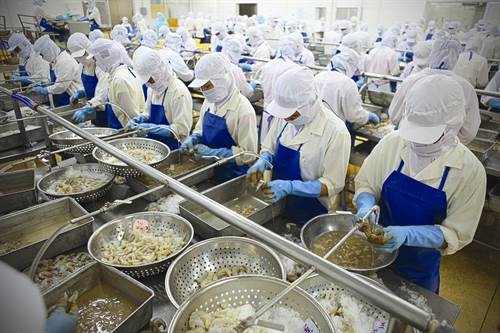
Vietnam’s shrimp industry produces a large amount of shrimp shell waste. Shrimp shells are a valuable source of chitin for producing chitosan.
Vietnam Has a Large Source of Whiteleg Shrimp Shells
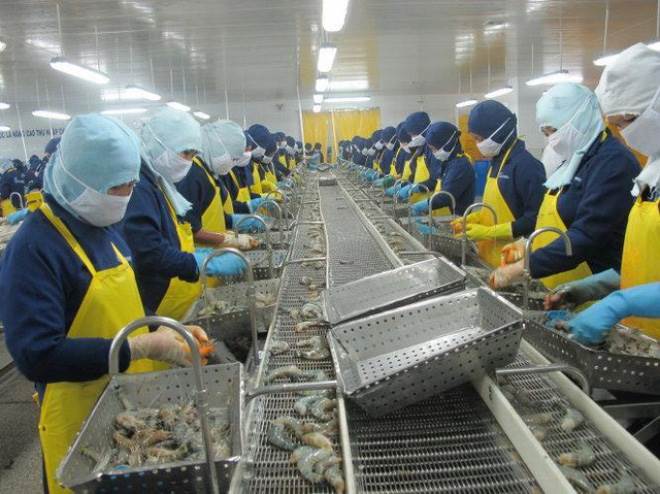
Vietnam is one of the world’s major exporters of whiteleg shrimp, with annual export value reaching around USD 1.7–2 billion. Most shrimp are exported in frozen form after being processed, peeled, and cleaned. During this process, shrimp heads and shells are removed in large volumes.
In many cases, these by-products are sold at a low price for animal feed or treated as biological waste. This is a missed opportunity because shrimp shells and heads can account for 40–50% of the shrimp’s total weight and contain a high level of chitin.
In recent years, Vietnam has started to make better use of this raw material by extracting valuable biological compounds, especially chitin and chitosan.
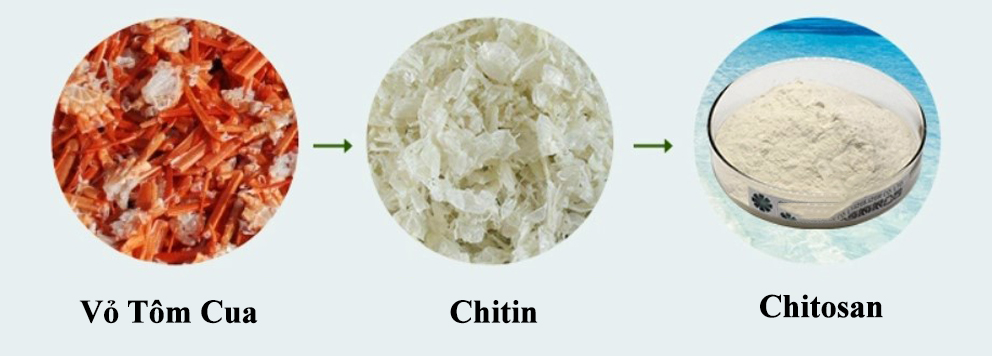
The basic process of producing chitosan from shrimp shells includes collecting the shells, cleaning them, extracting chitin, and converting chitin into chitosan.
Shrimp Shells Are Rich in Chitin for Chitosan Production
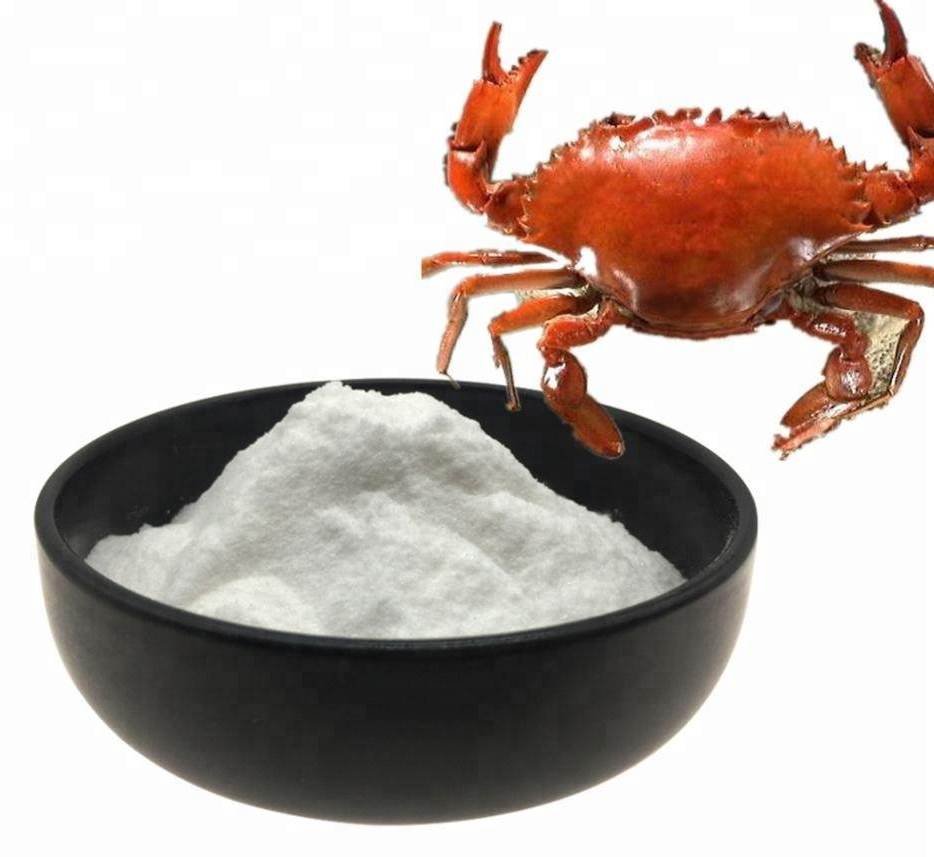
Chitin is a natural structural material found in the outer shells of crustaceans such as shrimp, crab, and other shellfish. It is also found in insects and certain fungi. In shrimp shells, chitin forms part of a complex structure together with proteins and minerals, especially calcium carbonate.
To produce chitosan, manufacturers first need to extract chitin from the shrimp shell. After that, chitin is converted into chitosan through a deacetylation process.
The main components of shrimp shells include:
- Chitin: around 27.2%
- Protein: around 23%
- Minerals: around 45.16%
- Other compounds: around 3.64%
=> Learn more: What Are Chitin and Chitosan? Key Differences, Properties, and Applications

Shrimp shells are mainly composed of chitin, protein, minerals, and other compounds.
Overview of the Chitosan Extraction Process from Shrimp Shells
The production of chitosan from whiteleg shrimp shells usually goes through two main stages. The first stage is the extraction of chitin from the shrimp shell. The second stage is the conversion of chitin into chitosan.
The simplified production flow includes:
- Collecting shrimp shells: Shrimp shells are gathered from seafood processing factories.
- Cleaning and pre-treatment: Impurities such as leftover meat, shrimp fluid, and lipids are removed.
- Demineralization: Minerals are removed from the shell structure.
- Deproteinization: Remaining proteins are separated from the shell material.
- Chitin collection: The purified chitin is washed, dried, and milled.
- Chitosan production: Chitin is converted into chitosan through an industrial deacetylation process.
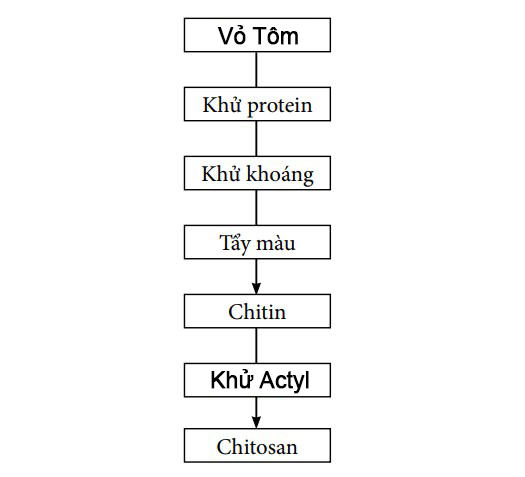
Diagram of the process for extracting chitin and producing chitosan from shrimp shells.
Step 1: Collecting Shrimp Shells
Whiteleg shrimp shells are collected in large quantities from shrimp processing and export factories, especially in Vietnam’s Mekong Delta region. This area has a strong seafood processing industry, making it a convenient source of shrimp shell raw material.
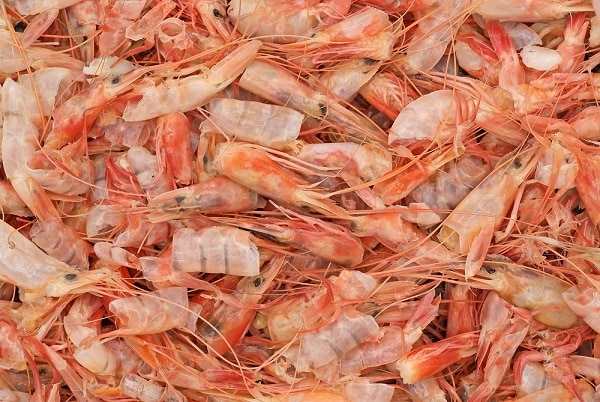
Vietnam has a large volume of shrimp shells, making it a valuable raw material source for chitosan production.
Step 2: Cleaning and Removing Impurities
After collection, shrimp shells usually contain impurities such as leftover shrimp meat, shrimp liquid, lipids, sand, and other residues. These impurities must be removed before the extraction process begins.
Cleaning the shells helps improve the efficiency of later processing stages. It also reduces the amount of chemicals and energy needed during mineral and protein removal.
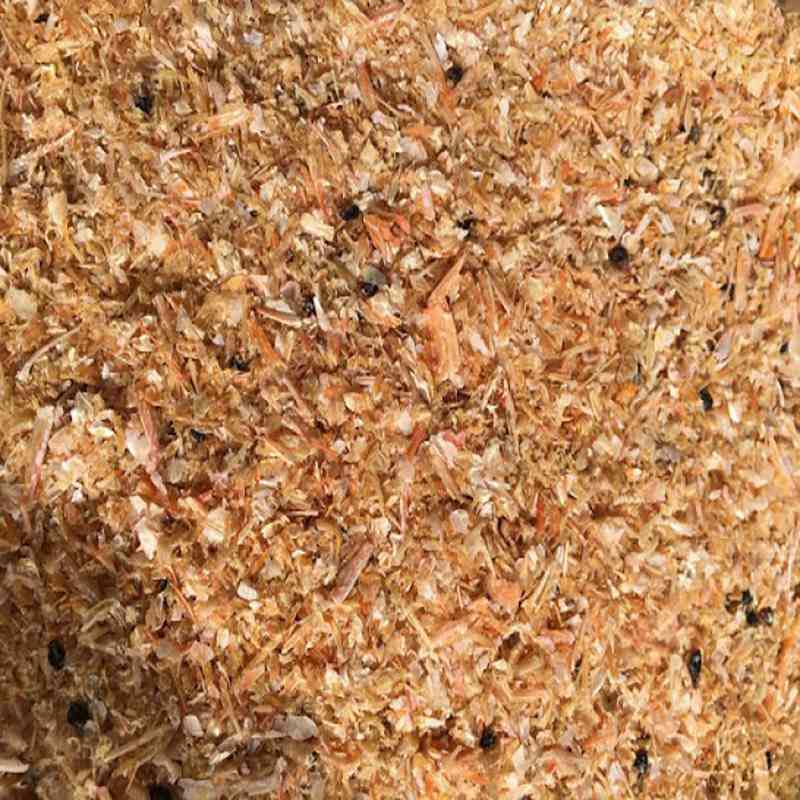
Cleaned shrimp shells after pre-treatment, ready for mineral and protein removal.
Step 3: Removing Minerals from Shrimp Shells
Minerals make up a large part of shrimp shells, with calcium carbonate being one of the main components. In this stage, the mineral content is removed so that the chitin structure can be separated more easily.
This step is normally carried out in industrial facilities using controlled chemical treatment. Because the process involves corrosive chemicals, it should only be handled by trained technicians with proper equipment, safety systems, and wastewater treatment controls.
The purpose of demineralization is to:
- Remove calcium carbonate and other minerals from the shrimp shell.
- Improve the purity of the extracted chitin.
- Prepare the material for the next protein-removal stage.
Step 4: Removing Protein from Shrimp Shells
Protein accounts for a significant part of the shrimp shell structure. After minerals are removed, the remaining shell material is treated to separate protein from the chitin matrix.
This step helps create cleaner chitin and improves the quality of the final chitosan product. In industrial production, this process must be carefully controlled to avoid damaging the chitin structure.
The main goals of deproteinization are to:
- Remove protein residues from shrimp shells.
- Improve chitin purity.
- Reduce odor and organic impurities.
- Prepare the material for drying, milling, and chitosan production.
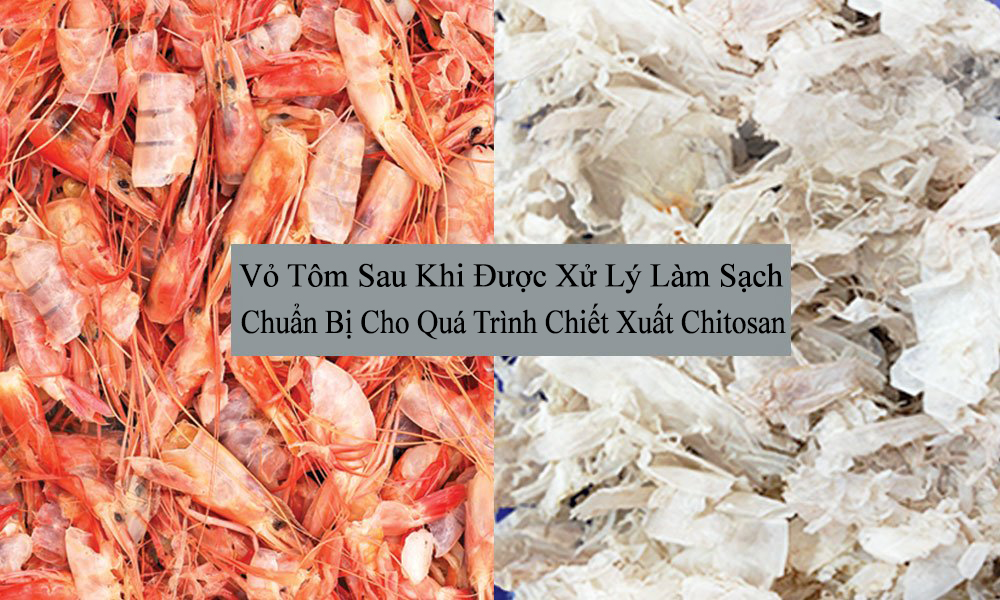
After mineral and protein removal, shrimp shells are processed into cleaner chitin for chitosan production.
Step 5: Collecting Purified Chitin
After the mineral and protein removal stages, the remaining material is known as chitin. This chitin is washed until clean, then dried until it becomes brittle. It can then be milled into smaller particles or powder to prepare for chitosan production.
Good-quality chitin should be clean, low in impurities, and suitable for further processing. The cleaner the chitin, the easier it is to produce high-quality chitosan.
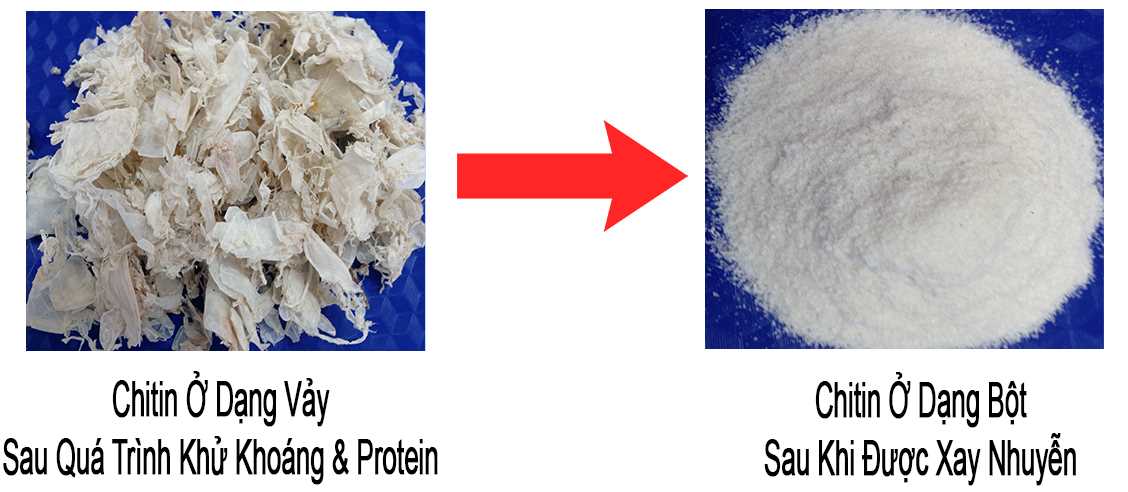
Chitin obtained after mineral and protein removal is milled into powder, making the next chitosan production stage easier.
Step 6: Producing Chitosan from Chitin
Once purified chitin is obtained, it can be converted into chitosan. This process is called deacetylation. In simple terms, deacetylation changes the chemical structure of chitin so that it becomes chitosan, a more soluble and more widely used material.
There are three common methods for producing chitosan from chitin:
- Chemical treatment: The most common method in industrial production.
- Enzymatic treatment: A cleaner but often more expensive method.
- Microbial fermentation: A biological method with strong potential for sustainable production.
Producing Chitosan by Chemical Deacetylation
In industrial production, chitosan is often produced from chitin through chemical deacetylation. This method is widely used because it is efficient, scalable, and suitable for large-volume production.
However, this process requires strict control of chemical concentration, temperature, time, washing, drying, wastewater treatment, and worker safety. For that reason, it should only be performed in properly equipped industrial facilities.
After deacetylation, the material is washed until neutral, then dried and milled into chitosan powder. The final product can be used in different industries depending on its purity, degree of deacetylation, viscosity, and particle size.
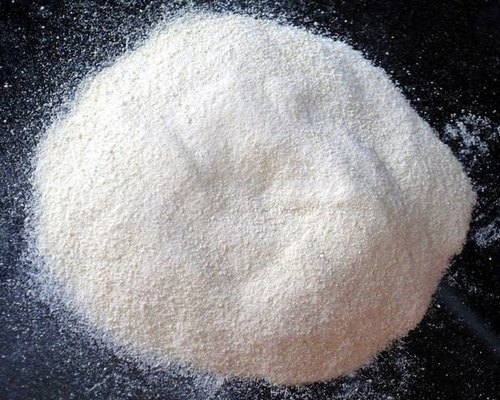
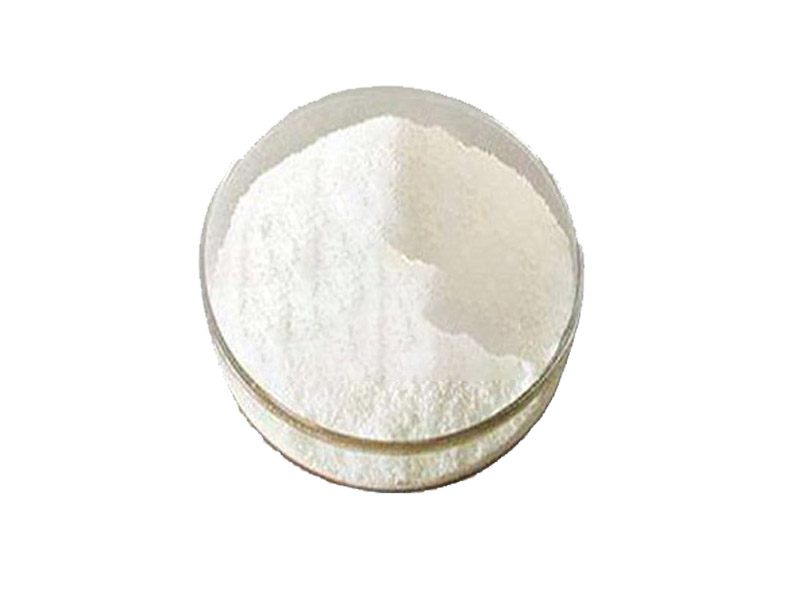
High-quality chitosan powder produced from purified chitin at a chitin and chitosan manufacturing facility.
Why Shrimp Shell Chitosan Has High Economic Value
Chitosan made from shrimp shells has strong commercial value because it is natural, biodegradable, and useful in many industries. It can be used in agriculture, water treatment, food preservation, cosmetics, pharmaceuticals, and biomedical materials.
For Vietnam, producing chitosan from shrimp shells brings two major benefits. First, it helps reduce waste from the seafood processing industry. Second, it creates a higher-value product from a material that was once treated as low-value by-product.
Conclusion
The extraction of chitosan from whiteleg shrimp shells is an important direction for Vietnam’s seafood industry. Instead of wasting shrimp heads and shells, factories can turn them into chitin and chitosan, two valuable materials with strong global demand.
With Vietnam’s large shrimp-processing capacity, the country has a strong advantage in developing a chitin and chitosan production chain. If properly managed, this process can help reduce waste, increase economic value, and support more sustainable seafood processing.
Chúng tôi là một thương hiệu chuyên sản xuất, thương mai và xuất khẩu các mặt hàng nông sản của Việt Nam. Chúng tôi có vùng trồng điều & nhà máy điều ở Bình Phước, trại nuôi ruồi lính đen ở Tây Ninh. Các mặt hàng xuất khẩu chính của Công ty là: hạt điều, hạt điều nhân, ruồi lính đen,… từ Việt Nam.