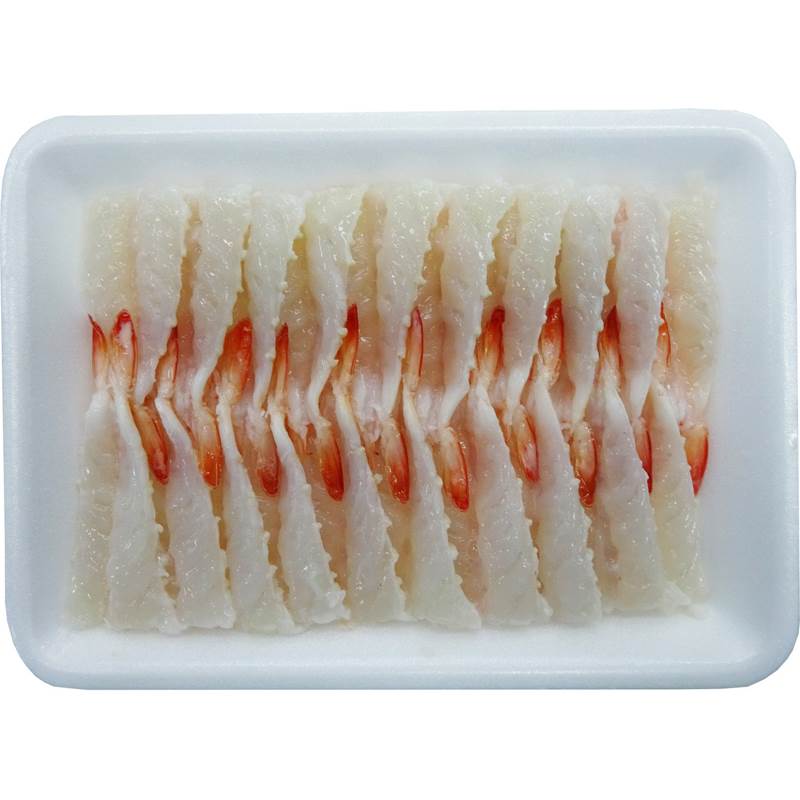
Vietnam exports a large volume of shrimp every year. Along with that comes a huge amount of shrimp heads and shells, which can account for 40–50% of the total shrimp weight and are naturally rich in chitin. If these by-products are discarded, they create a major waste problem for the economy and the environment. In recent years, shrimp shell by-products, especially from white-leg shrimp in Vietnam, have been increasingly used to produce valuable bio-based compounds.
Summary of the Chitin Extraction Process from Shrimp Shells:
- Collection: Collect shrimp shells from processing factories.
- Cleaning and preparation: Remove impurities and wash the shells with clean water.
- Demineralization: Use HCl to remove minerals from the shells.
- Deproteinization: Use diluted NaOH to remove remaining proteins from the shells.
- Final chitin product: Obtain purified chitin after washing, drying, and grinding.
Collecting Shrimp Shells
Shrimp shells are collected in large quantities from seafood processing and export factories in Vietnam’s Mekong Delta provinces. In Vietnam, shrimp head and shell waste was estimated at around 325,000 tons in 2019 and may reach about 450,000 tons by 2025. This is a valuable raw material source for chitin extraction.
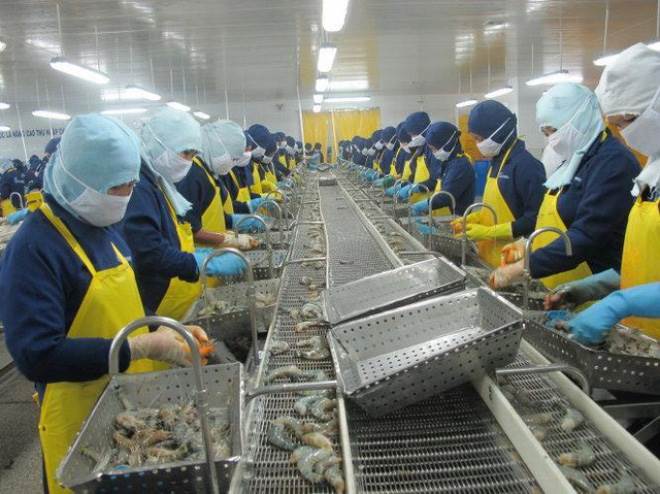
Shrimp processing factories in Vietnam generate a large amount of shrimp head and shell by-products.
Cleaning and Preparing Shrimp Shells
During collection from seafood processing factories, shrimp shells often contain many impurities such as shrimp meat residue, shrimp fluids, lipids, and other organic matter. Washing helps remove these impurities and makes the later demineralization and deproteinization steps more effective.
Proper cleaning also helps reduce the amount of chemicals needed during processing. The cleaner the raw shrimp shells are, the easier it is to remove minerals and proteins in the next stages.
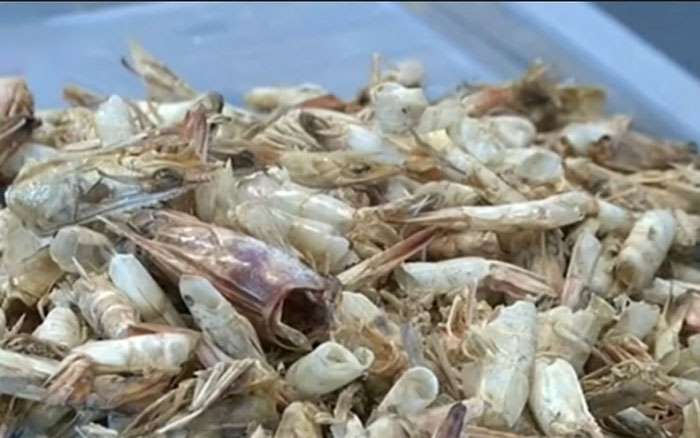
Shrimp shells are collected in large quantities from seafood processing factories in Vietnam’s Mekong Delta region.
Demineralization of Shrimp Shells
Minerals can account for up to 45.16% of the shrimp shell structure. To remove these minerals, shrimp shells are treated with HCl at a concentration of 2–6% under room temperature conditions (26–30°C). The usual solid-to-solvent ratio is 1:5 (w/v), and the treatment time is about 16 hours.
After this step, the remaining solid material is washed and soaked in clean water until it reaches a neutral pH. It is then ready for the next processing stage.
Summary of the shrimp shell demineralization process:
- Chemical used: HCl at 2–6%
- Temperature: 26–30°C, room temperature
- Processing time: 16 hours
- Ratio: 1 part solid material to 5 parts solvent
Deproteinization of Shrimp Shells
Protein makes up about 23% of the shrimp shell structure. To remove this protein, the cleaned and demineralized shells are treated with a NaOH solution at a concentration of 4–8% under room temperature conditions (26–30°C). The solid-to-solvent ratio is usually 1:5 (w/v), and the treatment time is about 20 hours.
After deproteinization, the remaining solid material is washed and soaked in clean water until the pH becomes neutral. At this stage, the material is called chitin.
Summary of the shrimp shell deproteinization process:
- Chemical used: NaOH at 4–8%
- Temperature: 26–30°C, room temperature
- Processing time: 20 hours
- Ratio: 1 part solid material to 5 parts solvent (1:5)
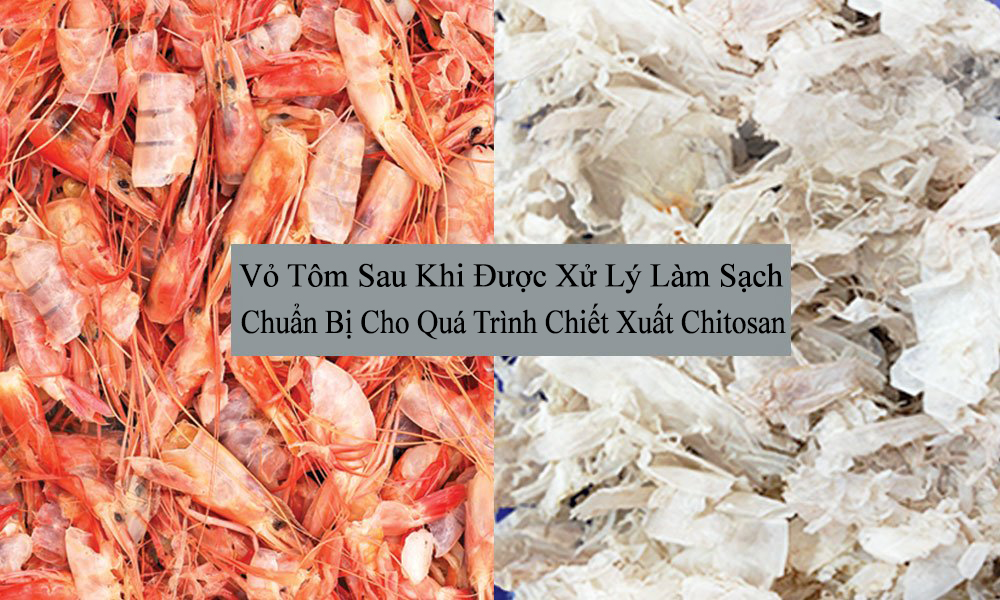
Shrimp shells after minerals and proteins have been removed, ready for further processing into chitin and chitosan.
Obtaining Pure Chitin
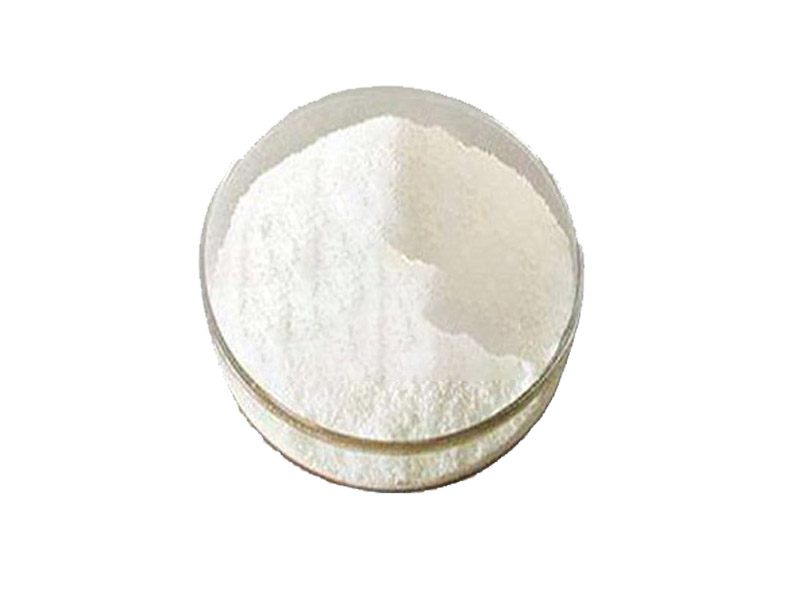
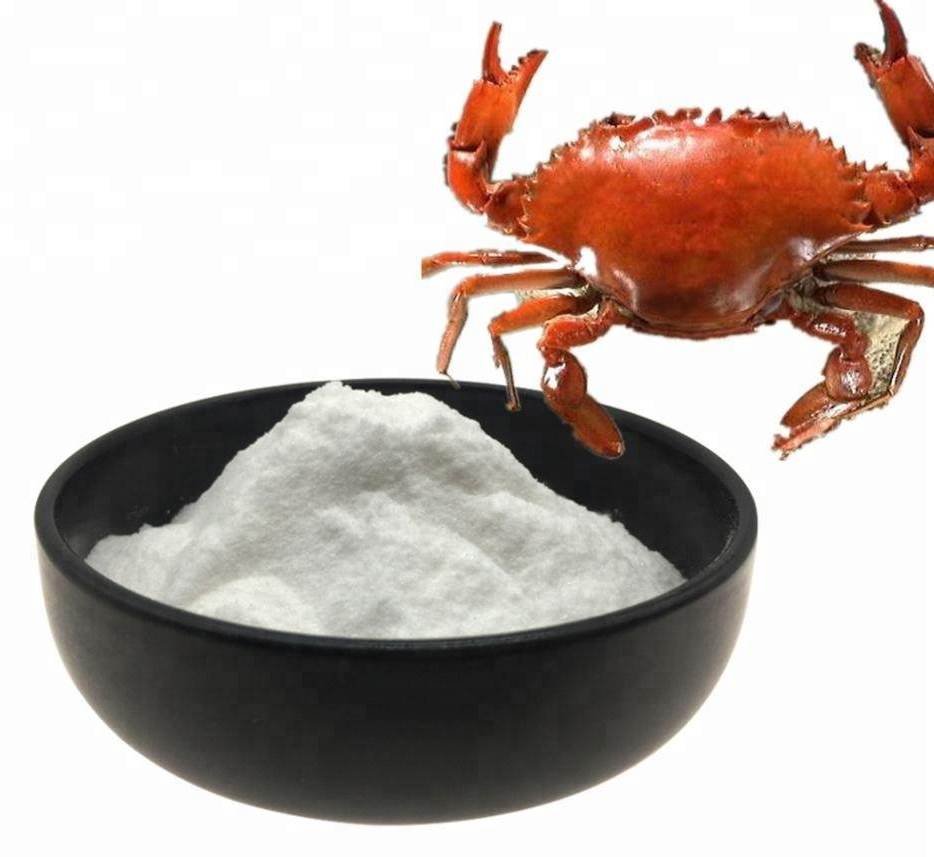
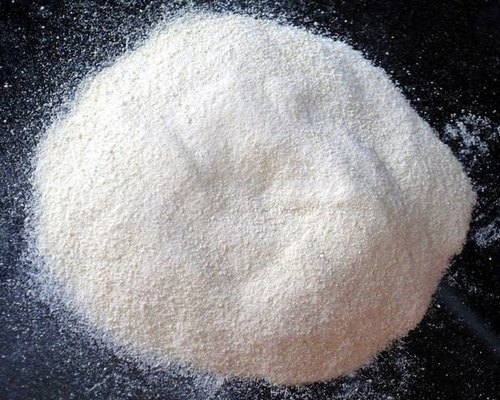
After minerals and proteins are removed, the purified chitin is dried until it becomes brittle. It is then ground into smaller particles or powder. This fine chitin material can be used as the starting material for the deacetylation process, which produces chitosan.
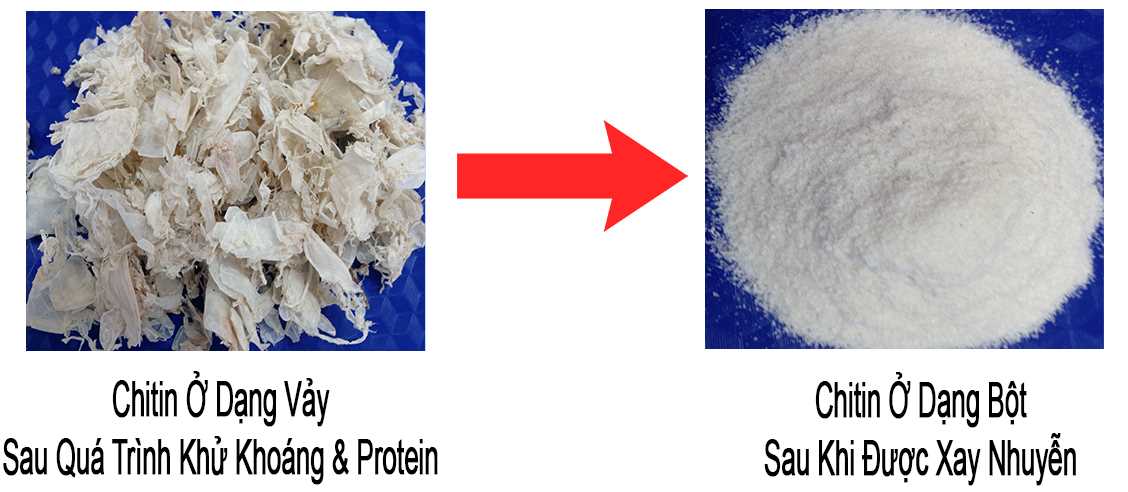
Chitin obtained from shrimp shells after demineralization and deproteinization is ground into powder, making the chitosan production process easier.
Chúng tôi là một thương hiệu chuyên sản xuất, thương mai và xuất khẩu các mặt hàng nông sản của Việt Nam. Chúng tôi có vùng trồng điều & nhà máy điều ở Bình Phước, trại nuôi ruồi lính đen ở Tây Ninh. Các mặt hàng xuất khẩu chính của Công ty là: hạt điều, hạt điều nhân, ruồi lính đen,… từ Việt Nam.